



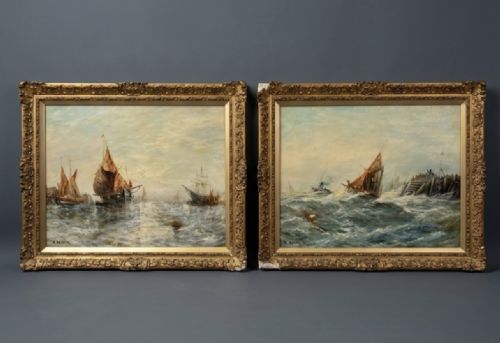
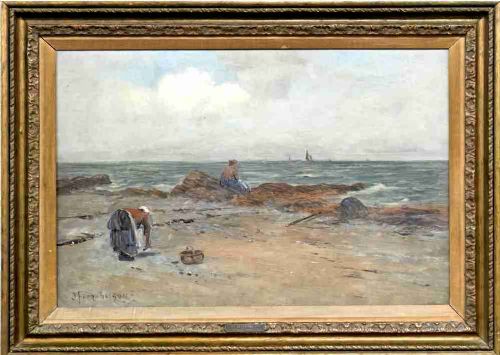
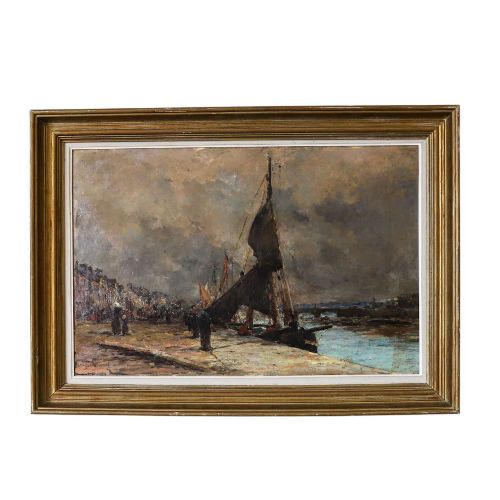
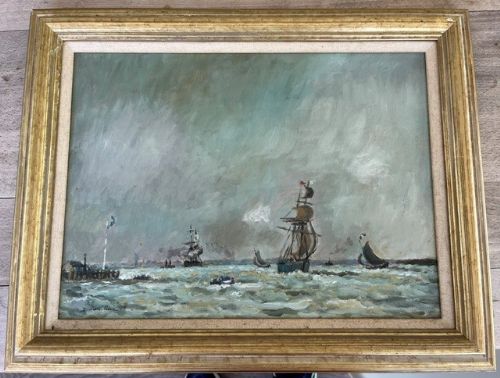
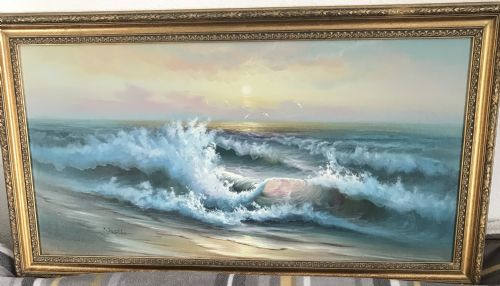
Original Marine Oil
Original marine oil paintings capture coastal light and maritime history on canvas, offering buyers an enduring connection to historical seascapes and seafaring life.
Original Marine Oil
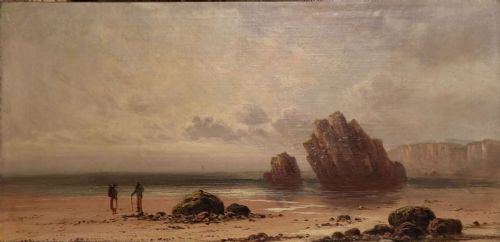
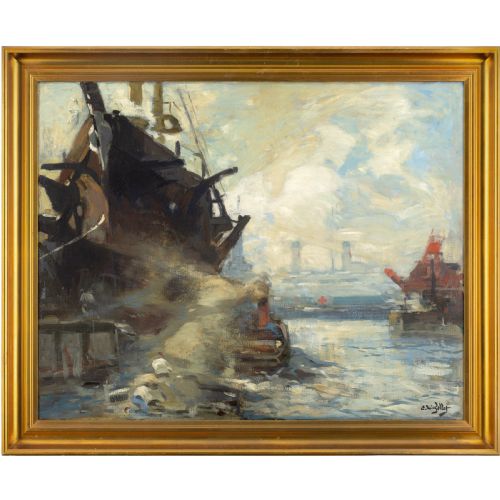
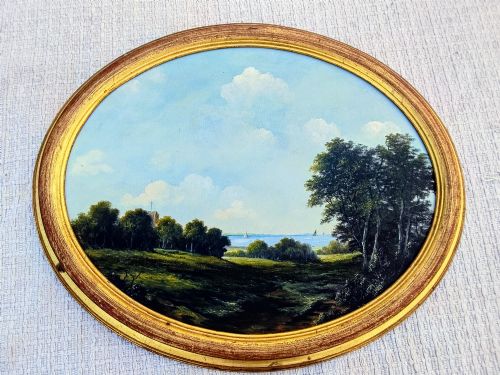
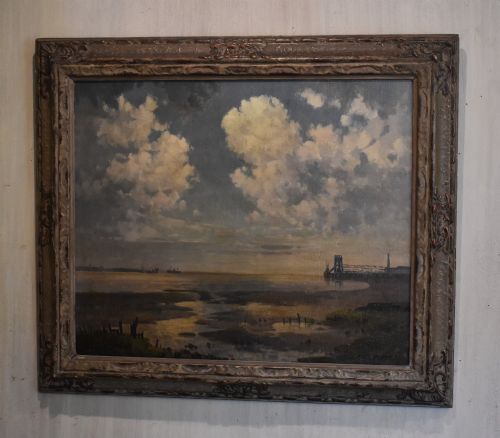
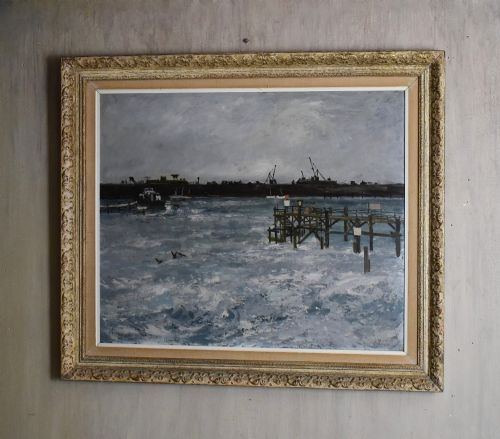
Original marine oil paintings depict coastal landscapes, harbours, and seafaring vessels across the nineteenth and twentieth centuries. These artworks range from Victorian maritime scenes to mid-century impressionist coastal views created in Britain and continental Europe.
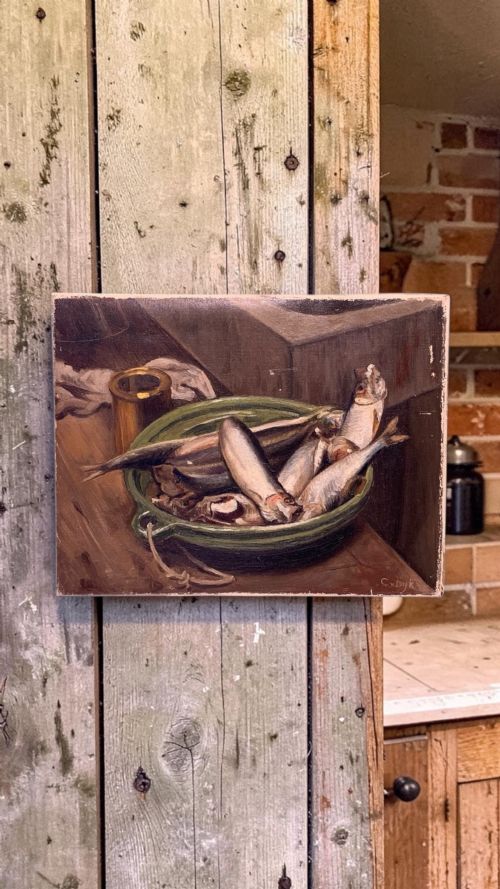
Buyers frequently encounter works executed on canvas or board, often housed in period gilt frames that complement the maritime subject matter. The selection spans detailed nineteenth-century depictions of fishing boats to looser en plein air studies from the mid-twentieth century.
Materials and Technique
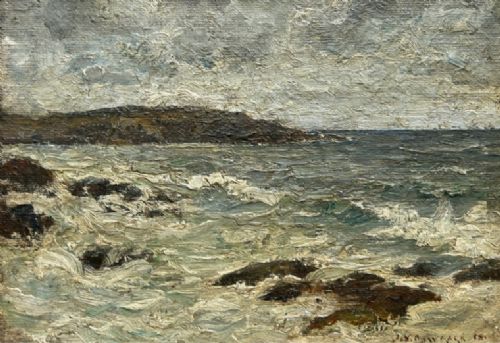
Artists applied oil paint to stretched canvas, wooden panels, or artists' boards, building texture with brushwork and impasto techniques. These mediums allowed painters to capture the movement of waves and the varying atmospheric conditions of the sea.
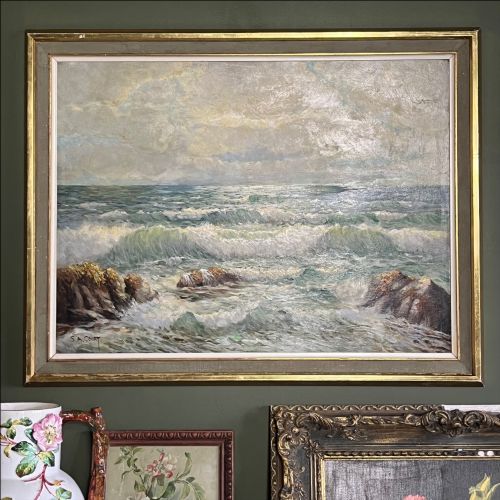
Gilt wood frames completed the presentation, providing a traditional border that enhanced the luminous quality of the oil pigments used in these coastal and marine subjects.
Listings feature original marine oil paintings spanning the Victorian period through to mid-century modernism, executed on canvas, wood, and board.
Assessing Quality and Execution
Quality rests upon the artist's ability to render light, water movement, and atmospheric perspective convincingly within the composition. Stronger works demonstrate confident brushwork and precise tonal control, particularly in depicting complex maritime vessels and turbulent seas.
The integration of the painting with its period frame also influences the overall standing of a piece. Original gilt frames that match the age and style of the canvas contribute significantly to the integrity of the artwork.
Kenneth Cozens·Clifford Hanney·Eugène-Louis Gillot·Sidney A Court·Clive Browne·Peter Brannan·Joseph Farquharson·Bernard Benedict Hemy·Walter Goodin·Abraham Hulk I·Charles Napier Hemy·Louis Suire·Gustave Vidal·James Fry·Norman Lloyd·Gustave De Bréanski·James Kyd·Adrian Van Porten·Edward Henry Eugene Fletcher·William Greaves·Charles Malfroy·Edward Seago
The Original Marine Oil Glossary
- Impasto
- Paint applied thickly to a canvas or board so that it stands out from the surface. This technique adds tactile depth and texture to representations of crashing waves and sea spray.
- En plein air
- The practice of painting outdoors to capture direct natural light and atmospheric conditions. It accounts for the spontaneous brushwork seen in many coastal scenes.
- Gilt wood
- Wood carved and covered with a thin layer of gold leaf or gold-coloured metallic finish. These frames frequently accompany nineteenth and twentieth-century marine paintings.
- Maritime
- Pertaining to the sea, shipping, and navigation. In art, it designates subjects involving boats, harbours, and coastal views.
- Board
- A rigid flat surface used as a support for oil painting instead of stretched canvas. Artists often utilised wooden panels or millboard for smaller studies.
Original Marine Oil: Frequently Asked Questions
What subjects do marine oil paintings show?
Marine oil paintings typically feature coastal landscapes, harbours, fishing boats, and larger sailing vessels upon the open sea. Artists documented working ports, dramatic rocky shores, and quiet estuaries.
These subjects reflect the close relationship between coastal communities and maritime trade during the nineteenth and twentieth centuries.
How do I hang a framed oil painting?
Heavy oil paintings in gilt frames require secure picture hooks fixed directly into wall studs or appropriate masonry fixings. Ensuring stable support protects both the canvas and the decorative frame.
Position paintings away from direct sunlight and steady heat sources to preserve the oil pigments and wooden supports over time.
How are nineteenth and twentieth-century styles different?
Nineteenth-century marine art often emphasises detailed realism in rigging, vessel construction, and atmospheric sea conditions. Painters focused on accurate historical representation and narrative clarity.
Twentieth-century works frequently adopt impressionist or modernist approaches, prioritising light, colour, and brush texture over precise topographical detail.
What is the difference between canvas and board?
Canvas consists of woven fabric stretched over a wooden frame, offering slight flexibility and a traditional textured ground for oil paint. Board provides a rigid, solid support often utilised for smaller or en plein air studies.
Both supports were common across the periods represented, depending on the scale and intention of the artist.