


Original Harbour Artwork
Original harbour artwork brings maritime scenes into domestic spaces through paintings created across the nineteenth and twentieth centuries.
Original Harbour Artwork
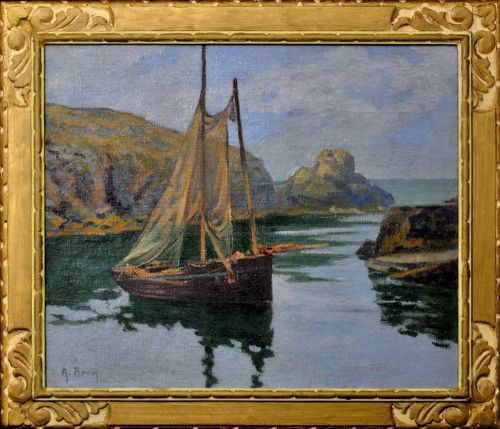
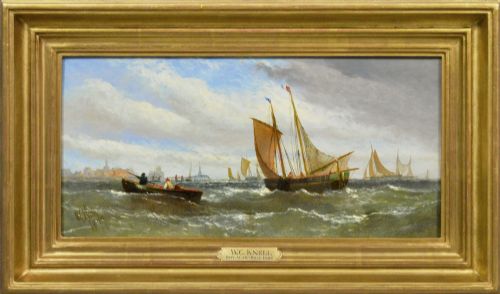
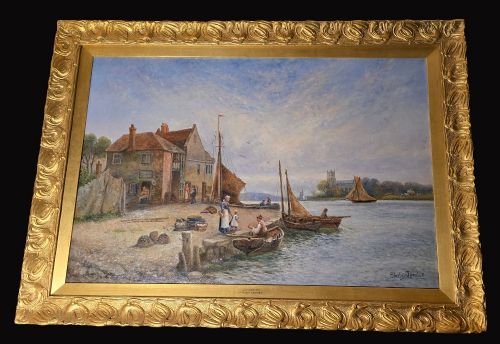
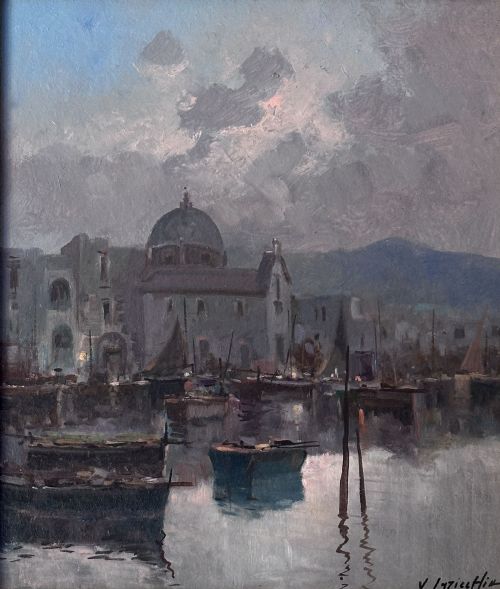
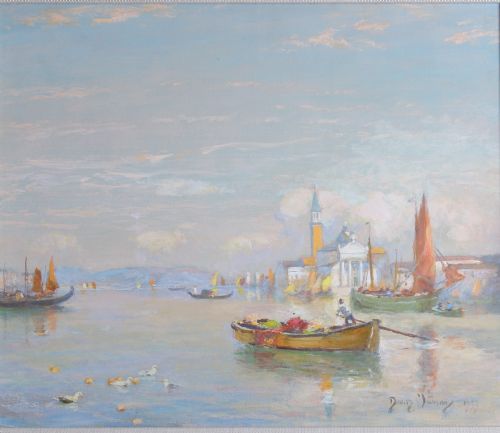
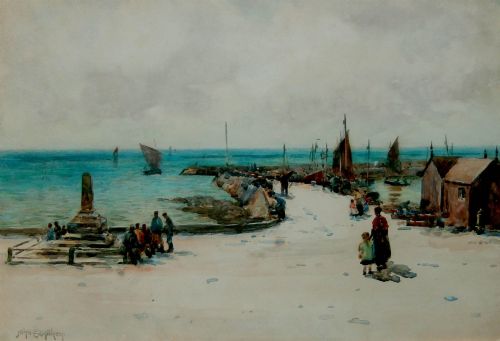
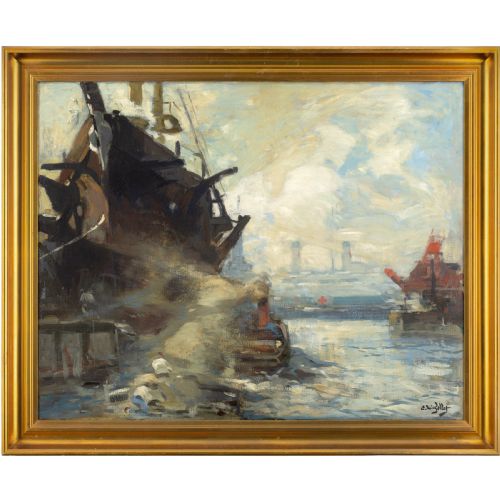
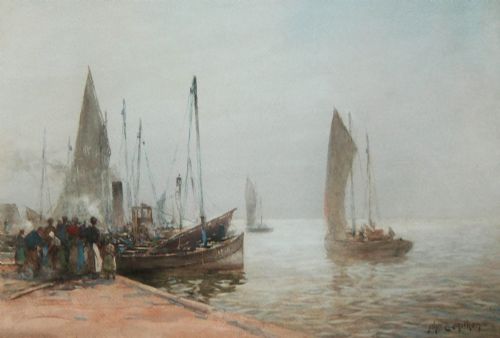
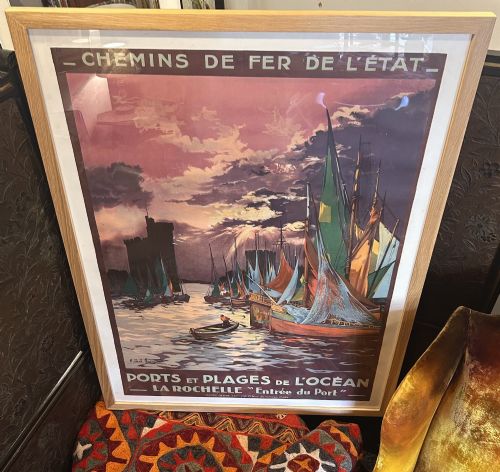
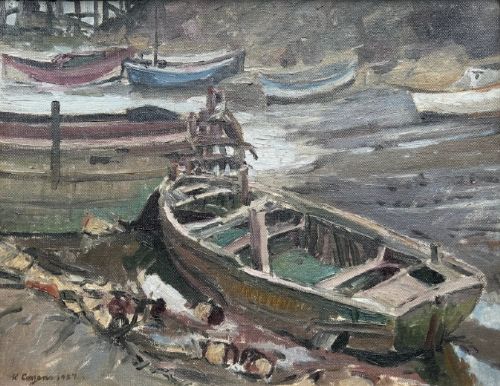
Original harbour artwork comprises paintings depicting maritime views, fishing ports, and coastal anchorages. These pieces document working waterfronts, piers, and shipping activities from various periods including the nineteenth century and the Edwardian era through to the mid-twentieth century.
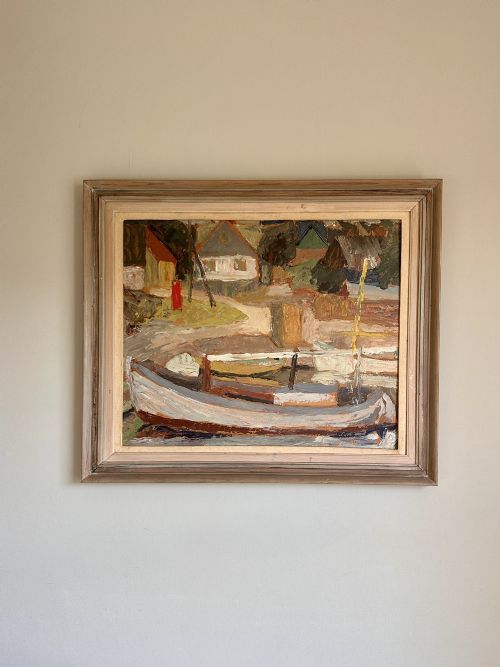
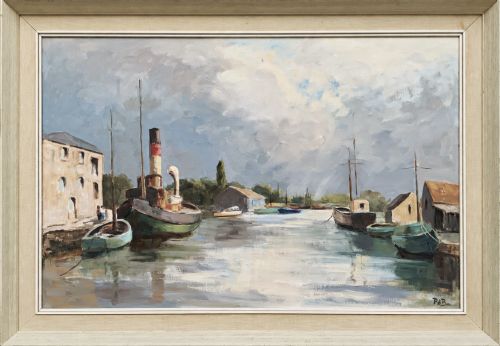
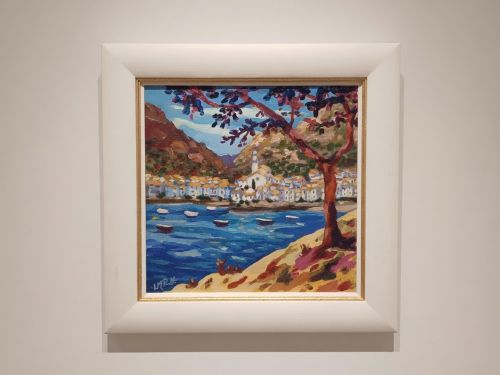
Buyers encounter works executed in diverse styles such as British Impressionism, Post-Impressionism, and Mid-Century Modern. The compositions range from detailed depictions of boats unloading catches in Cornwall to broader vistas of European ports and river havens.
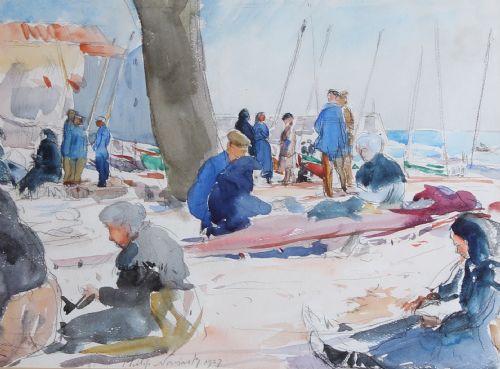
Most examples present coastal life using traditional painting media on canvas, board, or paper. These visual records capture the atmospheric conditions of seaside locations, utilising oil paint or watercolour pigment to portray changing light over water and vessels.
How they were made
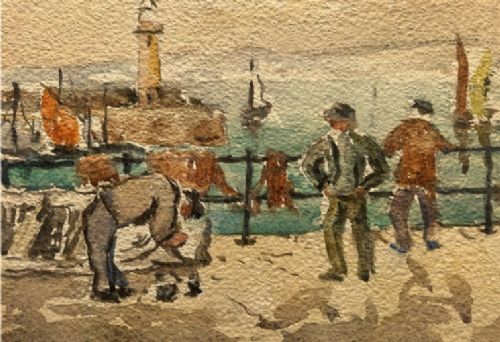
Artists utilised oil paint on canvas or wooden panel to build textured surfaces, sometimes employing impasto techniques to render the physical presence of water and masonry. Other works rely on watercolour pigment applied to paper, capturing transparent washes of light and sky across coastal landscapes.
Support materials varied according to the period and method, with framed canvas and heavy paper sheets being standard. Protective wooden framing and glass glazing were frequently applied to preserve delicate watercolours from environmental moisture.
Original Harbour Artwork Retail Price Guide 2026
Typical asking prices for original harbour artwork among the pieces listed under this phrase on Sellingantiques today, from the lower quarter to the upper quarter. They describe what is for sale here now, not the wider market.
Several Victorian artists clearly preferred thick overcoats while sketching freezing fishermen mending nets on windy Cornish piers.
What varies in quality
Quality rests upon the artist's ability to command perspective and atmospheric depth, distinguishing accomplished handling of light on water from basic topographical records. The articulation of maritime architecture, rigging, and human figures indicates the level of draughtsmanship involved.
The integration of brushwork and pigment density contributes significantly to the visual success of a composition. Stronger pieces demonstrate confident control over colour harmonies and tonal contrast to evoke specific weather conditions and diurnal shifts.
William Calcott Knell·Stanley Leader·George F Pennington·Peggy de Brett·Philip Naviasky·Sir David Murray·Kenneth Cozens·Eugène-Louis Gillot·James E Aitken·John E Aitken·William Banks Fortescue·Clive Browne·Peter Brannan·Hector Caffieri·Cyril Walduck Edwards·Alfred G Morgan·William Matthison·Thomas Hodgson Liddell·Walter Goodin·Paul-Jean Anderbouhr·Eric Tufnell·Edward Matthew Elliott·Richard Harry Carter·Gyrth Russell·Jean-Baptiste Olive
The Original Harbour Artwork Glossary
- Impasto
- Paint applied thickly to a canvas or board, leaving visible brush or palette knife marks that add tactile dimension to the surface.
- Watercolour
- A painting method where fine pigment is suspended in a water-soluble binder and applied in transparent washes onto paper.
- British Impressionism
- A painting style developed in the late nineteenth and early twentieth centuries focusing on loose brushwork and natural light.
- Post-Impressionism
- An artistic movement following Impressionism that explored emotional resonance and structural form through vivid colour and defined outlines.
- Canvas
- A heavy woven fabric stretched across a wooden frame to serve as a durable foundation for oil paintings.
Original Harbour Artwork: Frequently Asked Questions
What periods do these paintings cover?
The works span from the nineteenth century through the Edwardian period and into the mid-twentieth century, including pieces produced across the 1900s, 1920s, 1950s, and 1960s.
This broad chronological range allows collectors to select pieces reflecting specific historical movements, from early traditional watercolours to mid-century impressionistic canvases.
How should I frame and display these?
Oil paintings on canvas generally hang directly in standard wooden or gilt frames, whereas watercolours on paper require framing behind glass to prevent atmospheric damage.
Placement should avoid direct sunlight to protect pigments from fading, keeping them on interior walls with stable humidity and temperature conditions.
What subjects typically appear in these scenes?
Common subjects include working fishing boats, harbour walls, mending nets, and coastal villages in locations such as St Ives, Whitby, Venice, and Normandy.
Mediterranean ports, river havens, and shipping vessels also feature prominently, documenting the maritime commerce and coastal life of past eras.
How do I identify watercolour versus oil?
Watercolours are executed on paper under glass, showing translucent washes where the white paper ground illuminates the pigment layers.
Oil paintings utilise heavier paint on canvas or board, offering a textured, opaque surface that often exhibits visible brush marks or impasto build-up.