




Original Garden Artwork
Original garden artwork brings historic planting, domestic scenes and quiet lawns to the wall through period paintings on paper and canvas.
Original Garden Artwork
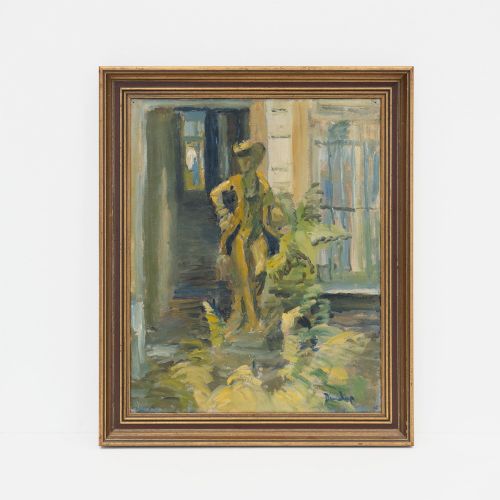
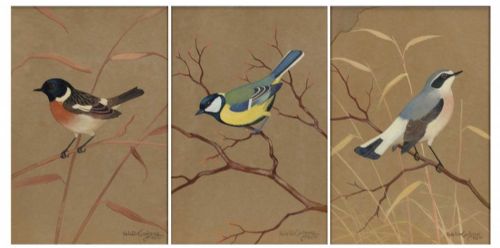
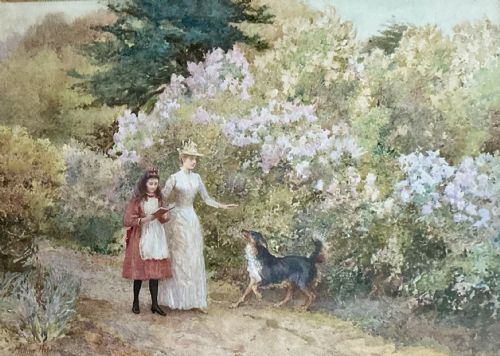
Original garden artwork comprises period paintings, watercolours and prints depicting cultivated grounds, floral borders and domestic retreats. These works range from late Victorian watercolours of cottage gates to mid-century oils of urban parks.
Materials and methods
Artists working in these periods relied primarily on watercolour pigments applied to paper or oil paints laid upon canvas and stretched wooden supports. Watercolour pieces often achieve a luminous transparency suited to bright floral arrangements, whilst oil paintings employ thicker brushwork and rich layering to build depth in foliage and shadows.
Support materials vary from heavyweight paper attached to canvas stretchers to traditional linen canvases. Mixed media and charcoal also appear, demonstrating the diverse techniques used by artists of the Edwardian and Victorian eras to interpret natural landscapes.
Listings feature works created across several decades, utilising materials like paper, canvas, watercolour pigment, and oil.
Distinctions in quality
Quality in these paintings rests on the artist's command of light, handling of pigment and ability to structure natural forms convincingly. Superior works demonstrate confident brushwork and precise atmospheric control, capturing the specific quality of daylight in a walled garden or public park.
The distinction between standard decorative pieces and finer examples also lies in the composition and provenance. Works by established regional painters or members recognised artist groups display a sophisticated palette and compositional balance that elevates a simple domestic scene into a compelling historical record.
Lucy Pratt·Ernest Arthur Rowe·Percy Lancaster·Ronald Ossory Dunlop·Ralston Gudgeon·Harry Wanless·Arthur Hopkins·Rowland Henry Hill·Theresa Stannard·Owen Bowen·G Villiers Stuart·Ernest Higgins Rigg·Kershaw Schofield·Lilian Stannard·Charles E Cundall·John Henry Inskip·Arturo Orselli·William Hatherell·Samuel Sidley·David Woodlock·Herbert Royle·John Abernethy Lynas-Gray·Arthur Claude Strachan·Jane Utley·Lester Sutcliffe
The Original Garden Artwork Glossary
- Watercolour
- A paint consisting of pigment suspended in a water-soluble binder, traditionally applied to paper. It allows for delicate washes and luminous effects.
- Stretcher
- A wooden framework upon which canvas is fastened to keep it taut. Older pieces often reveal hand-tooled timber frames behind the painted surface.
- Impressionism
- A nineteenth-century painting style characterised by relatively small, thin yet visible brush strokes and an open composition. It emphasises accurate depiction of light in its changing qualities.
- Provenance
- The chronology of the ownership or location of a historical object. Documented history adds significant context to period paintings.
Original Garden Artwork: Frequently Asked Questions
What periods do these garden artworks cover?
The collection spans from the nineteenth century through the mid-twentieth century, with a strong representation of Edwardian and Victorian pieces. These dates reflect the eras when plein air painting and domestic garden scenes reached widespread popularity among British artists.
Buyers will find works dated from the late 1800s up to the 1950s. Each era brings distinct palettes and framing choices that reflect contemporary artistic movements.
How should I care for antique watercolours on paper?
Works on paper require protection from direct sunlight to prevent pigments from fading over time. Framing with acid-free mounts and ultraviolet-filtering glass preserves the paper and the delicate watercolour washes.
Keep these pieces in rooms with stable humidity and temperature levels. Excessive moisture can cause foxing spots and damage the underlying paper support.
How do I identify an oil painting on canvas?
Oil paintings feature a textured surface where the paint layers remain slightly raised and flexible. Examining the edges around the stretcher frame often reveals canvas wrap and historic fixings.
Unlike watercolours, oil works do not require glass protection, though they benefit from periodic gentle dusting with a soft, dry brush. The canvas itself should remain taut across its wooden support.
Where were these garden scenes typically painted?
Many paintings depict private country houses, cottage gardens, and coastal homes across Britain. Artists frequently captured domestic scenes involving figures feeding animals, knitting outside, or tending to flowers.
Urban spaces also appear, including London parks, Kew Gardens, and historic European sites. These locations offer a window into historic garden design and horticultural fashions.