
Original French Artwork Canvas
Searching for original french artwork canvas brings forth oil paintings spanning from the nineteenth century into the mid-twentieth century.
Original French Artwork Canvas
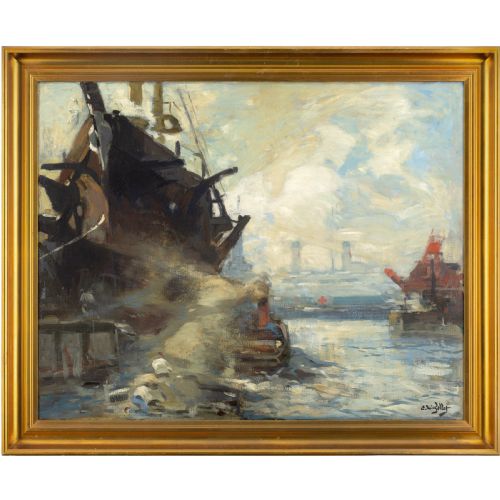
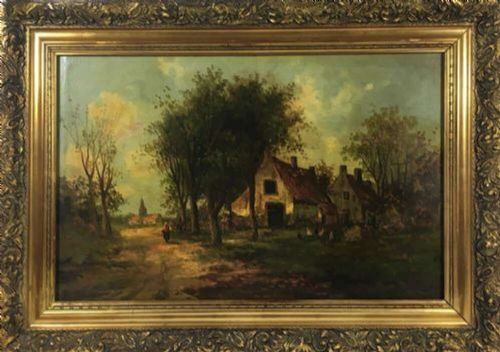
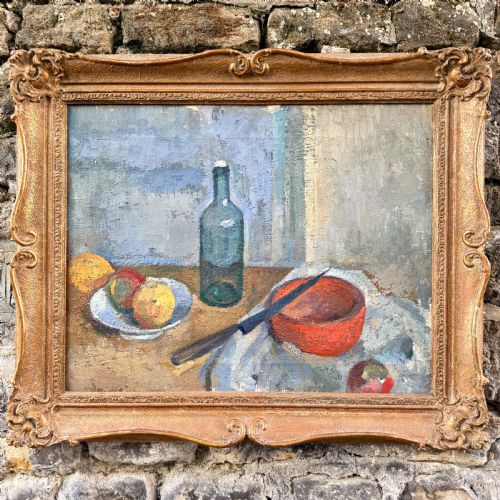
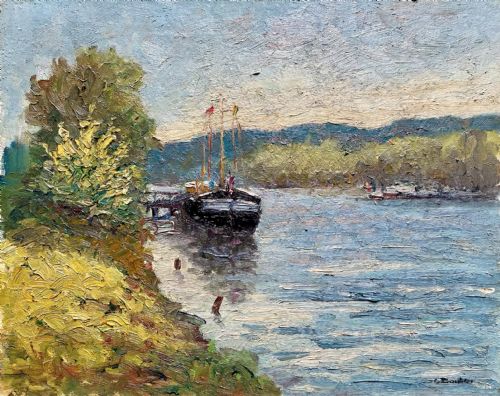
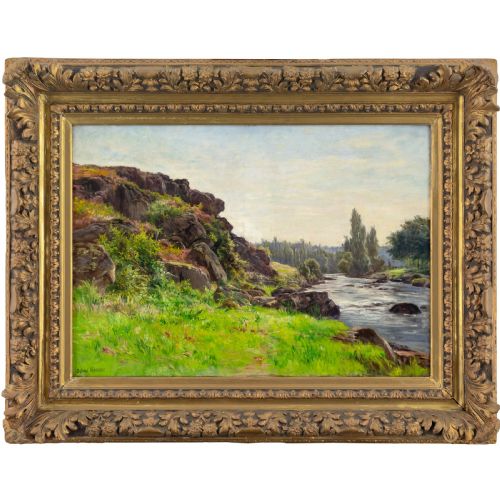
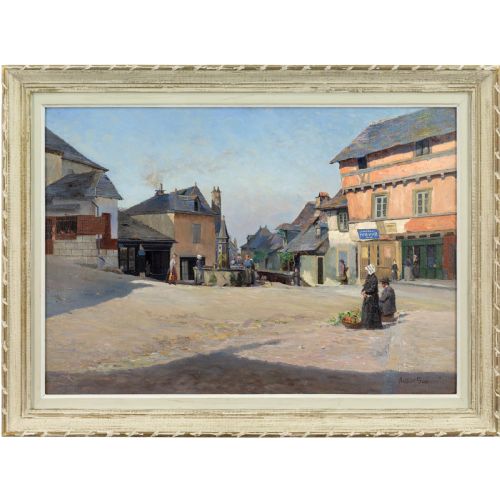
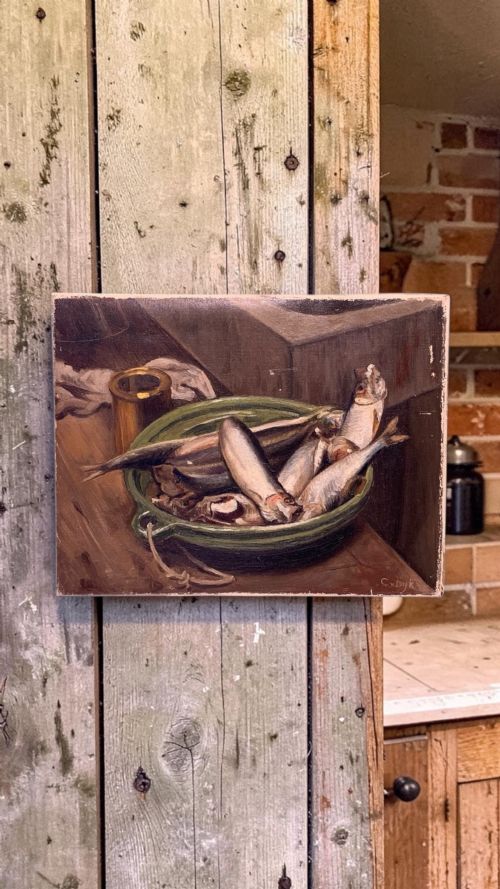
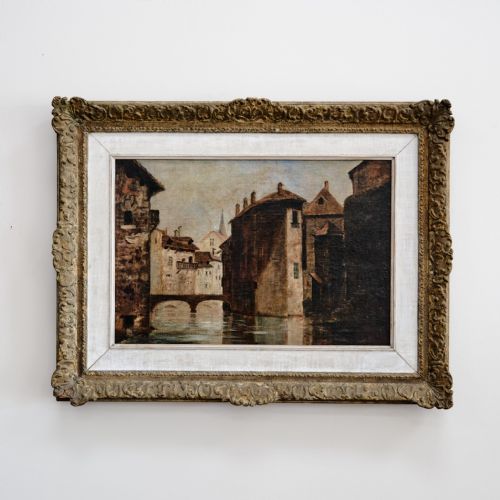
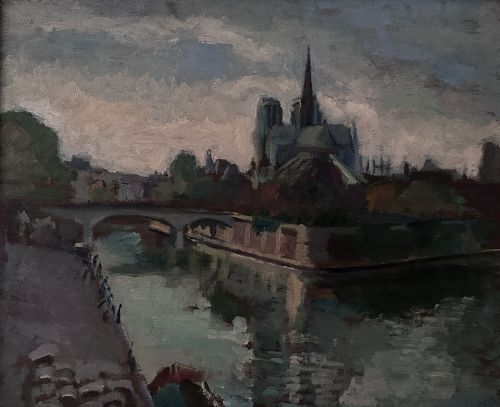
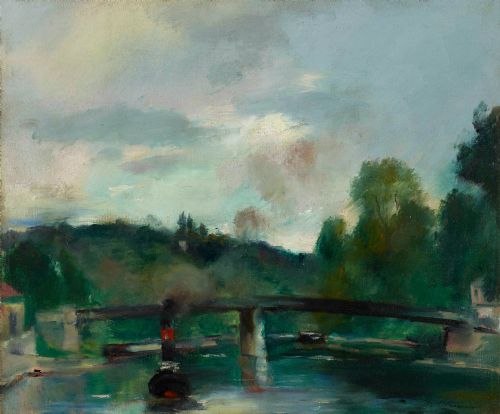
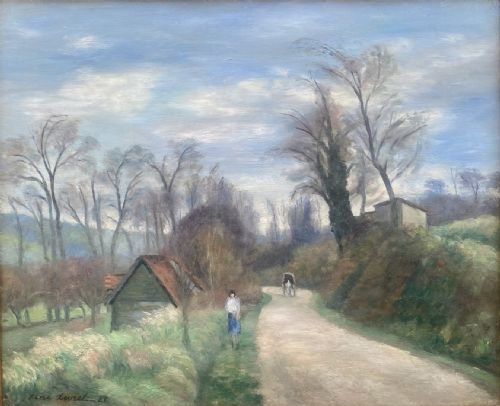
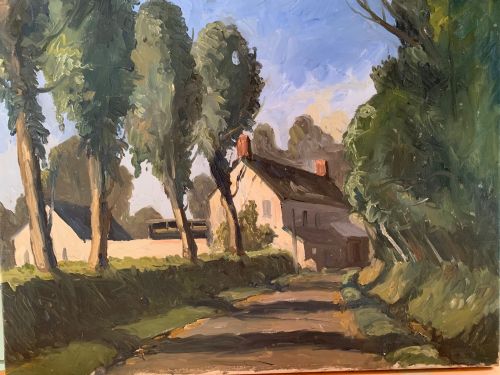
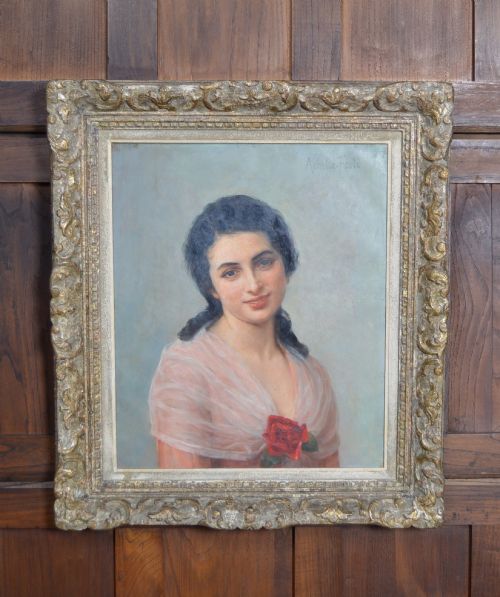
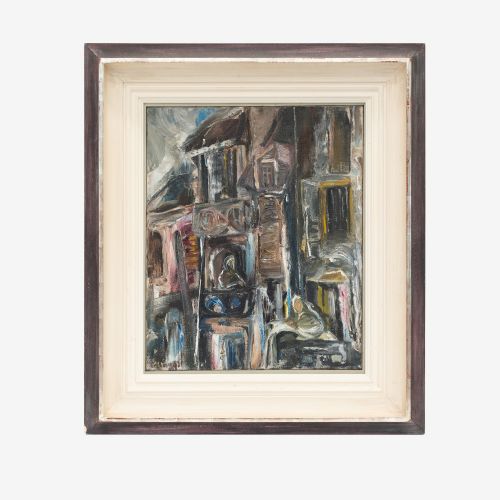
When browsing original french artwork canvas, buyers encounter oil paintings depicting rural landscapes, river scenes, cityscapes, and portraits. These works capture changing artistic movements from the Barbizon School and 19th-century realism through to impressionism, post-impressionism, and mid-century modernism. Canvases originate from various French regions, including Normandy, Brittany, Paris, and the Côte d'Azur.
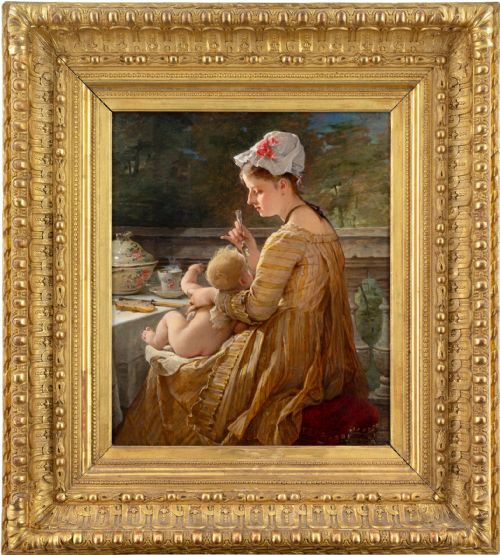
The selections span distinct periods, with works dating from the 1800s up to the 1960s. Landscapes range from quiet farmyards and river banks to bustling market squares and coastal cliffs. Portraiture captures figures in domestic settings, social events, and formal poses.
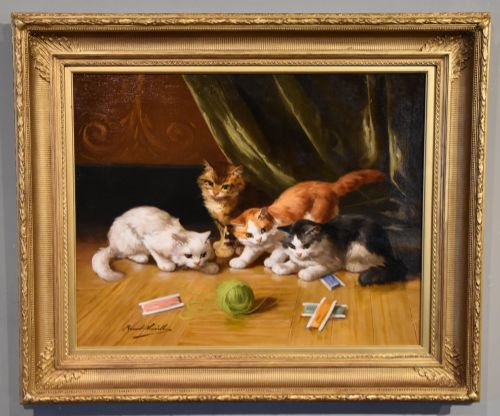
Most pieces arrive framed, frequently utilising wood, gilt wood, and gesso mounts that complement the period of the painting. Signatures appear on numerous canvases, identifying individual artists working within established French schools.
Materials and Technique
Artists painted primarily with oil paint applied to woven canvas supports. These canvases were stretched over wooden frames, providing a stable foundation for the pigment layers.
Frames incorporate wood finished with gesso and gilt details, enclosing the canvas to protect the edges and complete the presentation.
Regional subjects include Normandy coastlines, Brittany sea views, Paris street scenes, and rural French farmyards.
Assessing Quality and Execution
Quality rests in the handling of brushwork, compositional balance, and the descriptive power of the paint application. Works showing confident mark-making and deliberate tonal control stand apart from more formulaic student productions.
The integrity of the canvas support and the preservation of the original pigment layers influence the overall standard of a piece. Original framing matching the period of the painting adds further substance to the object.
Eugène-Louis Gillot·Gabriel Mathieu·Arthur Gué·Adelaïde Salles-Wagner·Henri Ottmann·Rene Levrel·Achille-Fould·Alfred Arthur Brunel de Neuville·Lilian Colbourn·Honore Cavaroc·Charles Clair·Henri Jaques Delpy·Paul-Jean Anderbouhr·Raymond Moritz·Henri Vincent-Anglade·Louis Suire·Gustave Vidal·Jean-Baptiste Olive·Gaetan Dumas·André Prévot-Valéri·Gabriel Dauchot·Mario Pinetti
The Original French Artwork Canvas Glossary
- Canvas
- A heavy woven fabric used as a surface for oil painting. It is stretched tightly over a wooden frame before application of the ground and pigment.
- Gesso
- A plaster-like mixture applied to wooden frames as a base for gilding or paint. It provides a smooth surface for decorative mouldings.
- Barbizon School
- A nineteenth-century French art movement focused on realistic landscape painting rooted in observation of nature. Painters worked directly in the countryside around a specific French village.
- Post-Impressionism
- An artistic movement following impressionism that explored emotional and structural elements through bold use of colour and form. Practitioners extended impressionist techniques while rejecting its limitations.
Original French Artwork Canvas: Frequently Asked Questions
How do I date an oil painting on canvas?
Dating relies on stylistic evidence, signatures, stretcher construction, and canvas stamps. Examination of the materials and framing techniques often provides a reliable timeframe for the creation of the artwork.
Secondary clues include clothing styles in portraits or identifiable buildings in cityscapes, which help narrow down the decade of production.
Where should I hang a canvas painting?
Canvas paintings require placement away from direct sunlight and excessive moisture to protect the oil pigments and organic support. Stable indoor environments prevent warping of the wooden stretcher frame.
Wall placement should consider eye level and adequate lighting to appreciate the brushwork and texture of the paint surface.
Are these paintings signed by the artist?
Many works bear visible signatures or monograms applied by the artist, while others remain anonymous. Unsigned pieces are attributed based on style, technique, and subject matter.
Signatures are typically located in the lower corners of the canvas and sometimes noted on the reverse stretcher bars.
What framing is typically included?
Framing consists primarily of wood mouldings, frequently finished with gesso and gilt details. These frames often reflect the aesthetic of the period in which the painting was produced.
Some frames are original to the artwork, while others represent later mountings chosen to complement the visual style of the canvas.