




Original Farmyard Painting
An original farmyard painting captures the rural rhythms of a bygone agricultural age through authentic oil and watercolour works.
Original Farmyard Painting
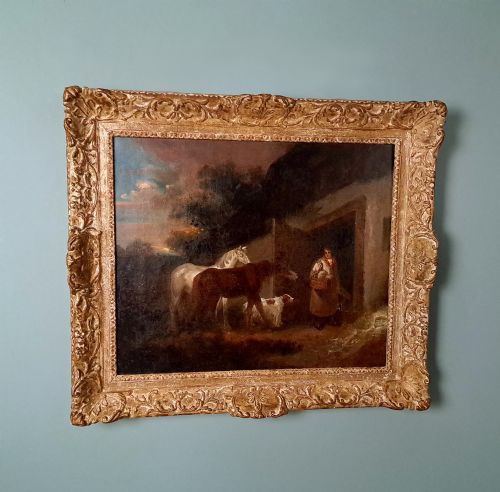
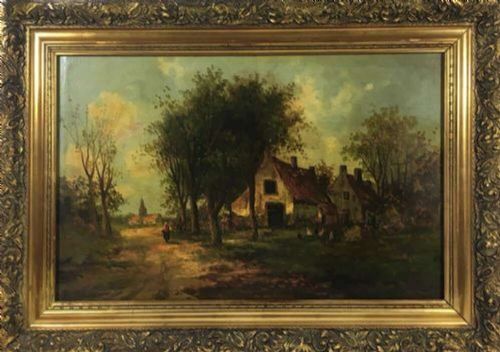
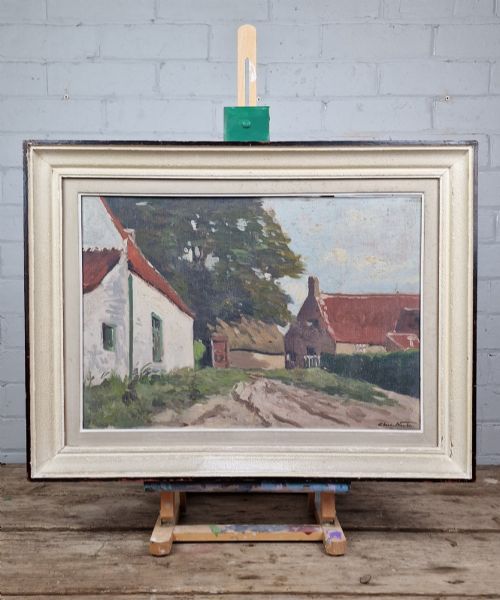
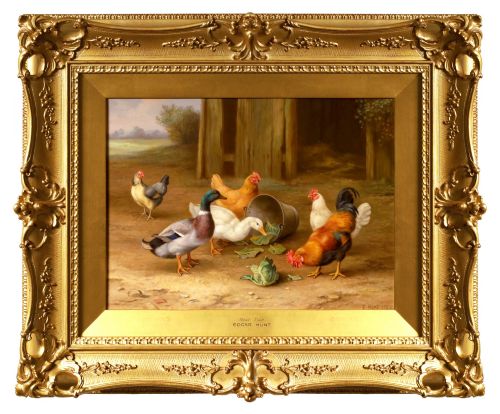
An original farmyard painting depicts traditional rural scenes featuring livestock, labourers, barns, and poultry yards from the nineteenth and early twentieth centuries. You will most frequently encounter oil paintings on canvas and delicate watercolours produced during the Victorian and Edwardian eras.
These works reflect diverse regional traditions across British, Belgian, and French art, ranging from academic pastoral landscapes to direct folk art and naïve portrayals. Artists focused closely on daily agricultural life, documenting shire horses, milking cows, carts, and farmyard fowl with keen observation.
Materials and techniques
Painters applied oil paint and watercolour onto stretched canvas, wooden boards, and heavy paper supports to construct these rustic scenes. Frames fashioned from giltwood or simple wood frequently complemented the finished pictures.
Artists utilised layered brushwork and fluid washes to capture natural light within farmyards, rendering textures of animal hides, weathered timber barns, and earthen ground.
Original Farmyard Painting Retail Price Guide 2026
Typical asking prices for original farmyard painting among the pieces listed under this phrase on Sellingantiques today, from the lower quarter to the upper quarter. They describe what is for sale here now, not the wider market.
Listings span oils, watercolours, and board paintings originating from the nineteenth century through the 1930s.
Judging the standard of execution
The degree of anatomical precision in animal subjects and the painter's handling of light and atmospheric depth separate accomplished works from simpler pieces. Masterly brushwork brings vitality to livestock and human figures, whereas lesser pieces rely on stiff compositions.
Provenance and the artist's standing within movements like British Impressionism or the Barbizon School elevate a work's significance. Stronger paintings demonstrate confident draughtsmanship and a harmonious palette rather than merely replicating a formulaic pastoral subject.
William Joseph Shayer Senior·Edgar Hunt·Herbert Royle·John Atkinson·John Linnell
The Original Farmyard Painting Glossary
- Watercolour painting
- A work executed with water-soluble pigments on paper. This medium allows for translucent washes and delicate details.
- British Impressionism
- An artistic approach developed in the late nineteenth and early twentieth centuries emphasising light and spontaneous brushwork. Practitioners captured outdoor scenes with loose, vibrant strokes.
- Oil on canvas
- Pigments bound in drying oil applied to a woven fabric support stretched over a wooden frame. This combination allows for rich colour saturation and textured impasto.
- Naïve art
- Work produced by artists without formal academic training, often characterised by a flat perspective and direct expression. Such pieces possess a charmingly unpolished realism.
- Provenance
- The documented history of ownership surrounding an artwork. A clear lineage adds historical weight to a piece.
Original Farmyard Painting: Frequently Asked Questions
What subjects appear in these paintings?
These works primarily feature agricultural scenes populated by shire horses, milking cows, pigs, cockerels, and farm workers.
Artists documented everyday rural labour, depicting hay carts, rustic cottages, barns, and poultry yards in authentic countryside settings.
How do I care for an oil painting?
Keep canvases away from direct sunlight and fluctuating humidity to protect the paint layer and stretcher bars.
Dust the surface gently with a soft, dry brush and avoid using water or chemical cleaning solutions on exposed paint.
Are watercolours framed differently than oils?
Watercolours on paper require framing behind glass with acid-free mount boards to prevent moisture damage and fading.
Oil paintings on canvas are typically framed without glass, allowing the textured paint surface to breathe.
How can I tell the period of a piece?
Examine the stretcher frames, paper types, and framing materials for signs of age corresponding to Victorian or Edwardian manufacturing methods.
Stylistic markers, artist signatures, and recorded exhibition provenances also help establish the date of creation.