







Farmhouse Wall Art
Farmhouse wall art brings rural character and pastoral quiet into a room through traditional paintings and watercolours.
Farmhouse Wall Art
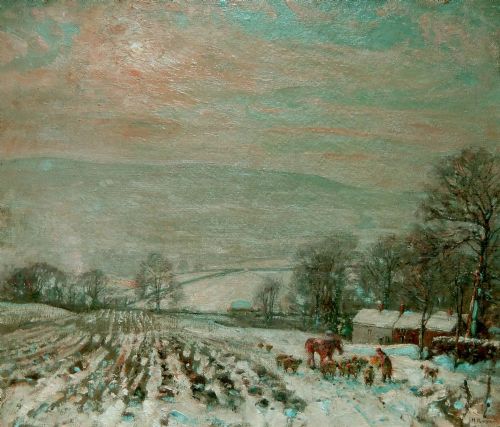
Farmhouse wall art encompasses paintings and drawings depicting rural scenes, farmyards, cottages, and agricultural landscapes from the nineteenth and twentieth centuries. These works capture pastoral life through mediums such as oil paint, watercolour, and charcoal.
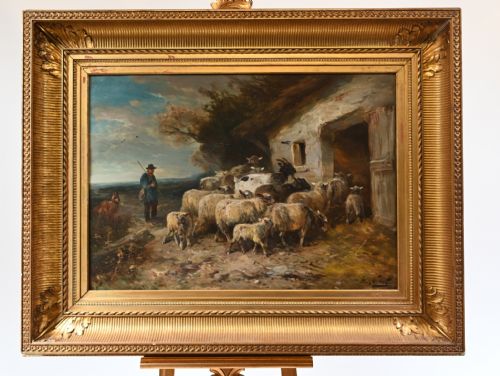
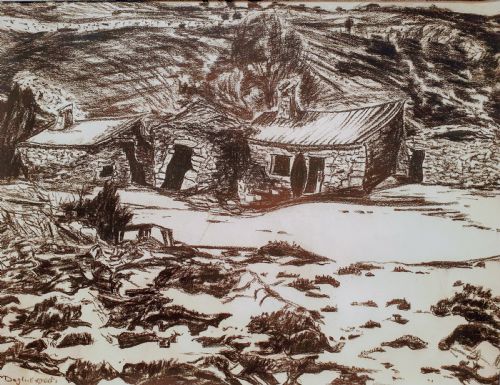
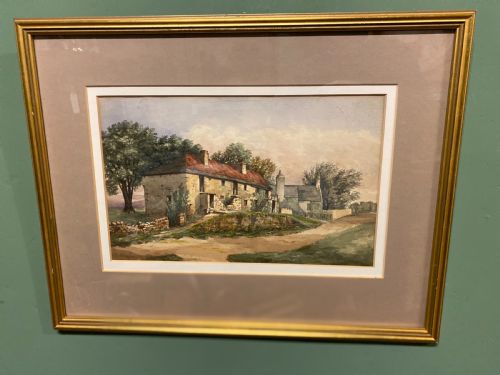
The pieces available include British Impressionism, French Provincial landscapes, and Victorian pastoral scenes. Buyers encounter framed oils on canvas, watercolours, and charcoal drawings showing working horses, shepherds, and old farmhouses.
Originating from British and continental European schools, these artworks reflect the rural scenery of periods ranging from the Victorian era through to mid-century modernism. Each piece records a distinct regional landscape, from Yorkshire to Provence and Normandy.
How they were made
Artists painted primarily in oil upon canvas or board, applying pigment to capture the light and texture of rural subjects. Watercolours on paper and charcoal on paper also record farm scenes with fluid or graphic precision.
Many works retain their period frames of wood or gilded wood, which complement the traditional compositions. The combination of canvas, oil paint, and wood provides the physical structure typical of these historic artworks.
Farmhouse Wall Art Retail Price Guide 2026
Typical asking prices for farmhouse wall art among the pieces listed under this phrase on Sellingantiques today, from the lower quarter to the upper quarter. They describe what is for sale here now, not the wider market.
Listings feature works spanning the nineteenth century, 1900, 1920, 1930, 1950, and 1960, executed in oil, watercolour, and charcoal.
What varies in quality
The standard of execution in brushwork, draughtsmanship, and compositional balance separates individual works. Paintings that handle light and atmospheric conditions with assurance demonstrate superior artistic capability.
The preservation of the original paint surface, paper, and frame influences the overall integrity of the piece. Works retaining their period wooden frames offer a more complete historical context.
Herbert Royle·Henry Schouten·Raimond Louis Lecourt·John Atkinson·Owen Bowen·Georgina Lara·George Wright
The Farmhouse Wall Art Glossary
- Oil paint
- A slow-drying paint made from pigment suspended in a drying oil, typically linseed. This medium allows for rich colour depth and textured application upon canvas.
- Watercolour
- A painting method in which the paints consist of pigments suspended in a water-based solution. It is traditionally applied to paper to create translucent washes.
- Gilded wood
- Wood treated with a thin layer of gold leaf or gilt. Frames finished in this manner were frequently used to house nineteenth-century paintings.
- French Provincial
- A style originating from the provinces of France, characterised by rustic charm and regional simplicity. It often appears in mid-century and earlier European landscape paintings.
- British Impressionism
- A movement in British art influenced by French impressionist techniques, focusing on light and everyday subjects. Works in this style show looser brushwork and outdoor lighting.
Farmhouse Wall Art: Frequently Asked Questions
What subjects appear in farmhouse wall art?
The works depict rural life, including farmyards, cottages, plough teams, and shepherds with flocks. Scenes range from British pastures to French provincial farmhouses and olive trees.
Artists focused on the daily realities of the countryside, recording working horses, barns, and agricultural landscapes across different European regions.
Which materials were used for these artworks?
Paintings are predominantly executed in oil paint upon canvas or board. Watercolours and charcoal drawings on paper also record these rural subjects.
Many pieces are presented within their original wooden or gilded wood frames, preserving the historical aesthetic of the period.
How do I date a piece?
Dating relies on stylistic evidence, artist signatures, and framing materials. Pieces span from the nineteenth century through to the mid-twentieth century.
Victorian and Edwardian works show traditional realism or early impressionism, while mid-century examples incorporate modernist or French colourist approaches.
How do I live with these paintings?
These artworks suit rooms seeking rural character and traditional warmth. Hang them away from direct sunlight to protect pigments on canvas and paper.
Ensure the wall environment remains stable in humidity to preserve both the artwork and its period wooden frame.