




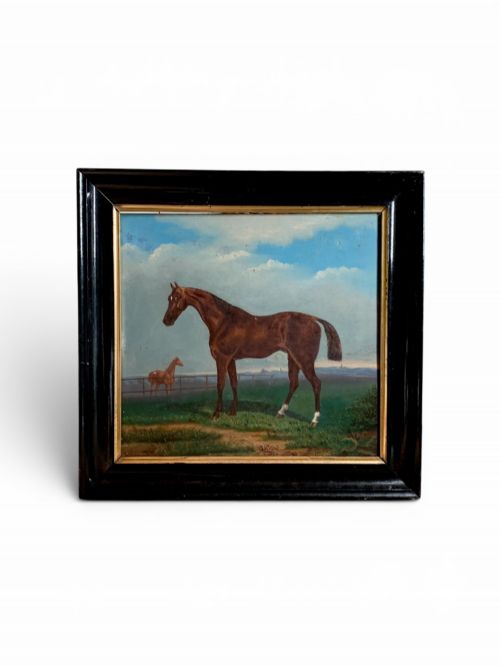


Original Equine Art
Original equine art brings centuries of horses, riders and rural work onto canvas, paper and panel.
Original Equine Art
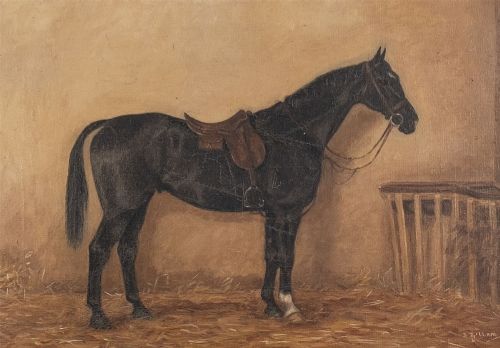
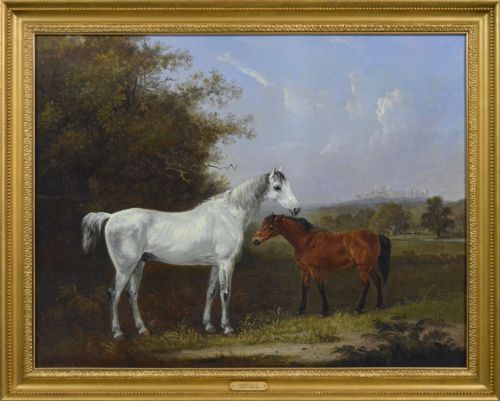
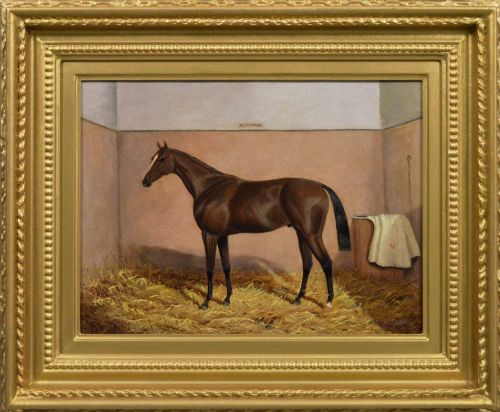
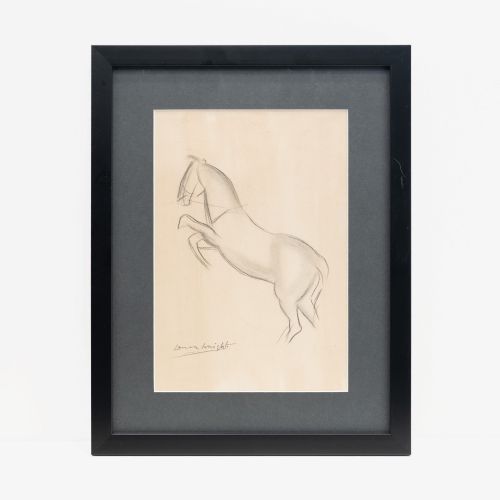
When searching for original equine art, collectors encounter framed oil paintings, watercolours, pastels and gouache works spanning the nineteenth and twentieth centuries. These pieces record individual animal portraits, racing scenes and rural landscapes dominated by horses.
The selection on this page relies heavily on British and French school artists working in oil and watercolour during the Victorian, Edwardian and mid-century modern periods. Buyers frequently meet detailed portraits of named racehorses and stallions alongside broader genre scenes of ploughmen and riders.
Beyond paintings on canvas and paper, the category extends to framed wall art and bronze sculpture depicting horses in the distinctive style associated with early twentieth-century makers.
Materials and Technique
Painters recorded horses using oil on canvas, oil on panel, and delicate watercolours or pastels on paper, applying pigments to capture the musculature and coats of animals. These traditional mediums were often finished within wooden frames that protect the works from atmospheric damage.
Sculptural pieces from the period utilise cast bronze to render forms with tactile surface patination, reflecting the techniques of twentieth-century workshops.
Original Equine Art Retail Price Guide 2026
Typical asking prices for original equine art among the pieces listed under this phrase on Sellingantiques today, from the lower quarter to the upper quarter. They describe what is for sale here now, not the wider market.
Listings feature works spanning the nineteenth and twentieth centuries, utilising canvas, paper, wood, glass, oil paint, watercolour, pastel and bronze.
Assessing Quality
The standard of execution in animal portraiture rests upon the artist's command of anatomy, bone structure and the play of light across a horse's coat. Superior works convey movement and individual character rather than a rigid formula.
Provenance and attribution elevate certain pieces, particularly when a painting bears the signature of an established sporting artist or exhibits the distinct hand of a recognised regional school.
Albert Clark·Dame Laura Knight·John Ferneley Senior·John Rattenbury Skeaping·Helena Maguire·Arthur Winter Shaw·W.A. Clark·Walter Duncan·Ernest Higgins Rigg·George Cole
The Original Equine Art Glossary
- Gouache
- An opaque watercolour medium consisting of pigment combined with a binding agent. It dries to a smooth, matte finish that allows artists to build up dense areas of colour.
- Pastel
- A dry drawing medium composed of powdered pigment and a binder. Artists use pastel sticks to achieve soft, velvety textures and subtle tonal gradations.
- Panel
- A rigid flat support, often made of wood, used by painters as an alternative to stretched canvas. Panels require careful preparation to ensure the paint adheres securely over decades.
- Provenance
- The documented history of ownership surrounding an artwork. A clear provenance helps establish authenticity and traces the piece through previous collections.
Original Equine Art: Frequently Asked Questions
Where should I hang equine watercolours?
Watercolours on paper require placement away from direct sunlight and high humidity to prevent the pigments from fading and the paper from degrading. UV-filtering glass offers an essential layer of protection for works on paper.
Keep pieces away from sources of direct heat, such as radiators, which dry out the paper fibres and weaken the antique framing materials.
How can I date an equine painting?
Dating relies on examining the stretcher frames, canvas type, pigment composition and artist signatures recorded in the work. Costume details on riders or stylistic markers such as Edwardian dress also provide reliable chronological clues.
Comparison with documented works by the same school or maker helps narrow down the decade of creation when explicit dates are absent from the front or reverse.
What is the difference between an oil and a watercolour?
Oil paint utilises a drying oil binder that allows for rich blending, heavy impasto application and deep colour saturation on canvas or panel supports. Watercolours use water-soluble binders on paper, creating luminous, transparent washes.
Oils generally tolerate ambient light better than watercolours, though both benefit from stable indoor environments and protective framing.