

Original Countryside Wall Art
Original countryside wall art brings the quiet pastoral scenes and rugged river valleys of past centuries directly into modern interiors.
Original Countryside Wall Art
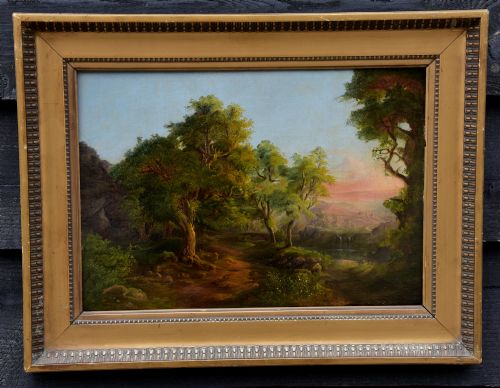
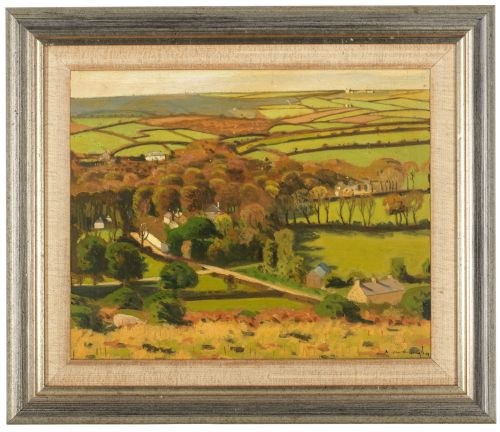
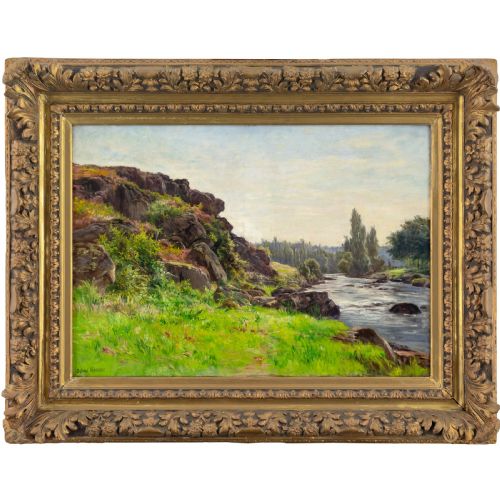
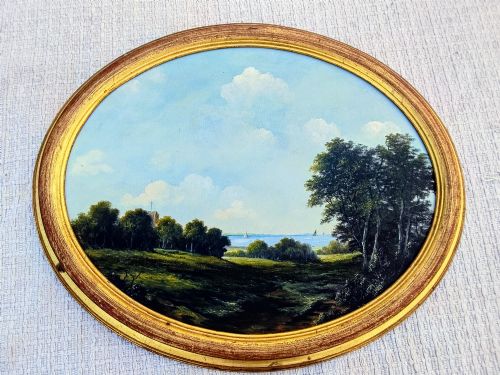
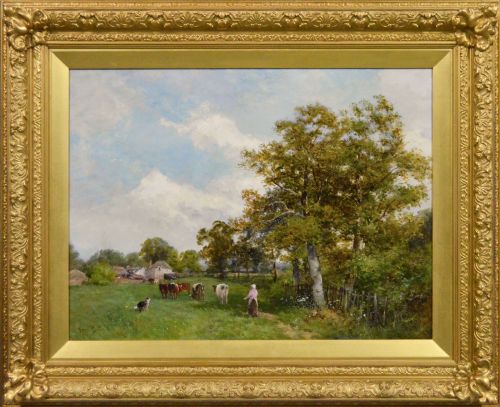
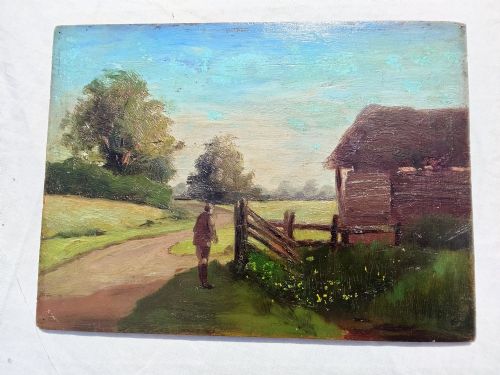
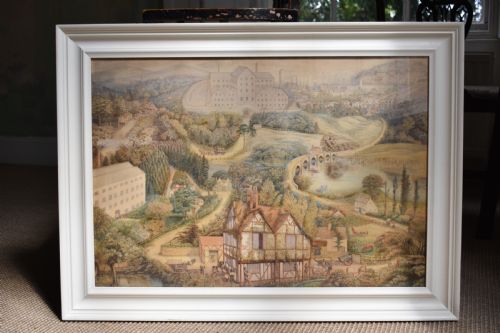
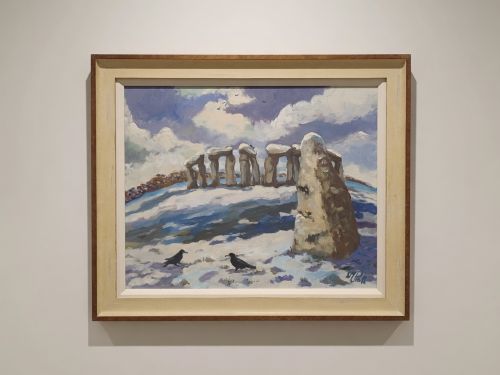
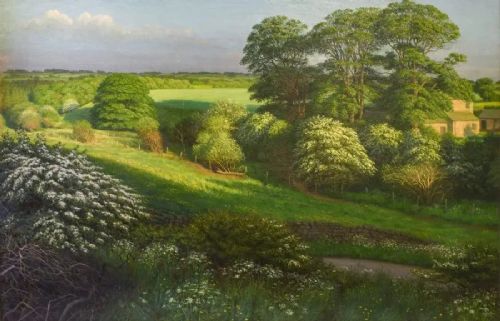
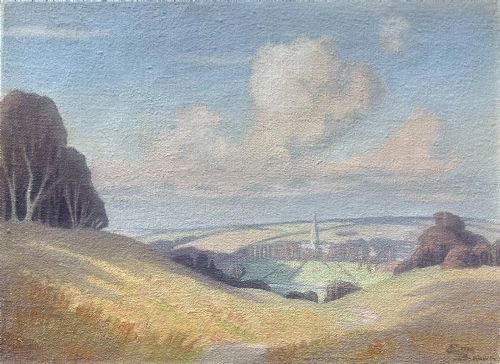
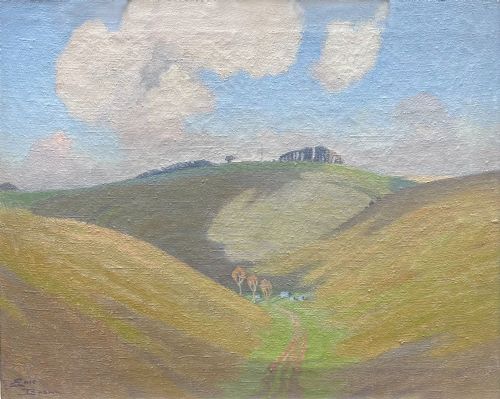
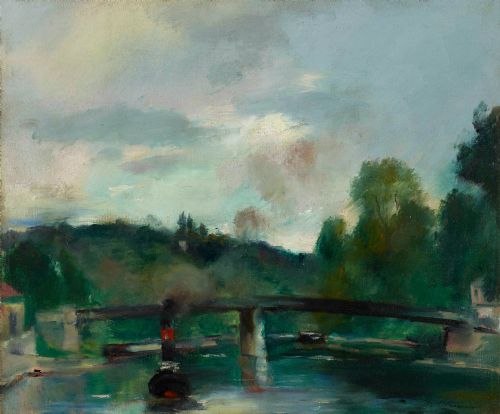
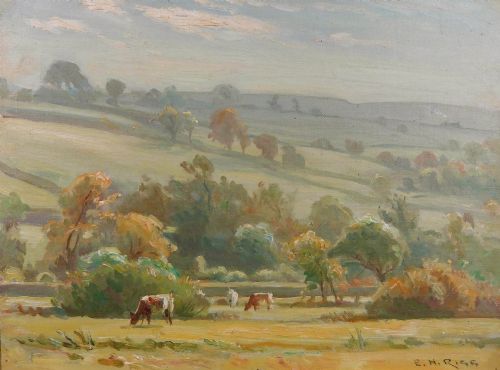
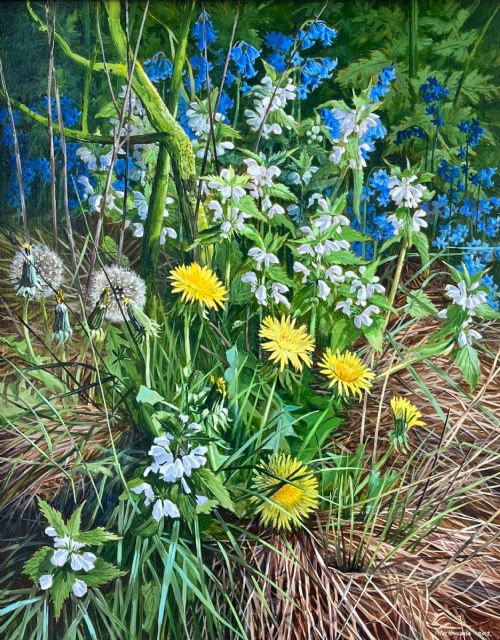
Original countryside wall art spans oil paintings, watercolours and fine art pieces depicting pastoral scenes, river valleys, woodland landscapes and coastal views. These works capture rural life through British and European impressionism, Victorian pastoral traditions and modern interpretations of the countryside.
The selections you meet most frequently on this page date from the nineteenth century through the mid-twentieth century. Canvas boards, wooden panels and heavy watercolour papers carry these historical depictions of cottages, herds, rivers and hills.
Materials and techniques
Artists painted these rural scenes using oil paints and watercolours applied to canvas, stretched linen, wooden panels and heavy paper. Oil paint allowed for textured impasto effects and rich blending, while watercolour offered translucent washes of light across skies and waterways.
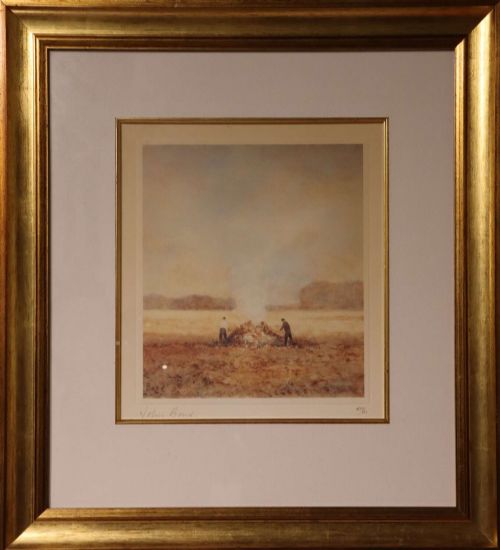
Many of these works remain set within their original wooden frames, sometimes accented with gilt mouldings that complement the palette of the painting within.
The listings span the nineteenth and twentieth centuries, featuring canvases, wooden panels and watercolours framed in wood and gilt.
Variations in quality
Quality in these rural paintings rests upon the confidence of the brushwork and the artist's ability to capture natural light and atmospheric depth. Superior works reveal a practiced command of tone and composition that breathes genuine life into a woodland or river scene.
The preservation of the pigment and the stability of the support material also divide standard works from exceptional examples. Paintings that retain their original vibrancy without heavy restoration or craquelure offer a more direct connection to the artist's hand.
William H Myers·Robert Morson Hughes·Gabriel Mathieu·David Bates·Lucy Pratt·Raymond Booth·Eric Brown·Henri Ottmann·Ernest Higgins Rigg·Peter Newcombe·John Bond·Florence Adelina Hess·Owen Bowen·Charles Clair·Alfred George Morgan·Edgar Woollatt·Joseph Edward Hennah·Helen Layfield Bradley·Samuel Timmins·Henry Charles Fox·André Prévot-Valéri·Mario Pinetti·John Sanderson Wells·Reginald Grange Brundrit
The Original Countryside Wall Art Glossary
- Impressionism
- A style of painting that focuses on capturing light and its ephemeral qualities rather than precise detail. Artists often used rapid, visible brushstrokes to portray outdoor countryside scenes.
- Impasto
- Paint applied thickly to a canvas or panel so that it stands out from the surface. This technique gives texture and physical depth to elements like foliage, water and clouds.
- Provenance
- The documented history of ownership surrounding a work of art. Clear provenance helps establish the authenticity and background of a piece.
- Wash
- A thin, semi-transparent layer of thinned watercolour paint applied across paper. Painters utilised this technique to create luminous skies and gentle water reflections.
Original Countryside Wall Art: Frequently Asked Questions
What is original countryside wall art?
Original countryside wall art consists of hand-painted artworks depicting rural landscapes, rivers, cottages and agricultural scenes. These pieces are one-off creations rather than mass-produced prints.
Created across the nineteenth and twentieth centuries, they record historical views of the countryside using media such as oil and watercolour.
How should I hang antique paintings?
Antique paintings on canvas or panel require stable indoor wall spaces away from direct sunlight and damp conditions. Proper picture wire and wall anchors ensure the weight of the wooden frame is evenly supported.
Maintaining moderate room temperatures prevents the wooden panels and canvas supports from warping or cracking over time.
How do I identify the period of a painting?
The period of a painting is often determined by the style of the brushwork, the framing materials and signatures or inscriptions on the reverse. Examining the type of canvas, stretcher bars and paper also provides clues to the era of creation.
Many works feature artist signatures and dates that help anchor them to specific artistic movements like British Impressionism or Victorian pastoralism.
Are watercolours different from oil paintings?
Watercolour paintings use water-soluble pigments applied to paper, producing a delicate and translucent finish. They are typically framed behind glass to protect the paper surface from atmospheric moisture.
Oil paintings utilise pigments bound in drying oils applied to canvas or wood boards, offering richer textures and heavier impasto without the need for glass protection.