


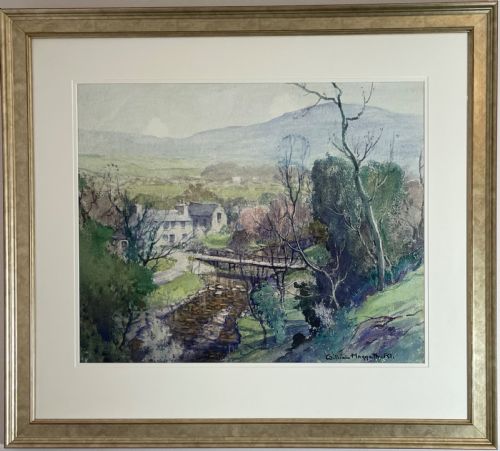


Original Cottage Watercolour
An original cottage watercolour brings the quiet charm of rural life into a room through delicate washes of pigment on paper.
Original Cottage Watercolour
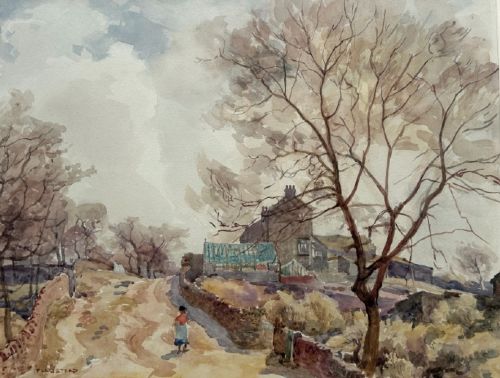
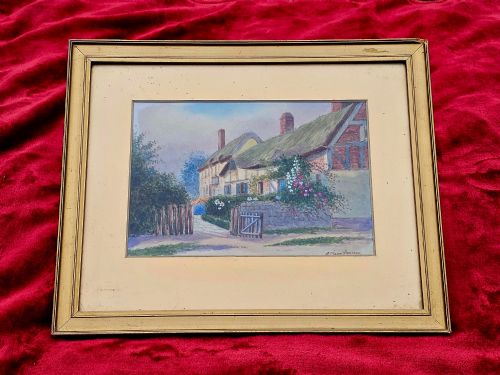
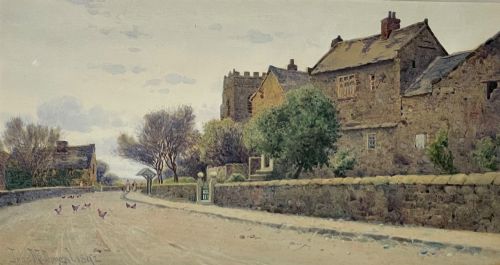
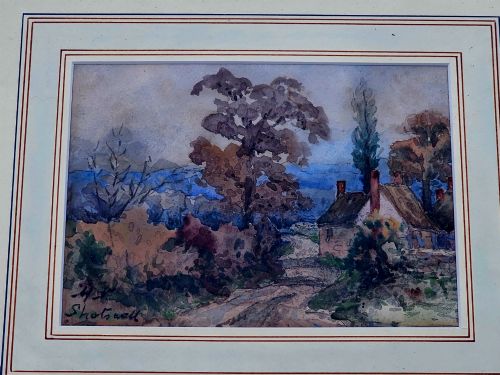
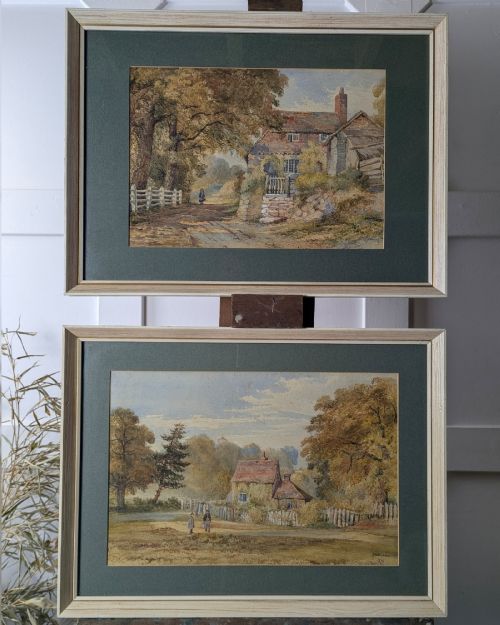
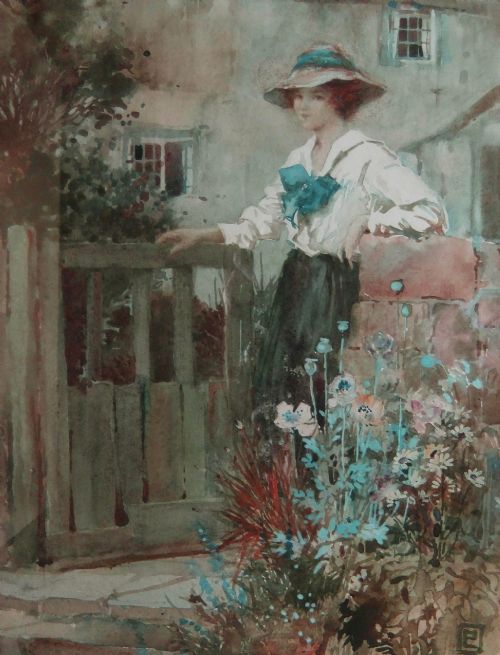
An original cottage watercolour captures rural scenes, village dwellings and pastoral gardens through the traditional medium of pigment applied to paper. These works frequently depict thatched roofs, country lanes and domestic garden scenes grounded in the British countryside.
The pieces on this page span the Victorian, Edwardian and mid-twentieth-century periods, alongside nineteenth-century examples. Buyers will frequently encounter works from the early twentieth century bearing the signatures of established painters of rural and village life.
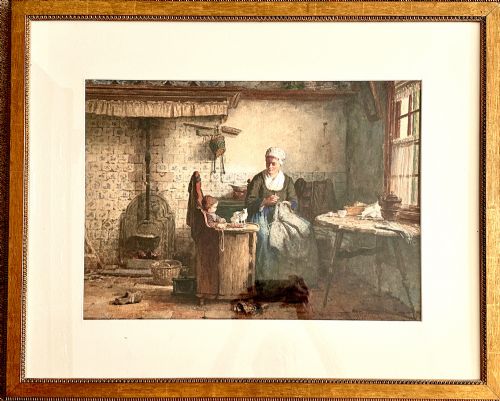
Framed behind glass, these paintings preserve the delicate brushwork and nuanced colour palettes favoured by artists working in British impressionist and pastoral styles. Each piece offers a direct link to historical depictions of rural architecture and domestic routines.
How they were made
Watercolour pigment was applied to paper using fine brushes, allowing artists to build translucent washes that let the bright surface of the paper reflect light through the paint. Gum arabic was often mixed into the pigment to deepen colour intensity and add a subtle sheen to darker areas.
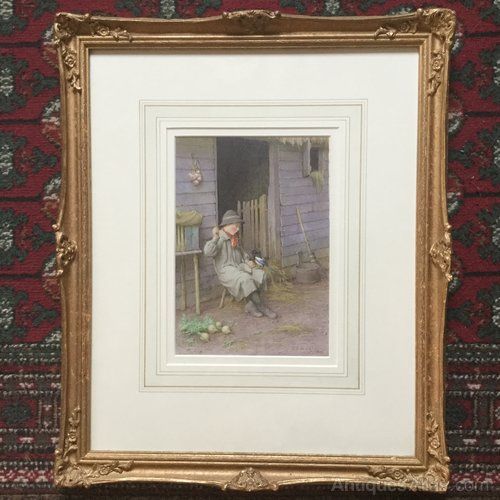
Finished paintings were commonly mounted behind glass within wooden frames, occasionally augmented by gilt wood mouldings that complemented the domestic subject matter. This protective framing preserved the fragile paper supports and water-soluble pigments from atmospheric moisture and handling over the decades.
Listings feature paper, watercolour pigment and wood spanning the Victorian period through to the 1940s.
What varies in quality
The distinction between a standard painting and a finer work lies in the confidence of the brushwork and the precision of architectural and botanical detail. Master hands captured the texture of weathered thatch and the play of light on cottage walls with immense economy and exactness.
Compositional balance and atmospheric depth also set individual pieces apart, separating hasty sketches from fully realised pastoral scenes. A superior painting manages to evoke the specific mood of a village at dusk or a sunlit garden through careful tonal control.
Fred Stead·A. Marie Parsons·John McDougal·Robert A. Nottingham·Hendrik Valkenberg·Percy Lancaster·Charles Edward Wilson·Fred Lawson·J S Ainley·William Hoggatt·Theresa Stannard·Helena Maguire·Linnie Watt·Owen Bowen·Lilian Stannard·Harry Sylvester Stannard·Henry Charles Fox·Will Anderson·Robert Hollands Walker·Thomas James Lloyd·B. Kaufmann·David Woodlock·Henry Spernon Tozer·Joseph Kirkpatrick·Walter Henry Sweet
The Original Cottage Watercolour Glossary
- Watercolour
- A painting method in which the paints are made of pigments suspended in a water-based solution. The paper surface often remains visible to provide highlights and luminosity.
- Gilt wood
- Wood that has been treated with a thin layer of gold leaf or gold-coloured gilding. This finish is frequently found on the traditional frames encasing Victorian and Edwardian works.
- Pastoral style
- An artistic genre celebrating rural life, shepherds, rustic cottages and agricultural landscapes. It offers an idealised view of the British countryside.
- Impressionism
- A style of painting that focuses on capturing the visual impression of a moment, particularly regarding shifting light and spontaneous brushwork. In British works, this approach softened rigid academic traditions.
Original Cottage Watercolour: Frequently Asked Questions
How should I hang a watercolour?
Watercolours are sensitive to strong sunlight and can fade if placed in direct beams for prolonged periods. Choose a wall that receives indirect light to preserve the pigment tones.
Ensure the room maintains a stable humidity level to protect both the antique paper and the wooden frame from warping or moisture damage.
How do I date an antique painting?
Dating relies heavily on artist biography records, stylistic markers of the Victorian or Edwardian eras, and sometimes inscriptions left on the reverse of the paper. Frame styles and backing materials also offer useful clues regarding the decade of creation.
Signatures matched against exhibition records help narrow the window of production to a specific active period in the artist's career.
What subjects are most common?
Cottages, village greens, coastal scenes and pastoral gardens dominate this selection of British works. Artists frequently turned to rural hamlets and quiet lanes for picturesque subject matter.
Figures engaged in everyday domestic tasks, such as tending hens or knitting by the door, frequently animate these pastoral settings.