


English Cottage Painting
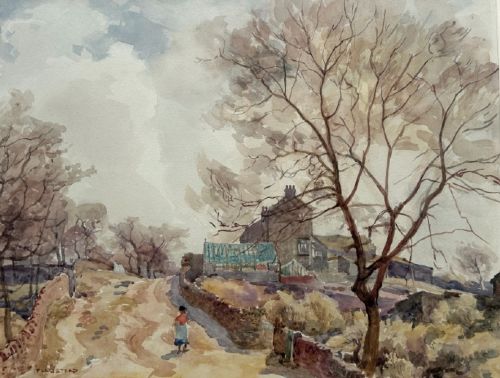
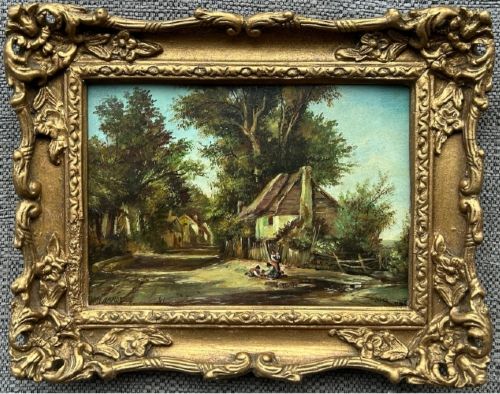
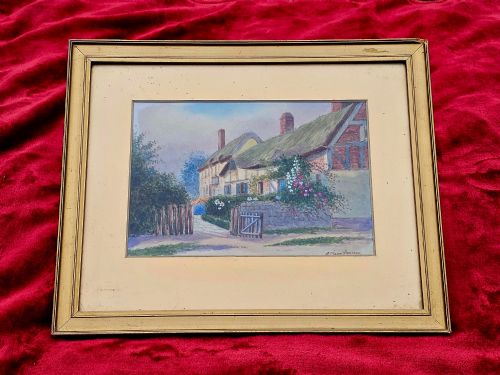
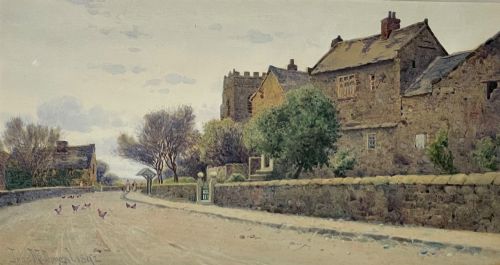
English cottage painting brings pastoral rural life into focus through watercolours and oils dating from the nineteenth and early twentieth centuries.
English Cottage Painting
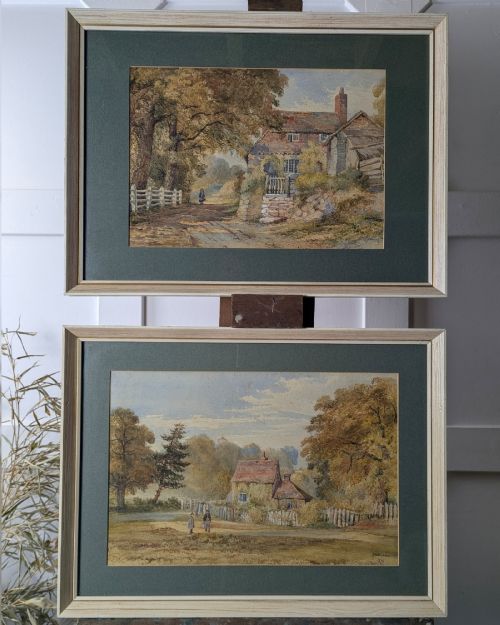
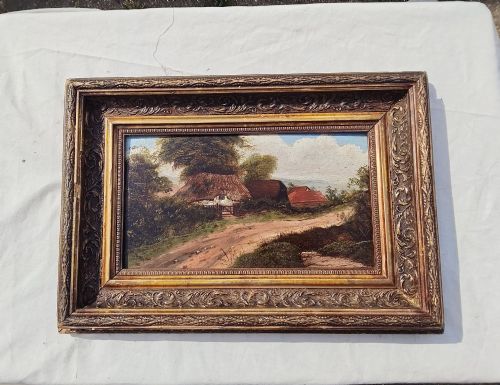
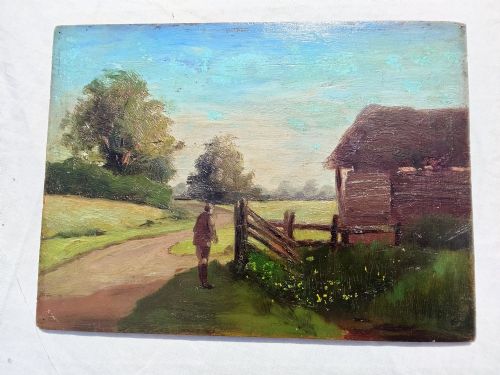
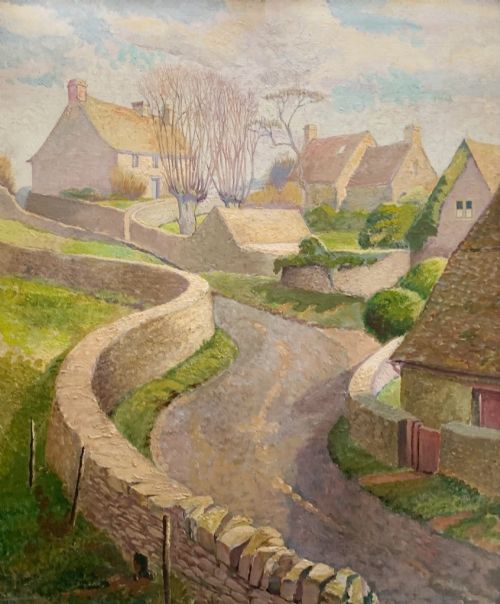
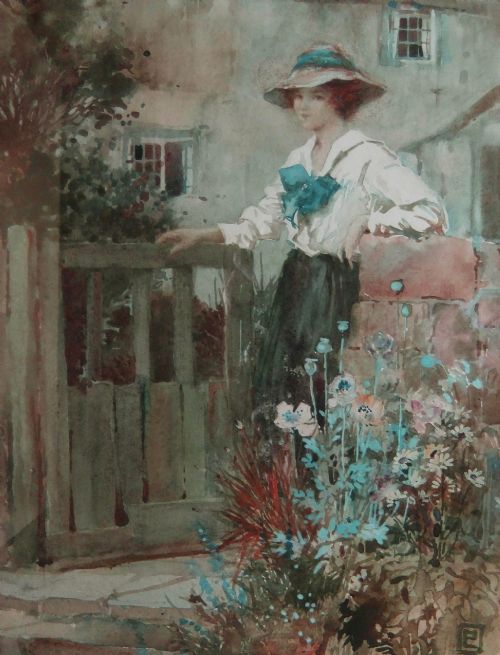
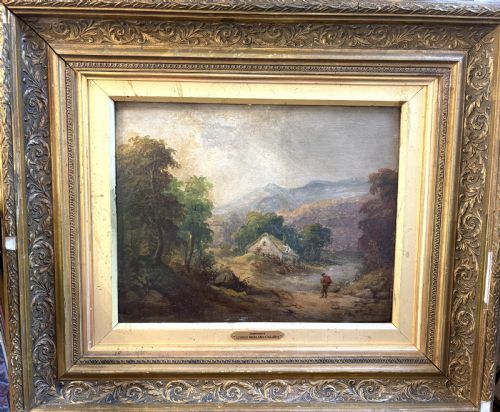
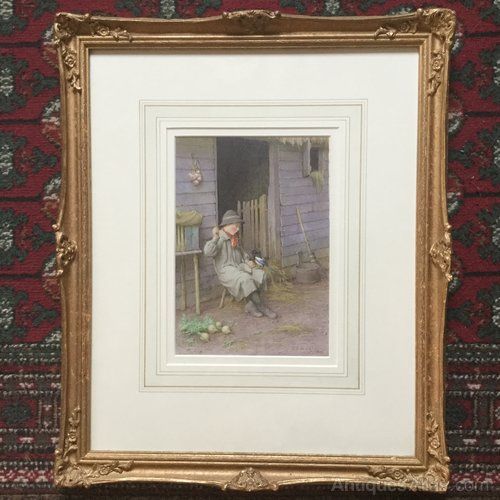
An english cottage painting captures the quiet rural architecture and village landscapes of Britain across the Victorian, Edwardian, and later periods. These works frequently depict thatched cottages, country lanes, and garden scenes rendered by regional artists associated with the English School and British Impressionism.
Watercolours on paper and oil paintings on canvas, panel, or board dominate this selection. Buyers regularly encounter framed works bearing signatures from period artists alongside pieces attributed to broader regional traditions.
Materials and methods
Artists relied on watercolour pigment applied to paper or oil paint laid onto canvas, wooden boards, panels, and card. Mixed media surfaces and lithographs also appear within the selection.
Frames typically consist of wood and glass to protect the paper watercolours, while oil paintings on canvas or panel are commonly secured within substantial wooden surrounds.
Several watercolours preserve the exact moment ducks and geese were fed outside historic English cottages.
Distinctions in execution
Quality rests upon the handling of light and the clarity of the composition, where skilled brushwork distinguishes a nuanced landscape from a formulaic rendering. Stronger examples demonstrate confident pigment control and distinct atmospheric depth.
The provenance and documentation associated with a named artist or a specific location elevate the standing of a piece. Condition of the underlying paper or canvas and the preservation of the original frame also influence the overall standard.
Fred Stead·William Howard Hardy·John McDougal·Percy Lancaster·George Morland·John Horace Hooper·Reginald Grange Brundrit·Fred Lawson·Arthur Tucker·J S Ainley·Frederick James Knowles·William Greaves·Charles Vickers·Theresa Stannard·Robert Finley McIntyre·Helena Maguire·Linnie Watt·Owen Bowen·Ernest Higgins Rigg·Lorenzo Headley·Lilian Stannard·Harry Sylvester Stannard·Henry Charles Fox·Will Anderson·Robert Hollands Walker
The English Cottage Painting Glossary
- Watercolour pigment
- A water-soluble paint medium used extensively on paper surfaces for delicate landscape studies. It allows for translucent washes that capture changing light.
- Oil on canvas
- Pigment suspended in drying oil applied to a stretched woven fabric support. This technique provides rich colour saturation and texture.
- English School
- A classification for artists working within Britain who share stylistic traits influenced by regional landscapes. It groups painters without formalizing a single academy.
- Panel painting
- An artwork executed on a flat piece of wood rather than canvas. Wooden boards and panels offer a rigid surface for detailed oil work.
English Cottage Painting: Frequently Asked Questions
What periods do these paintings cover?
The works span the nineteenth century through to the mid-twentieth century, encompassing Victorian, Edwardian, and later periods.
Most pieces date specifically from the late 1800s up to the 1940s, reflecting traditional rural subjects popular during those decades.
How were these artworks displayed?
Paintings were typically framed in wood, with watercolours placed behind glass to protect the paper support.
Heavier oil paintings on canvas or wooden boards often featured substantial gilded or painted wooden frames suited to domestic interiors.
Are the paintings signed by artists?
Many examples feature artist signatures, monograms, or inscriptions detailing specific locations across the British countryside.
Other works are attributed to broader regional movements such as the English School or catalogued as unsigned studies.
What subjects appear in these scenes?
Common subjects include thatched cottages, village lanes, farmsteads, and pastoral landscapes with figures or animals.
Artists frequently recorded specific rural spots across Yorkshire, Sussex, and other regional English counties.