


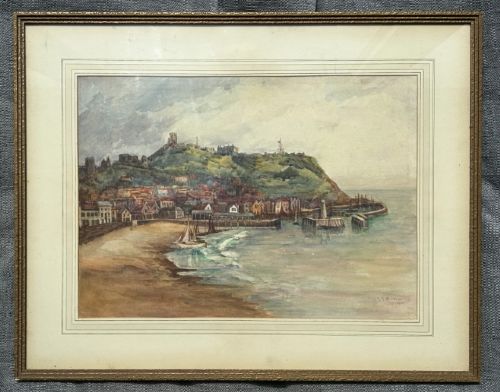
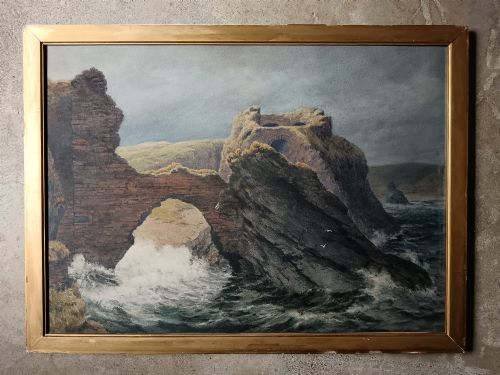
Original Coastal Watercolour Painting
An original coastal watercolour painting captures the changing light and salt air of British shores through washes of pigment on paper.
Original Coastal Watercolour Painting
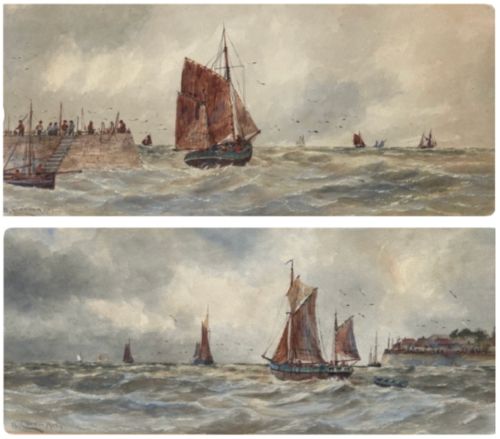
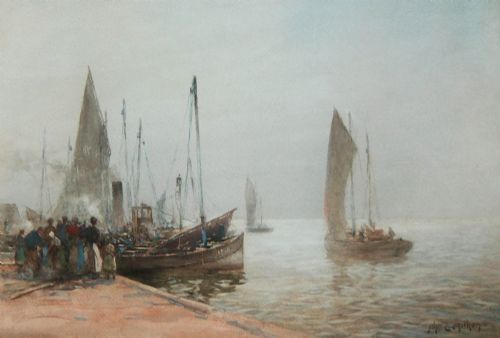
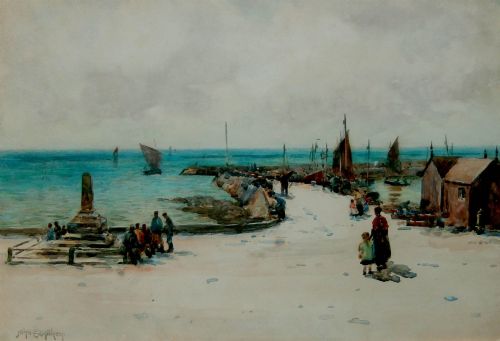
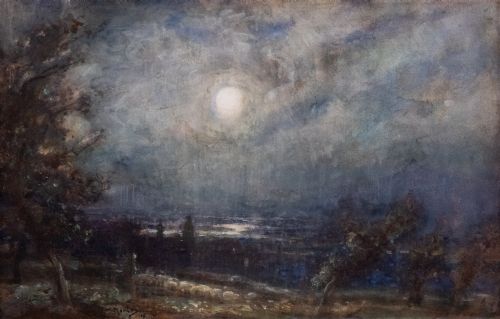
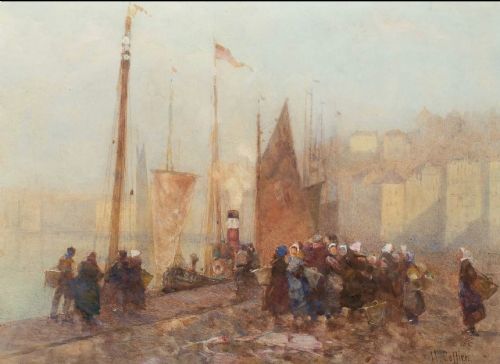
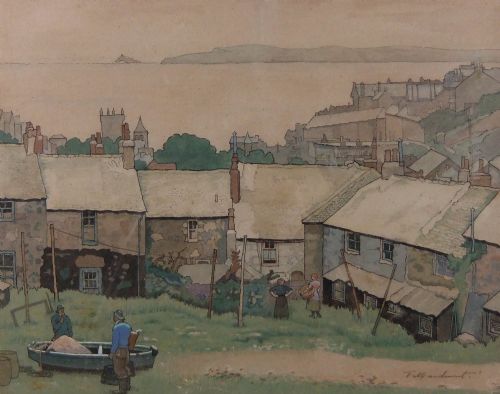
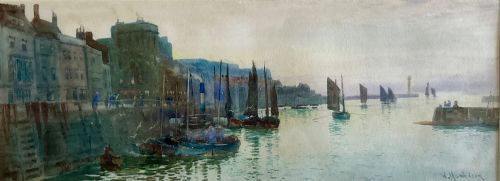
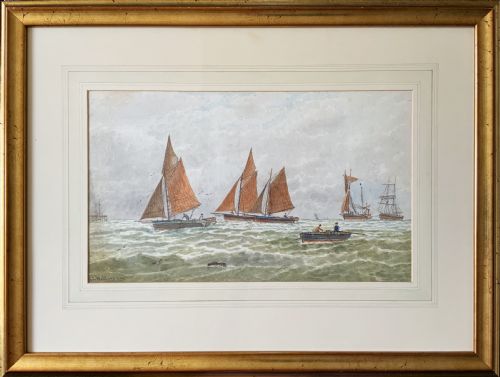
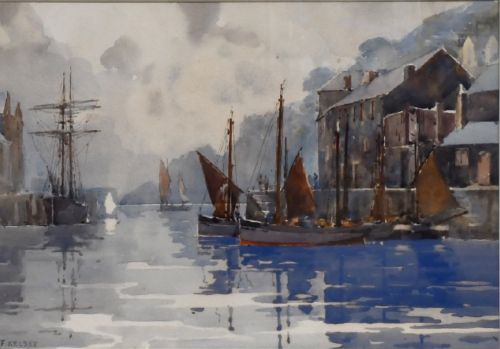
When searching for an original coastal watercolour painting, buyers encounter works depicting bustling harbours, quiet fishing villages, and dramatic cliffs along the British coastline and beyond. These works span from the Victorian era through the early twentieth century, capturing maritime life, sailing vessels, and seaside architecture in delicate washes.
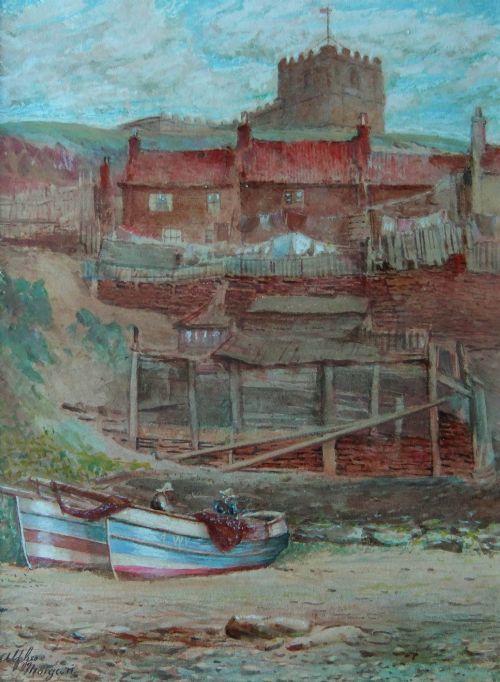
The most common examples on this page date from the late nineteenth century to the 1930s, reflecting a period of intense artistic interest in seaside locations like Whitby, St Ives, and Scarborough. Painters recorded local fishing fleets, coastal cottages, and tidal estuaries with observational precision.
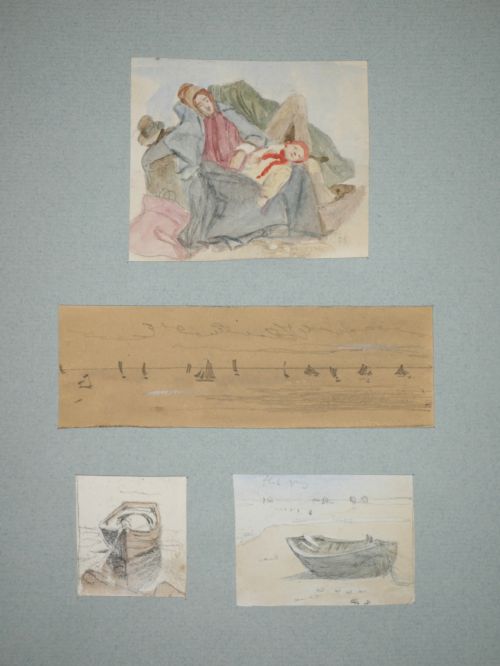
Works range from intimate topographical sketches by provincial artists to ambitious marine watercolours by established members of historical art societies. Styles shift from tight Victorian detail to freer impressions influenced by British Impressionism and regional schools.
Materials and technique on paper
Watercolour pigment mixed with water forms the primary medium, applied to fibrous paper supports that absorb the fluid layers. Artists built up transparent washes to represent skies and water, occasionally employing gouache for opaque highlights on cresting waves or ship sails.
Works are typically framed behind glass within wooden mouldings, sometimes finished with gilt accents to protect the absorbent paper from environmental moisture and handling.
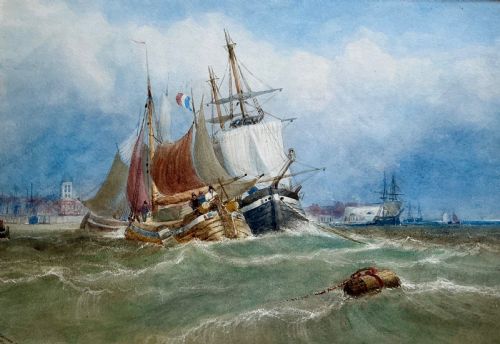
Several artists clearly braved fierce North Sea gales to capture Whitby fishing boats battling the chop.
Judging the standard of a marine watercolour
Quality rests on the artist's handling of light, atmospheric perspective, and water movement, where confident brushwork separates accomplished compositions from stiff topographical records. A successful sheet captures the luminosity of open air and the specific character of a tidal harbour without overworked passages.
Condition plays a vital role in evaluation, particularly the preservation of pigment vibrancy against fading caused by exposure to light. Intact paper surfaces free from heavy foxing and strong original framing retain the intended visual impact of the composition.
James Orrock·Thomas William Morley·Hector Caffieri·Thomas Bush Hardy·Edward Seago
The Original Coastal Watercolour Painting Glossary
- Watercolour pigment
- Finely ground colour particles suspended in a water-soluble binder. This medium allows artists to achieve luminous transparency through layered washes on paper.
- Gouache
- An opaque watercolour paint containing added white pigment for solid highlights. It provides dense opacity for depicting foam, sails, and bright sunlight.
- Foxing
- Small brownish spots caused by chemical reactions in the paper over time. It appears frequently on older sheets exposed to damp conditions.
- Marine art
- Paintings and drawings dedicated to ships, shipping, and coastal scenery. This genre encompasses both documentary views of vessels and atmospheric coastal landscapes.
- Wash
- A thin, fluid layer of diluted pigment spread across the paper. Artists use flat washes for skies and graduated washes for shifting sea tones.
Original Coastal Watercolour Painting: Frequently Asked Questions
How should I frame and hang my coastal watercolour?
Watercolours require framing behind glass with acid-free mounts to prevent the paper from touching the glazing. This barrier protects the pigments from atmospheric pollutants and physical damage.
Keep framed watercolours away from direct sunlight and damp walls to preserve the integrity of the paper and prevent fading.
What subjects appear most often in these paintings?
Fishing boats, harbour walls, and coastal cottages dominate these historical works, reflecting the working maritime life of nineteenth and early twentieth-century ports. Scenes often record specific locations around Yorkshire, Cornwall, and Scotland.
Artists frequently focused on the daily departure and return of local fleets, capturing tidal changes and atmospheric weather along the shore.
How can I tell a Victorian watercolour from a later twentieth-century piece?
Victorian watercolours generally exhibit tighter detail, precise drawing beneath the pigment, and finished studio polish. Artists of this era often worked on heavier textured papers with a structured narrative focus.
Later works from the 1920s and 1930s tend to show looser brushwork, broader washes, and an emphasis on atmospheric mood over meticulous topographical accuracy.
Are these paintings unique or prints?
Every item described here is an original, hand-painted work created directly by the artist upon the paper. Unlike mass-produced prints, each brushstroke and pigment layer is singular.
Signatures, inscriptions, and variations in paper texture confirm the hand-rendered nature of these historical coastal scenes.