





Masted Ship Painting
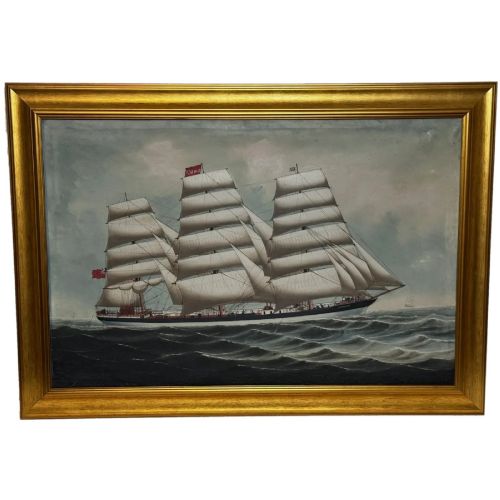
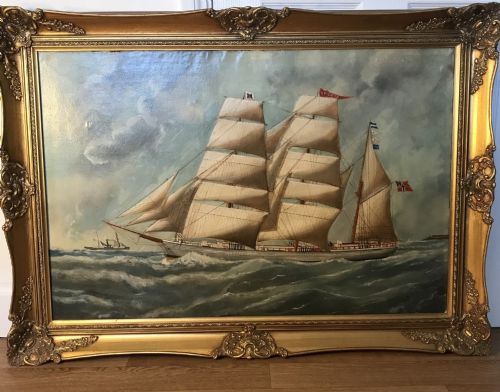
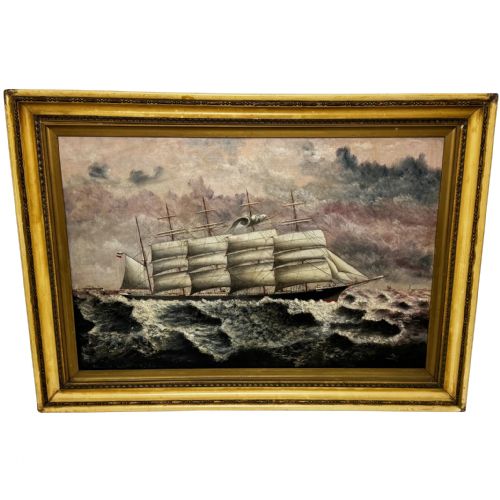
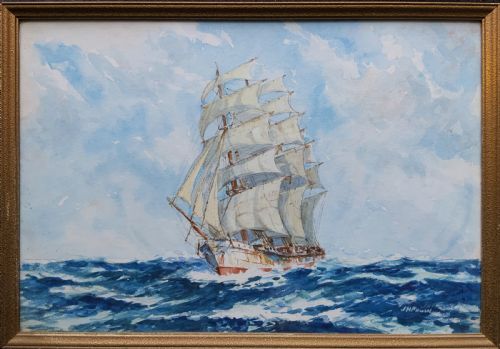
A masted ship painting captures the majesty of traditional sailing vessels through oil on canvas or watercolour.
Masted Ship Painting
A masted ship painting portrays vessels such as schooners, barques, and clippers navigating open seas or entering coastal ports. The examples found here span from the 18th century through to the mid 20th century, encompassing Victorian and Edwardian maritime traditions.
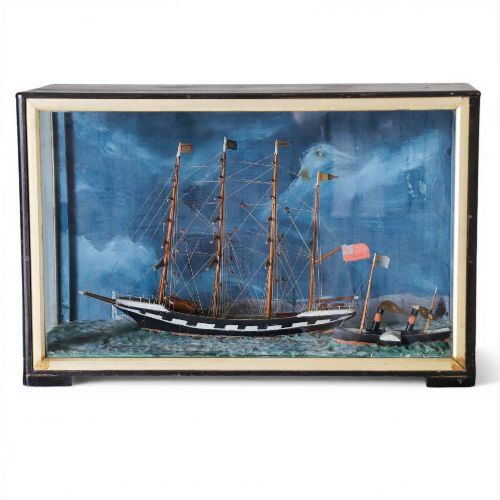
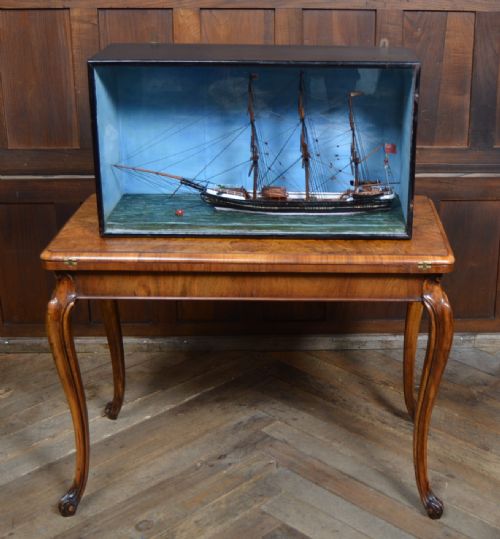
Collectors encounter both flat works in oil or watercolour and three-dimensional representations including dioramas and shadow boxes. The paintings depict specific named vessels alongside dramatic seascapes in stormy or calm waters.
Materials and Construction
Artists relied primarily on oil on canvas and watercolour on paper, framed frequently in giltwood. Model components utilise wood, glass, and paper to construct detailed rigging and hull structures.
Surviving pieces combine traditional canvas painting techniques with folk art construction methods, particularly in scratch-built models and shadow box dioramas.
Several ships depicted carry names like The Hippolyta and Sindia, immortalising vessels that braved the wild southern oceans.
Assessing Quality and Execution
Quality rests upon the precision of the rigging, the accuracy of the vessel's proportions, and the depiction of the water and sky. Skilled hand placement of masts and sails distinguishes finely observed works from simpler naive interpretations.
The sophistication of the background atmosphere, whether a Turner-esque seascape or a detailed coastal harbour, elevates the visual depth of the composition.
Reginald Arthur Borstel·William Boyce·Richard Ball Spencer·Rowland H. Hill·Henry Loos·Thomas G Purvis
The Masted Ship Painting Glossary
- Barque
- A sailing vessel with three or more masts, where the foremast and mainmast are square-rigged and the mizzenmast is fore-and-aft rigged.
- Diorama
- A three-dimensional scene enclosed in a case, often combining painted backdrops with carved wooden ship models under glass.
- Giltwood
- Wood that has been treated with gold leaf or a gold-coloured finish, common in traditional picture framing.
- Clipper
- A very fast nineteenth-century merchant sailing ship with three masts and a large sail area.
- Schooner
- A type of sailing vessel characterised by fore-and-aft rigs on two or more masts.
Masted Ship Painting: Frequently Asked Questions
How do I date a masted ship painting?
Dating relies on the rigging style, the hull construction of the vessel shown, and the framing materials. Victorian and Edwardian examples often display specific naming conventions on the canvas or mount.
Comparison with documented ship designs from periods such as the 19th century provides further chronological context for unsigned works.
Where should I hang a maritime painting?
These works suit rooms with stable humidity levels, away from direct sunlight to protect watercolours and oil pigments. Placing them at eye level allows proper appreciation of the detailed rigging.
Ensure heavy framed pieces or glass-fronted dioramas are secured firmly to structural wall fixings.
Are ship dioramas fragile?
Dioramas enclose delicate wooden masts and paper sails behind glass, protecting them from dust but requiring careful handling during relocation. The internal rigging can be sensitive to vibrations and temperature shifts.
Keeping the exterior wooden case clean maintains the overall preservation of the enclosed model.
What is the difference between a barque and a schooner?
A barque carries square sails on its forward masts and a fore-and-aft sail on the rear mizzenmast. This configuration allowed for efficient long-distance ocean voyages.
A schooner primarily utilises fore-and-aft rigged sails across all its masts, suiting coastal navigation and speed.