



Original Cattle Painting
An original cattle painting captures nineteenth and early twentieth century pastoral life, offering buyers a window into traditional rural landscapes and farming scenes.
Original Cattle Painting
When searching for an original cattle painting, buyers encounter works spanning the nineteenth century through the early decades of the twentieth century, including Victorian and Edwardian periods.
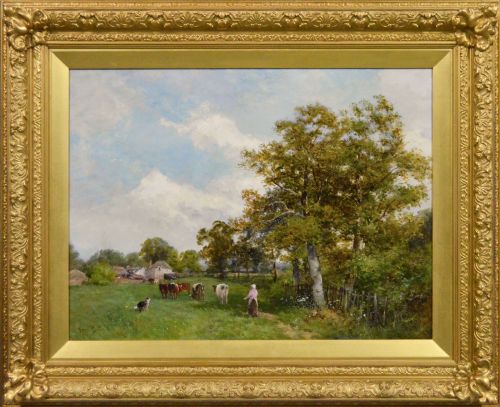
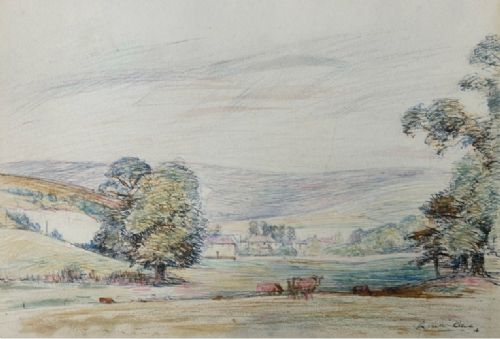
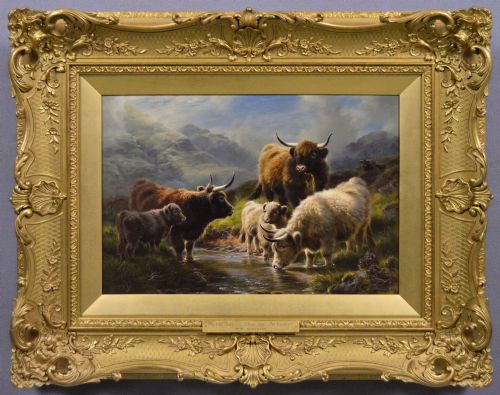
The most common formats on this page are oil on canvas and watercolour paintings depicting herds grazing by rivers, resting in woodlands, or traversing Scottish highlands.
Subjects range from detailed studies of farm animals by specialised animal painters to broader British and European landscape scenes featuring cattle as central motifs.
How They Were Made
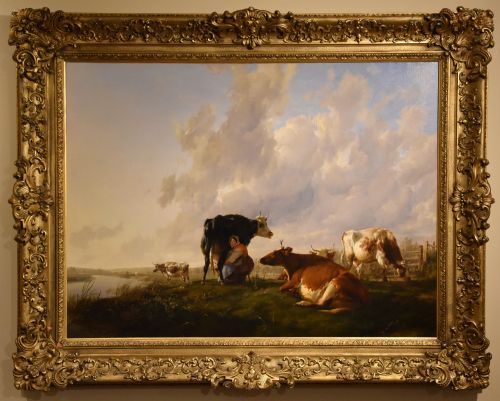
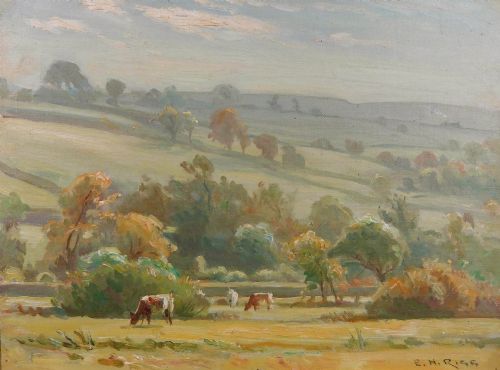
Artists utilised oil paint applied to canvas, wood panels, copper, or milk glass, building up rich textures and deep tones for pastoral scenes.
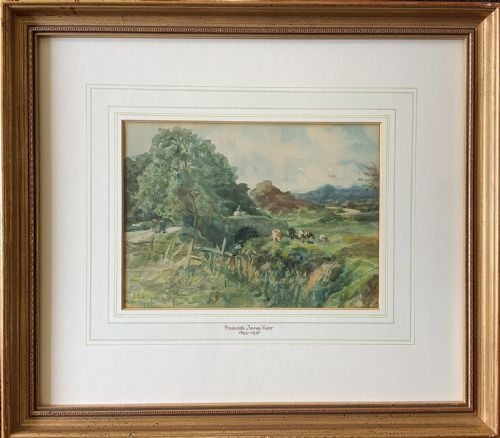
Watercolour paintings on paper capture lighter, atmospheric effects of light across fields and lochs, often finished with graphite underdrawing.
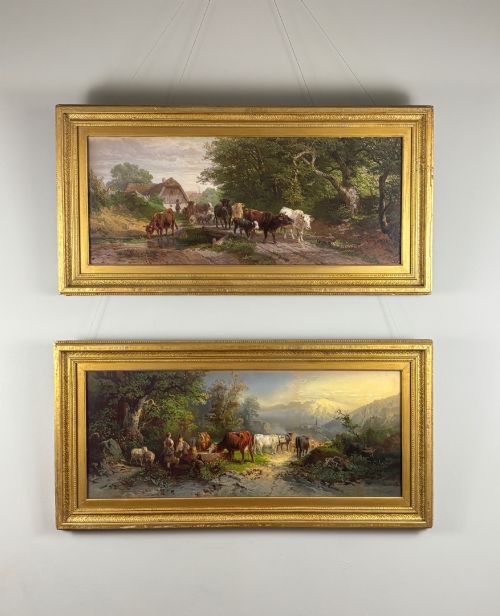
Works are frequently housed in period giltwood frames, carved wood mouldings, or burr frames that complement the traditional subjects.
The archive includes works on milk glass, copper panels, and wood alongside traditional canvas and paper supports.
What Varies in Quality
Quality rests upon the artist's ability to render the anatomy, weight, and texture of the animals convincingly within a balanced landscape composition.
Works by listed academic painters or exhibited Royal Academy members demonstrate superior brushwork, anatomical precision, and atmospheric depth compared to unsigned naïve school pieces.
Thomas Sidney Cooper·David Bates·William Watson Jnr·Alfred de Breanski Snr·Henry Hillier Parker
The Original Cattle Painting Glossary
- Oil on Canvas
- Pigment mixed with drying oil applied to a stretched woven fabric support. This traditional medium allows for rich blending and textured impasto work.
- Watercolour
- Pigment suspended in a water-based, translucent solution applied to paper. It provides luminous washes that capture delicate atmospheric effects.
- Pastoral Landscape
- A genre of art depicting rural life, shepherds, and grazing livestock in idealized countryside settings. These scenes emphasise tranquility and harmony with nature.
- Giltwood
- Wood carved and coated with a thin layer of gold leaf or gold paint. It provides an ornate, reflective border popular for framing nineteenth-century fine art.
Original Cattle Painting: Frequently Asked Questions
What periods do these paintings come from?
The available works primarily date from the nineteenth century through the early twentieth century, encompassing Victorian and Edwardian eras. Painters of this time frequently travelled across Britain and Europe to record rural and Highland subjects.
Buyers will also find pieces from the interwar years up to the mid-twentieth century. These later works maintain traditional pastoral themes while reflecting shifting artistic styles.
How were these landscape scenes composed?
Artists typically positioned cattle in the foreground or middle distance to anchor the composition and provide a sense of scale against rivers, valleys, or mountains. Figures such as milkmaids, drovers, or shepherds frequently accompany the herds.
Skilled painters used natural light and atmospheric haze to guide the viewer's eye across the landscape. The interplay of weather and topography defines the regional character of each scene.
How do I identify Scottish Highland subjects?
Scottish Highland scenes are distinguished by rugged mountainous backdrops, misty lochs, and long-horned cattle standing near water. Artists like William Watson Jnr and Alfred de Breanski Snr specialised in these dramatic atmospheric views.
These paintings often feature deep heather tones, dramatic skies, and rocky terrain. The cattle depicted in these regional works are typically heavier and more rugged than lowland breeds.
How should I display a framed antique painting?
Antique paintings housed in original giltwood or carved wooden frames require stable environmental conditions away from direct sunlight and high humidity. Maintaining consistent indoor temperatures protects both the canvas or paper support and the delicate gilding on the frame.
Proper wall placement allows natural ambient light to illuminate the brushwork without causing fading or glare on the glazed watercolours. Heavy pieces require secure wall fixings suited to the weight of the wooden frames.