






Original 1960s Oil Painting
An original 1960s oil painting brings mid-century character and bold texture to a wall through genuine period brushwork.
Original 1960s Oil Painting
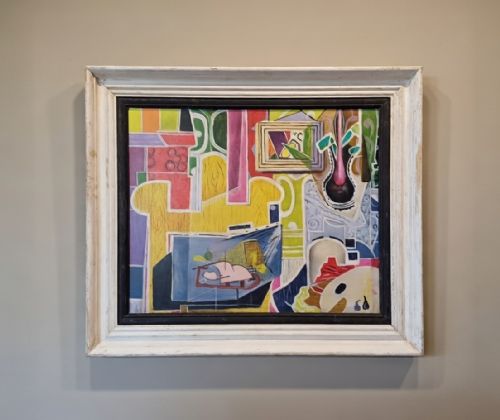
An original 1960s oil painting captures the diverse visual vocabulary of the mid-century period through varied subject matter and distinct regional movements. Buyers searching this phrase encounter works ranging from French Expressionist scenes and Belgian impressionism to British abstracts and Op Art geometric compositions.
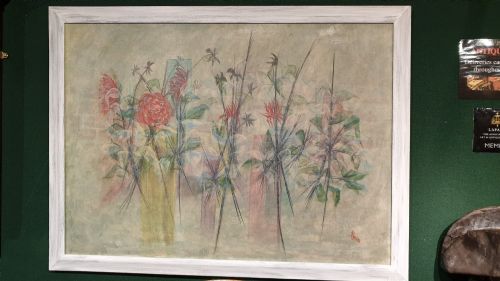
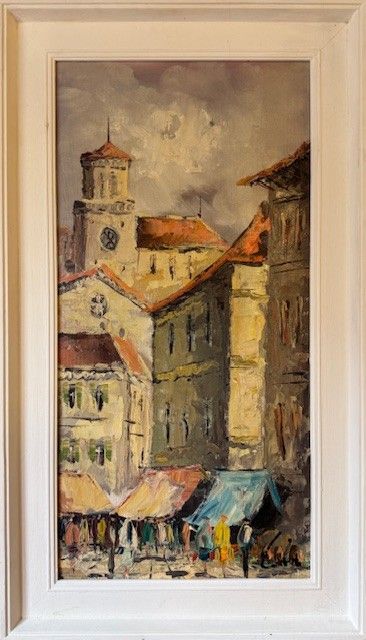
The prevalent formats on this page include large landscape vistas, urban street scenes, floral still lifes, and figurative compositions. Many pieces reflect mid-century modern and modernist sensibilities executed during the 1950s and 1960s.
The selection encompasses both named artists associated with institutions like the RSA and FRSA, alongside accomplished anonymous hands. Works draw influence from European art centres, capturing everything from Parisian riverbanks to Lake District topography.
How they were made
These works rely on traditional supports of stretched canvas, wooden board, or canvas boards prepared for oil medium. Pigments are applied with brushes or built up in thick impasto layers to create tangible surface relief.
Frames commonly incorporate wood and gilt mouldings selected to complement the era's aesthetic. The physical construction combines standard painter's stretchers with visible artist signatures, dates, and inscriptions on the reverse.
Listings feature canvases and boards executed in oil paint, framed in wood and gilt.
What varies in quality
Quality rests upon the confidence of the brushwork, the ambition of the composition, and the preservation of the pigment layer. Works that demonstrate a sure command of light, colour balance, and spatial depth stand apart from routine decorative output.
The strength of a piece also depends on the clarity of the mid-century stylistic idiom, whether abstract, impressionist, or figurative. Original surface textures and stable canvas tension contribute significantly to the enduring presence of the painting.
Helen Layfield Bradley·Gabriel Dauchot·Amile Coppieters·Ron Folland·William Littlejohn·Noel Quintavalle·Christian Caillard·William Ernst Burwell·Donald McIntyre
The Original 1960s Oil Painting Glossary
- Impasto
- Paint applied thickly to a canvas or board, standing out in relief from the plane. This technique adds literal dimension and catches light across visible brush strokes.
- Op Art
- A style of visual art that uses optical illusions through geometric patterns. These compositions employ precise mathematical arrangements to create dynamic effects of movement on a flat surface.
- Mid-Century Modern
- A design and art movement spanning roughly the middle decades of the twentieth century. It embraces simplified forms, modernist abstraction, and fresh approaches to traditional genres.
- Gilt
- A thin layer of gold leaf or gold-coloured pigment applied to wooden frame mouldings. This finish provides a reflective border that separates the canvas from the surrounding wall.
Original 1960s Oil Painting: Frequently Asked Questions
How do I identify a mid-century painting?
Mid-century paintings typically display characteristic stylistic traits such as modernist abstraction, impressionistic brushwork, or distinct mid-century colour palettes. Many works bear period dates or signatures on the front or reverse.
Framing styles and the physical materials of the canvas or board further anchor the piece to the decades surrounding nineteen sixty.
What subjects are common in these works?
The subject matter spans landscapes, urban cityscapes, coastal views, floral still lifes, and figurative scenes. Artists of the period explored both traditional rural settings and modern urban environments.
Abstract compositions and geometric Op Art pieces also appear frequently alongside representational views from Britain and continental Europe.
How should I hang an oil painting?
Oil paintings on canvas require stable indoor environments away from direct sunlight and excessive humidity. Secure wall fixings matched to the weight of the wooden frame ensure safe display.
Allowing adequate clearance from direct heat sources protects both the wooden stretcher and the oil pigment layer over time.
Are these works signed by the artists?
Many pieces feature artist signatures, inscriptions, or dates inscribed directly onto the canvas or wooden support. Documentation often includes exhibition details or biographical records associated with the painter.
Unsigned works still attribute to specific regional schools or periods through their technique, materials, and stylistic approach.