





Textured Oil on Canvas
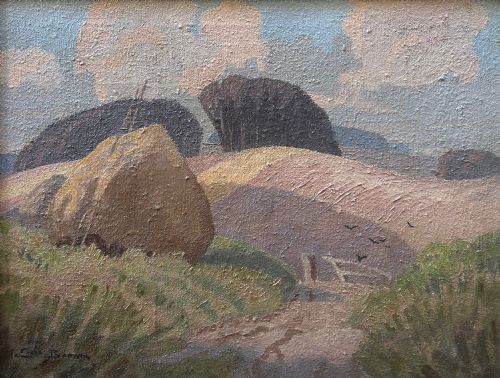
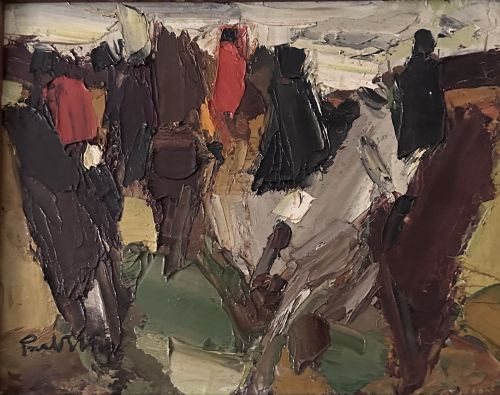
Textured oil on canvas works bring tactile depth to walls through heavy pigment and expressive brushwork.
Textured Oil on Canvas
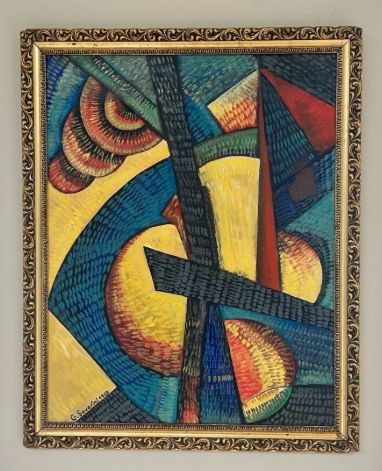
Textured oil on canvas pieces span from the 1920s to the 1960s, encompassing Mid-Century Modern, Expressionism, Post-Impressionism, and Impressionist styles. Buyers seeking textured oil on canvas works encounter landscapes, seascapes, cityscapes, abstract compositions, and still life subjects.
Materials and construction
Artists built these works using oil paint applied thickly to canvas or board, occasionally incorporating gesso for added preparation. Frames of wood enclose many pieces, while supports include hardboard and traditional woven fabric.
Impasto application allows the pigment to stand proud of the surface, creating visible ridges and brush marks that catch the light. Paint layers interact with wood frames and board backings to form durable structural units.
Listings feature oil paint applied to canvas, board, and hardboard, spanning the decades from 1920 to 1960 across abstract and figurative styles.
Assessing quality
Depth and control of the impasto surface separate standard decorative pieces from more accomplished works, where thick pigment defines form rather than obscuring it. The handling of light within coastal and urban scenes demonstrates the artist's command over the heavy medium.
Cohesion between the painted surface and the original wood frame affects the integrity of the piece, as does the stability of the canvas or board support over the decades.
Erich Mercker·Elisabeth Bardon·Helen Layfield Bradley·Leon Kossoff·Ernst Louizor·William Ernst Burwell
The Textured Oil on Canvas Glossary
- Impasto
- Paint applied thickly to a canvas or board, standing out from the surface so that the marks of the brush or palette knife remain visible. This technique builds physical dimension into the artwork.
- Gesso
- A white paint mixture consisting of a binder mixed with chalk, gypsum, or pigment, used to prepare wood or canvas surfaces for painting. It provides a stable ground for oil layers.
- Post-Impressionism
- An art movement developing roughly from the 1880s onwards, extending Impressionist rejection of rigid academic styles while retaining vivid colours and distinct brushwork. Works often emphasise symbolic content.
- Expressionism
- A modernist style where artists seek to evoke emotional responses through distorted forms and heavy application of pigment. The approach prioritises subjective inner experiences over objective reality.
- Hardboard
- An engineered wood product made from wood fibres pressed under high heat and pressure, utilised as a rigid painting support in place of canvas during the mid-twentieth century.
Textured Oil on Canvas: Frequently Asked Questions
How do I hang a heavy impasto painting safely?
Heavy oil and impasto works require sturdy fixings screwed directly into wall studs or masonry rather than standard picture hooks. Ensure the wooden frame is structurally sound before mounting.
Check that the hanging wire or brackets on the back of the wood frame match the weight of the canvas and board support.
What is the difference between canvas and board supports?
Canvas provides a flexible woven textile base that responds slightly to atmospheric changes, while board and hardboard offer rigid, stationary surfaces for thick pigment.
Both materials appear frequently across mid-century abstract and landscape works, often housed within original wood frames.
How should I clean a textured oil painting?
Dust accumulation in the recesses of thick impasto paint requires gentle removal using a very soft, dry artist brush. Avoid using water, cloths, or cleaning solutions on the painted surface.
Professional conservators should handle any deeper cleaning or removal of grime from the oil paint layer.
How do I date a mid-century abstract oil painting?
Dating relies on stylistic markers from Expressionism and Mid-Century Modernism, alongside materials like hardboard supports and framing techniques typical of the period.
Signatures, dates inscribed on the reverse, and artist records help narrow down the decade of creation.