






Earthy Brown Wall Art
Earth brown wall art brings warm rustic tones and pastoral scenes into a room through historic paintings and textiles.
Earthy Brown Wall Art
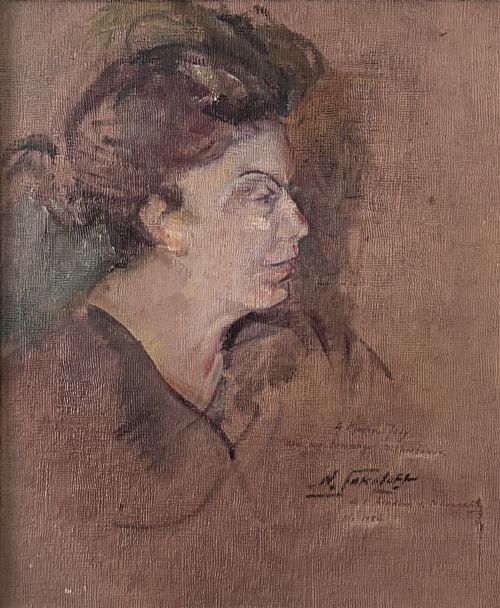
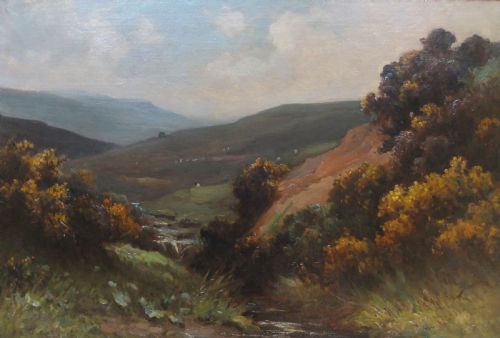
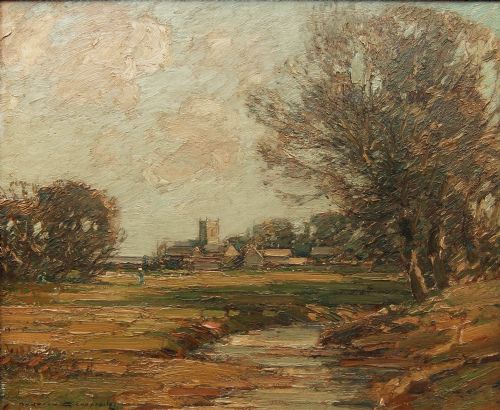
When buyers search for earthy brown wall art, they encounter historic paintings, watercolours and wall hangings dominated by natural pigments and rustic tones. The selections span from the nineteenth century through the mid-century modern period, with notable representation from early twentieth-century British, Scottish and French provincial schools.
The most common forms on this page are framed oil paintings and watercolours depicting rural landscapes, farmyards, livestock and woodland scenes. These works utilise natural earth palettes ranging from deep umbers to soft ochres, reflecting pastoral and agricultural subjects.
Pieces originating from diverse regional schools appear alongside textile works such as Indonesian ikat panels. Each item brings a distinct historical context, whether through Victorian academic traditions or early twentieth-century impressionist interpretations of the countryside.
Materials and construction
These works are executed on traditional supports including canvas, wood panel, board and heavy paper. Painters utilised oil and watercolour pigments derived from natural earths, achieving rich tonal depths through layered brushwork and washes.
Textile examples incorporate woven fibres manipulated through traditional resist-dyeing methods to create patterned wall hangings. Surviving works retain original wooden stretchers, frames and inscribed panels that document the provenance of the piece.
Several horses captured in these pastures appear to have paused specifically to watch the artist work.
Evaluating quality and handling
Quality in these works rests upon the confidence of the handling and the fidelity of the tonal range. Superior examples demonstrate assured brushwork and compositional balance, capturing light and atmosphere without heavy-handed reworkings.
The preservation of the original surface, support and period frame dictates the integrity of the piece. Works that retain stable paint layers and clear artist inscriptions carry greater historical weight.
William H Myers·Tom Campbell·James Tower·Raimond Louis Lecourt·John Atkinson·John Frederick Herring·Alfred Grey RHA·William Traies·Ernest Higgins Rigg·Frederick William Jackson·Kershaw Schofield·Charles Branwhite·William Greaves·Owen Bowen·Fred C Jones·Maurice Wagermans·Edward John Niemann·Frederick Underhill·Thomas Creswick RA
The Earthy Brown Wall Art Glossary
- Canvas
- A heavy woven fabric stretched across a wooden frame to serve as a support for oil paintings. It provides a flexible yet durable surface for textured brushwork.
- Wood Panel
- A rigid wooden board utilised as a painting support before stretched canvas became standard. Panels offer a smooth, stable ground that preserves fine detail.
- Watercolour
- A paint consisting of pigment suspended in a water-soluble binder, applied to paper to create translucent washes. It allows for rapid, luminous studies of light and weather.
- Barbizon School
- A nineteenth-century French movement focused on realistic landscape painting en plein air. Artists emphasised earthy tones and direct observation of nature.
- Ikat
- A dyeing technique where yarns are pattern-dyed before weaving to create intricate designs. Indonesian examples feature rich tribal motifs and natural dyes.
Earthy Brown Wall Art: Frequently Asked Questions
What subjects appear in these paintings?
The subjects focus primarily on rural life, including working horses, cattle, farmyards and pastoral landscapes. Woodland scenes and river views also feature prominently across the collection.
Artists drew inspiration from the British countryside, Scottish highlands and French provincial settings, documenting agrarian scenes of the period.
How do I hang a heavy oil painting?
Large oil paintings on canvas or wood panel require secure wall fixings anchored directly into wall studs or solid masonry. Utilising heavy-duty picture wire and rated hooks ensures the weight is safely distributed.
Positioning the artwork at eye level protects the frame and allows the natural earth tones to be viewed clearly.
How should I care for watercolour paintings?
Watercolour paintings require protection from direct sunlight to prevent fading of the delicate pigments and paper supports. Framing behind glass with acid-free mounts safeguards the paper from moisture and atmospheric pollutants.
Keeping the works in stable indoor humidity conditions preserves both the paper and the original frame.
How do I distinguish between periods?
Stylistic shifts and framing materials often signal the date of a work, moving from nineteenth-century academic realism to early twentieth-century impressionism. Inscriptions on stretchers or reverse panels frequently provide precise dates and locations.
Nineteenth-century works tend towards darker varnishes and detailed brushwork, while later pieces adopt looser applications of paint.