



Orientalist Occasional Table
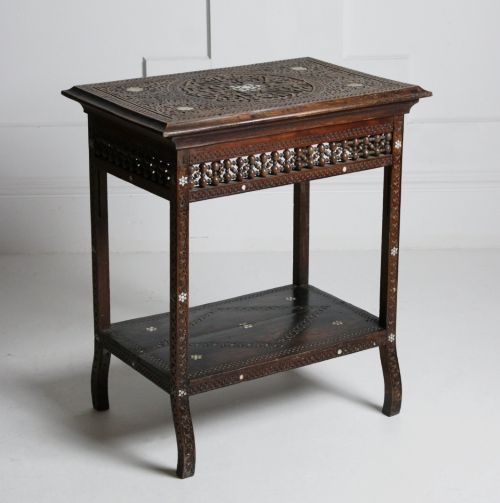
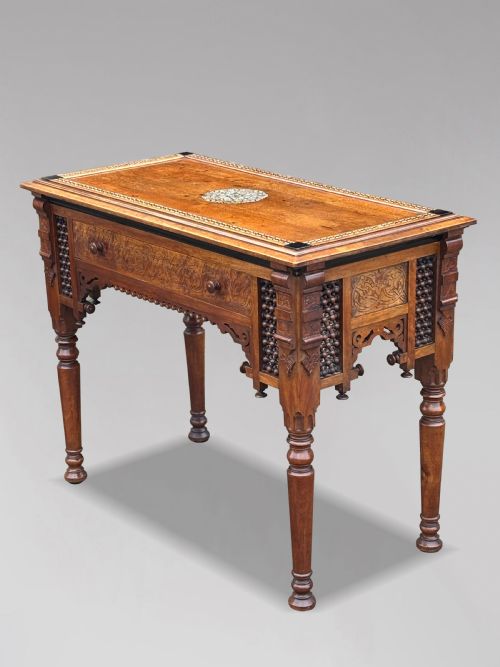
These orientalist occasional table pieces bring intricate geometric design and rich inlay into a room, offering a distinct focal point.
Orientalist Occasional Table
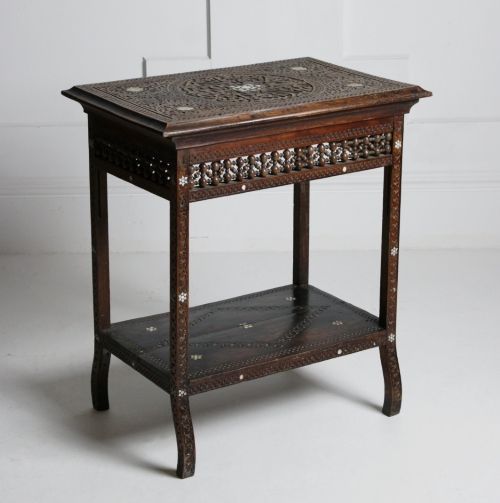
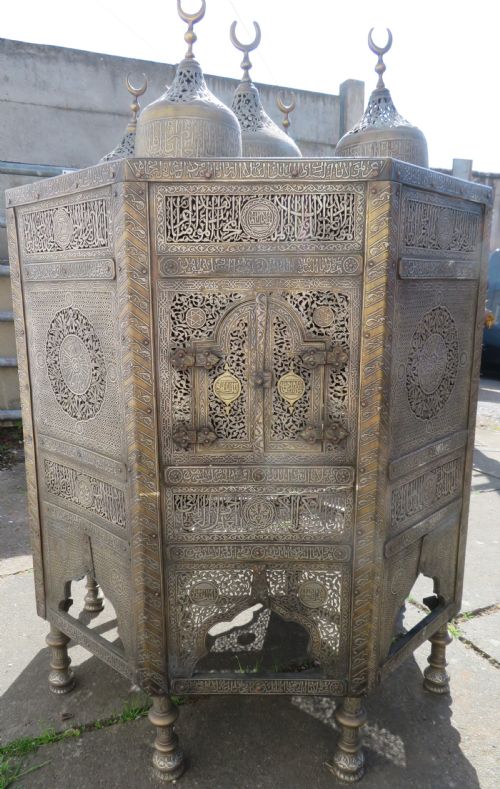
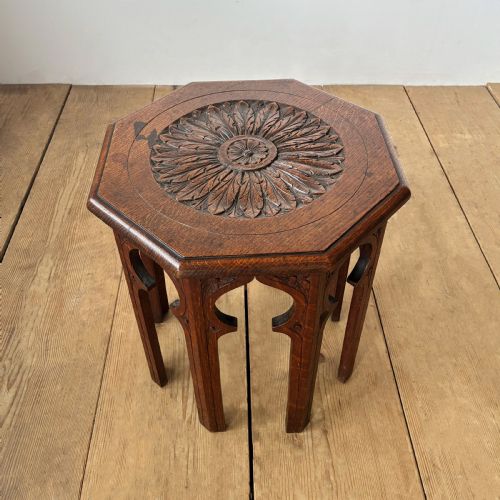
An orientalist occasional table draws upon Moorish, Mamluk, and Syrian revival styles to provide a compact surface for living spaces. These pieces appear as hexagonal, octagonal, or square forms designed to function as side tables, centre tables, and Quran stands.
The material vocabulary spans walnut, mahogany, and ebonised wood augmented by striking metallic and organic inlays. Such surfaces arrive from workshops influenced by North African, Ottoman, and British aesthetic movements of the nineteenth and early twentieth centuries.
Materials and construction methods
Joiners built the foundational structure using hardwoods like walnut, mahogany, and ebonised wood, often shaping them into intricate folding or multi-tiered frames. Openwork carving frequently perforates the panels and supports.
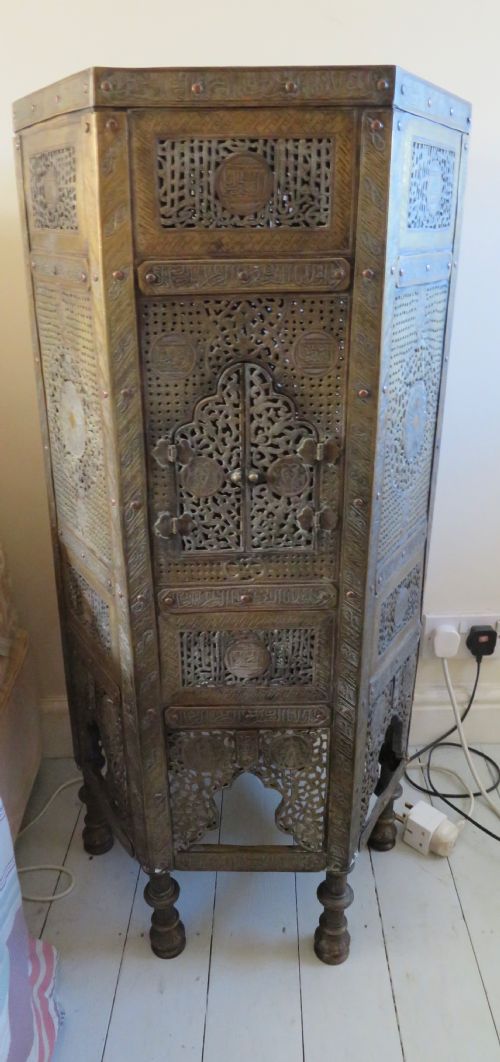
Artisans embellished these timber surfaces by setting in mother-of-pearl, bone, copper, and brass wire. Cairo ware examples utilise heavy brass etched and inlaid with silver and gold to create dense surface patterns.
What separates the finest examples
The precision and density of the inlay dictate the distinction between standard production and masterwork pieces. Finer tables maintain tight joins in complex geometric lattices without relying on excessive filler around the mother-of-pearl and bone elements.
The integrity of the carved timber and the preservation of the metallic wire work determine the longevity of the object. Substantial brass tops with deep engraving represent superior execution compared to thin sheet metal applications.
Liberty & Co·Carlo Bugatti
The Orientalist Occasional Table Glossary
- Cairo ware
- Brass or copper domestic items decorated with inlaid silver and gold calligraphy and geometric motifs. These pieces date largely from the late nineteenth and early twentieth centuries.
- Kursi
- A low stand or table, frequently octagonal, traditionally used for holding sacred texts such as the Quran. In Western interiors, they function as conventional occasional tables.
- Moorish Revival
- An architectural and decorative style incorporating arches, intricate tilework, and geometric woodwork inspired by North African and Spanish Islamic design. It gained popularity in Britain during the Victorian era.
- Ebonised wood
- Timber treated with a chemical stain or black finish to imitate ebony. This technique was favoured by late nineteenth-century designers seeking high contrast for inlaid details.
Orientalist Occasional Table: Frequently Asked Questions
How do I clean an inlaid table?
Dust the intricate woodwork and metal inlays regularly using a soft, dry brush to prevent debris from lodging in the crevices.
Avoid liquid polishes and harsh solvents, as moisture can loosen the bone, mother-of-pearl, and brass elements from their timber grooves.
Are these tables sturdy enough for daily use?
Most occasional tables function well for holding lamps, books, or drinks, though their delicate lattice frames require careful handling.
Moving the furniture should involve lifting it entirely rather than dragging it across the floor to protect the lower joints.
What is the difference between Syrian and Moorish pieces?
Syrian tables often feature dense geometric woodwork inlaid with significant quantities of mother-of-pearl and wire.
Moorish revival examples frequently incorporate arched fretwork panels and draw inspiration more broadly from North African and Spanish Islamic motifs.
How can I date an orientalist table?
Examine the timber species, construction joints, and the type of metal inlay to establish the period of manufacture.
Pieces bearing maker attribution or specific revival styles typically point to late nineteenth or early twentieth-century production.