



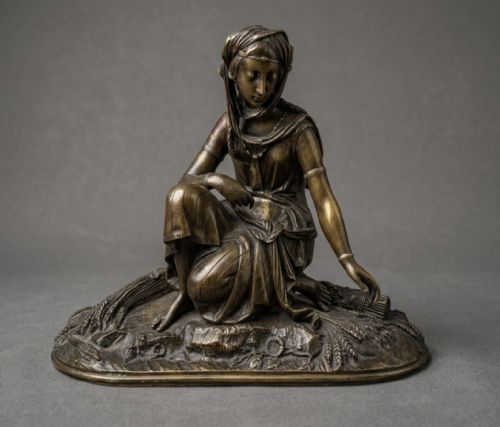


Orientalist Female Figure
An orientalist female figure brings dramatic theatricality and intricate detail into a room through bronze, terracotta, and porcelain sculpture.
Orientalist Female Figure
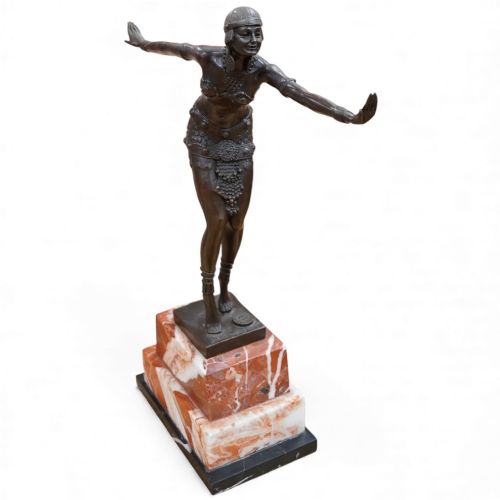
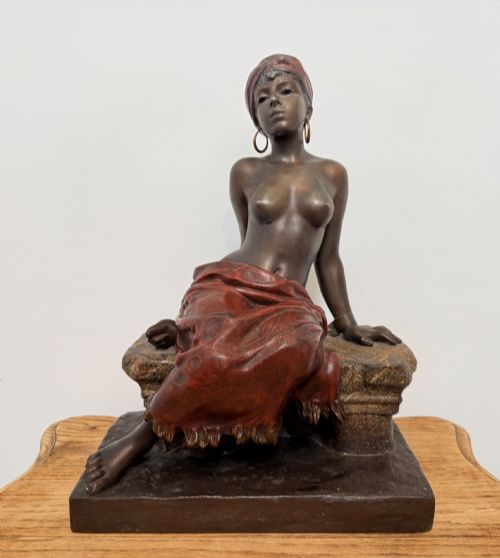
An orientalist female figure captures romanticised visions of North African, Middle Eastern, and Asian women through nineteenth and early twentieth-century sculpture. These works range from small cabinet bronzes to life-size terracotta statues produced during the Victorian, Art Nouveau, and Art Deco periods.
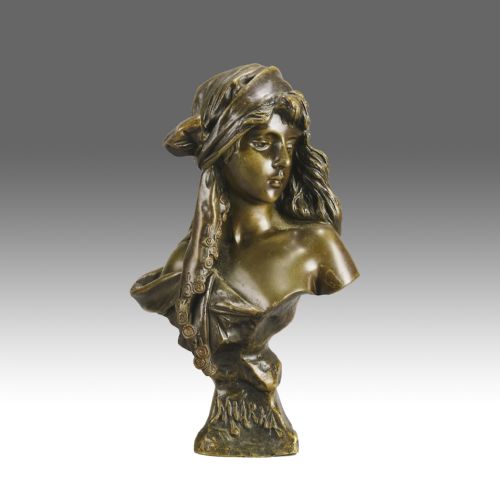
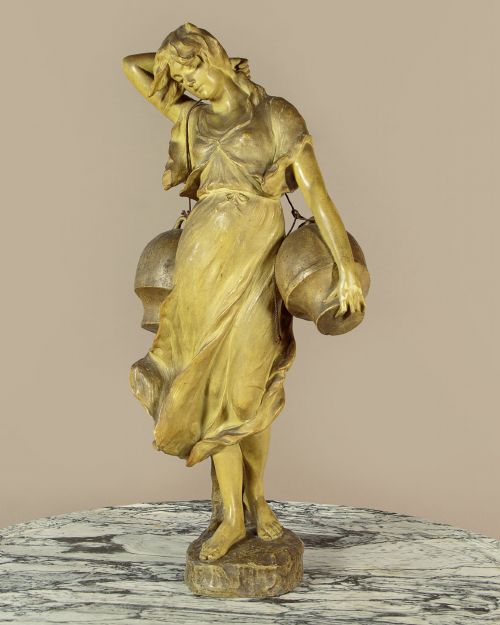
The most common examples encountered here are bronze busts and full-length figures cast in France and Austria, often depicting dancers, water carriers, or mythological subjects. Makers and foundries utilised diverse cultural motifs to satisfy European fascination with distant lands.
Makers rendered these subjects in media spanning patinated metal, cold-painted bronze, earthenware, and carved alabaster. Each piece reflects the aesthetic priorities of its specific decade, shifting from elaborate late Victorian realism toward stylised Art Deco geometry.
Materials and casting methods
Foundries primarily shaped these sculptures using traditional lost-wax casting for bronze or pressing earthenware and terracotta into moulds. Artisans then applied patinas, cold-painted enamels, or polychrome finishes by hand to enhance skin tones, textiles, and jewellery.
The selection includes works attributed to Art Nouveau, Art Deco, Orientalism, Japonisme, and Victorian styles.
Judging execution and detail
The precision of the casting determines how cleanly drapery falls and how sharply accessories such as harps, mirrors, or musical instruments are defined. Greater weight and deeper undercuts in the bronze or terracotta indicate a more ambitious and costly production.
Emmanuel Villanis·Edouard Drouot·Franz Bergman·Goldscheider·Georges-Charles Coudray·Claire Colinet·Demetre Chiparus·Arthur Waagen·Royal Dux·Royal Worcester
The Orientalist Female Figure Glossary
- Cold-painted bronze
- A manufacturing technique where paint is applied to an unheated bronze casting, often using oil-based paints that remain delicate over time. This finish is characteristic of Viennese workshops.
- Patination
- The chemical treatment or natural oxidation applied to metal surfaces to alter colour and create depth. Dark brown and golden tones are typical of late nineteenth-century bronzes.
- Polychrome
- The practice of decorating sculpture in multiple colours across skin, hair, and garments. This technique appears frequently on terracotta and earthenware figures to heighten realism.
- Terracotta
- Fired unglazed clay moulded into sculptural forms. Larger pieces require internal reinforcement during the firing process to prevent cracking.
- Lost-wax casting
- A method where a molten metal is poured into a mould created by melting away a wax model. This process allows for extreme intricacy in hair and fabric folds.
Orientalist Female Figure: Frequently Asked Questions
Where should I place a bronze figure?
These sculptures suit prominent spots on heavy wooden desks, sideboards, or dedicated pedestals where lighting catches the patinated surface. Keep them away from direct heat sources to protect the metal finishes.
Ensure the supporting furniture is stable enough for heavier bronze and terracotta pieces, particularly larger life-size statues.
How do I clean cold-painted bronze?
Dust gently with a soft dry brush, avoiding all liquids, polishes, and chemical cleaners that strip the delicate paint. Water will permanently damage cold-painted surfaces.
Take special care around faces and hands where the original paint layer is thinnest and most vulnerable to abrasion.
How do I date a terracotta sculpture?
Examine the base and interior surfaces for maker stamps, artist signatures, and firing cracks characteristic of nineteenth-century kiln technology. The style of dress and hairstyle often provide immediate clues to the decade of production.
Compare the surface wear and patina with documented examples from known Austrian and French manufactories of the period.
What is the difference between Art Nouveau and Art Deco figures?
Art Nouveau pieces feature flowing, organic lines inspired by nature, with swirling hair and soft drapery characteristic of the turn of the twentieth century. Artisans emphasised movement and naturalistic curves.
Art Deco works embrace sharp geometric angles, stylised poses, and streamlined clothing reflecting the modern design ethos of the 1920s.