


Terracotta Bronze Sculpture
These terracotta bronze sculpture pieces blend modelled clay with metallic finishes to capture classical, animalier and Art Nouveau subjects.
Terracotta Bronze Sculpture
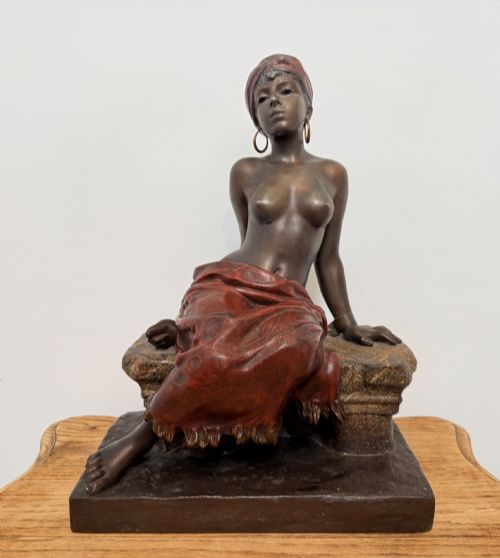
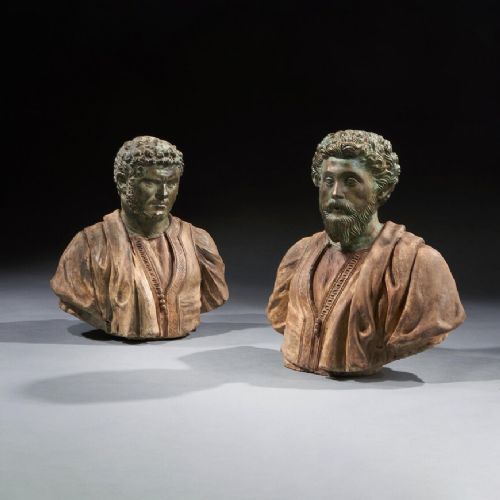
When you search for terracotta bronze sculpture, you find figures, busts and wall reliefs created across the nineteenth and early twentieth centuries. These works span decorative objects, portrait busts of historical figures like Marcus Aurelius and Caracalla, and idealised classical women.
You are most likely to meet nineteenth century and Edwardian examples rendered in earthenware, plaster, and terracotta with bronze or painted finishes. The forms range from small animal studies to life size portrait busts and wall sculptures.
The selection reflects distinct aesthetic movements including Art Nouveau, Orientalist, Neoclassical, and Animalier styles. Makers of the period utilised slip cast techniques alongside hand modelling to produce these sculptural works.
How they were made
Maker workshops utilised terracotta, earthenware and plaster as the primary base materials for modelling figures and busts. These forms were shaped by hand or produced via slip casting methods before drying and firing.
Surface finishes involved the application of bronze paint, metallic patinas, or pigments to simulate cast metal upon the clay body. Wood and marble elements frequently served as structural mounts or display bases for the finished sculptures.
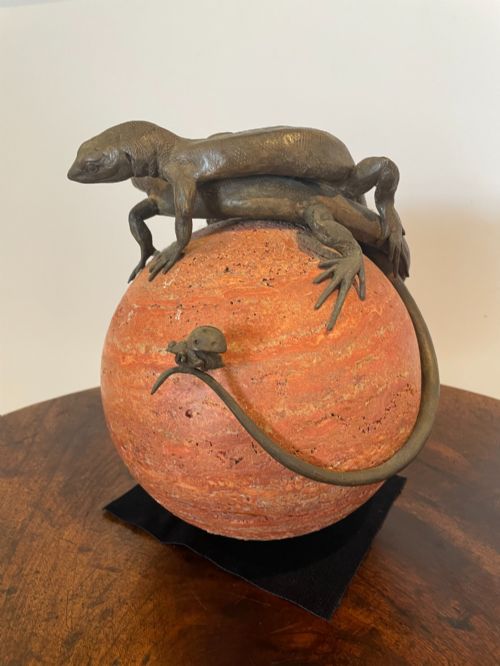
Marcus Aurelius and Caracalla appear here alongside a bronze lizard and a cocky boy, proving imperial Caesars share shelf space with cheeky youths.
What varies in quality
The application of the patination or bronze finish determines visual depth and realism on the terracotta surface. Original pigment preservation and the stability of the underlying clay or plaster body dictate the overall integrity of the piece.
Friedrich Goldscheider·Pietro Calvi·E Villanis·Reps and Trinte
The Terracotta Bronze Sculpture Glossary
- Animalier
- A nineteenth century sculptural style focusing on realistic depictions of animals. These works often capture creatures in dynamic motion or repose.
- Slip cast
- A manufacturing technique where liquid clay slip is poured into a plaster mould. This process allows for the efficient production of complex figurative forms.
- Patination
- The surface treatment applied to sculpture to simulate aged bronze or metal. It provides colour, depth, and protection to the underlying terracotta or plaster.
- Wall relief
- A sculptural form that projects from a flat background surface. These pieces are designed for wall mounting rather than free standing display.
Terracotta Bronze Sculpture: Frequently Asked Questions
Are these pieces solid bronze?
Most items described under this search are formed from terracotta, earthenware, or plaster rather than cast metal. They employ bronze paints, metallic slips, or patination to achieve a metallic appearance.
This technique allowed nineteenth century potteries to produce affordable sculptural works with the visual weight of bronze.
How do I clean a terracotta sculpture?
Dust surfaces gently with a soft dry brush to prevent accumulation without damaging painted or patinated finishes. Avoid using water or chemical cleaners on porous terracotta and applied pigments.
Protect the pieces from direct moisture and humidity to preserve the integrity of the clay and surface coatings.
What is an animalier sculpture?
Animalier refers to nineteenth century artworks depicting animals with anatomical accuracy and naturalistic behaviour. Lizards and other creatures form part of this distinct sculptural tradition.
These pieces reflect a broader Victorian fascination with natural history and precise observation of the natural world.
How do I identify an Art Nouveau piece?
Art Nouveau works feature flowing organic lines, stylised floral motifs, and depictions of classical female figures with cascading hair. The aesthetic dominated late nineteenth and early twentieth century design.
Look for sinuous curves and soft drapery that integrate the figure seamlessly with its sculptural base or frame.