


Oriental Wooden Storage Trunk
An oriental wooden storage trunk brings both substantial capacity and rich cultural detail into a room, offering a practical place to store blankets while anchoring the space with historic texture.
Oriental Wooden Storage Trunk
When you search for an oriental wooden storage trunk, you encounter a wide selection of chests, coffers, and blanket boxes originating from workshops across China, Japan, and India. These pieces span from the eighteenth century through the early twentieth century, reflecting varied regional traditions in domestic storage.
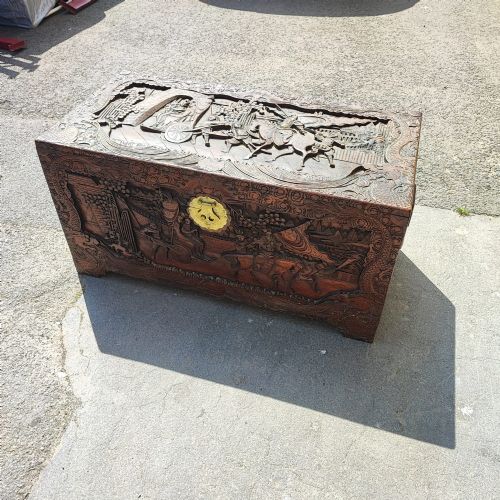
The version you are most likely to meet on this page is the Chinese carved camphor wood trunk, often featuring deep relief carving and brass hardware. Alongside these, the inventory includes black lacquer storage chests, Japanese tansu cabinets, and brass-bound Zanzibar chests in rosewood or teak.
Makers produced these containers for travel, trade, and domestic use, employing durable woods that naturally repelled pests. Surviving examples demonstrate how functional utilitarian objects doubled as decorative furnishings in both eastern and western interiors.
Materials and construction
Cabinetmakers relied heavily on fragrant camphor wood and dense hardwoods such as teak, rosewood, and hongmu, which provided structural stability for long-distance travel and domestic storage. Camphor wood was particularly prized for its aromatic qualities and natural insect-repelling properties, making it ideal for protecting textiles.
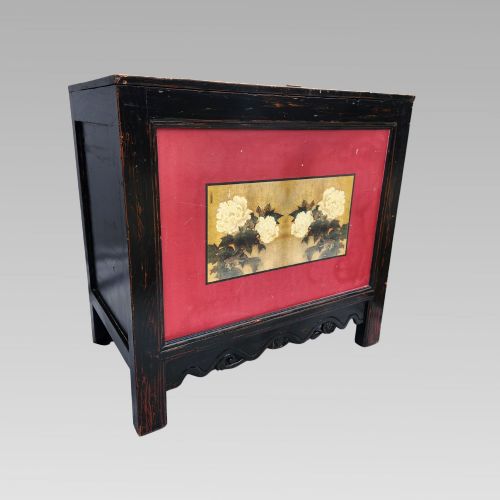
Workshops applied decorative surfaces using black lacquer, red lacquer, and gold leaf, occasionally incorporating hand-painted floral motifs or elaborate Chinoiserie scenes. Metalwork played a crucial structural and aesthetic role, with artisans securing corners, edges, and lids with heavy brass mounts, straps, and decorative lock plates, often using iron for utilitarian reinforcement.
Open an old camphor chest and the lingering scent of timber will instantly transport you across two centuries of maritime trade.
Assessing quality
The depth and clarity of the hand-carved relief work distinguish a standard container from an exceptional piece, as master carvers achieved remarkable crispness and dimension in floral and figurative motifs. Finer trunks also display superior timber selection, utilising well-figured camphor wood or dense tropical hardwoods with stable, harmonious grain patterns.
Hardware integration marks another clear distinction in manufacture, where original brass mounts, straps, and heavy latch plates fit flush against the wood without loose joints or crude replacements. The presence of intact interior fittings, original lacquer surfaces, and working locks with key components elevates the integrity of the piece.
The Oriental Wooden Storage Trunk Glossary
- Camphor wood
- A light-coloured aromatic timber native to Asia that repels moths and insects. It was widely used for lining and constructing blanket boxes and travelling chests.
- Zanzibar chest
- A heavy hardwood storage chest featuring elaborate brass studding, straps, and corner mounts. These pieces reflect the trade links between India, Oman, and East Africa.
- Tansu
- A traditional Japanese mobile storage chest built from wood with iron fittings. These modular pieces were designed for household organisation and travel.
- Chinoiserie
- European decorative style inspired by Chinese artistic traditions, often featuring lacquerwork and painted motifs. It appeared on furniture produced for export markets.
- Coffer
- A sturdy wooden box with a hinged lid used historically for storing valuables and documents. They typically sit low to the ground and feature heavy structural joinery.
Oriental Wooden Storage Trunk: Frequently Asked Questions
What is a camphor wood trunk?
A camphor wood trunk is a storage chest made from aromatic Asian timber designed to keep textiles safe from moths and dampness. The wood releases a distinct natural scent that acts as a deterrent to pests.
These chests often feature hand-carved exterior panels depicting landscapes or florals, paired with protective brass hardware. They functioned historically as blanket boxes and travel luggage.
How were Zanzibar chests used?
Zanzibar chests served as secure travelling luggage and domestic storage for merchants operating across the Indian Ocean trade routes. Their dense hardwood construction and heavy brass strapping protected contents during sea voyages.
In the home, they doubled as seating and tables while keeping valuable garments and documents locked away safely. Their distinctive brass studwork also displayed the wealth and status of the owner.
How do I style a wooden trunk?
A wooden storage chest works well as a coffee table in a living room, providing a flat surface for books while concealing blankets inside. Placing one at the foot of a bed offers convenient bedroom storage and extra seating.
The natural wood tones and brass hardware complement both traditional and modern interiors, adding warmth and texture. Keeping the top uncluttered allows carved panels or lacquer finishes to remain visible.
How do I date an antique chest?
Dating an antique chest involves examining the wood species, construction methods, and hardware styles used by the makers. Eighteenth-century examples often feature simpler, heavier panel construction, while nineteenth-century pieces frequently incorporate intricate relief carving and elaborate brass mounts.
Documentation, regional styles, and patination on the timber and metal also provide clues to age. Trunks bearing campaign-style recessed handles or specific export lacquer techniques typically point to the Victorian era or earlier.