





Relief Carved Camphor Chest
A relief carved camphor chest is a pungent timber storage trunk designed to protect precious textiles, bringing dense grain and deep carving into the bedroom or hallway.
Relief Carved Camphor Chest
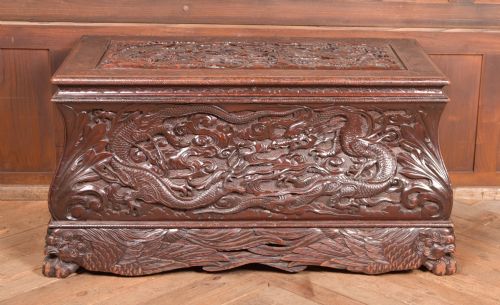
A relief carved camphor chest is primarily a storage trunk or blanket box designed for domestic utility and voyage. These pieces emerge in styles described as Chinese Export, Traditional Chinese, Chinese Oriental, and Oriental, spanning the nineteenth century and the early decades of the twentieth century.
The buyer meets trunks, coffers, storage chests, and occasional cabinet forms on this page. Most examples date from the 1900s to the 1930s, alongside nineteenth-century precursors.
Camphor wood forms the foundational material for every item listed, frequently paired with brass hardware.
How they were made
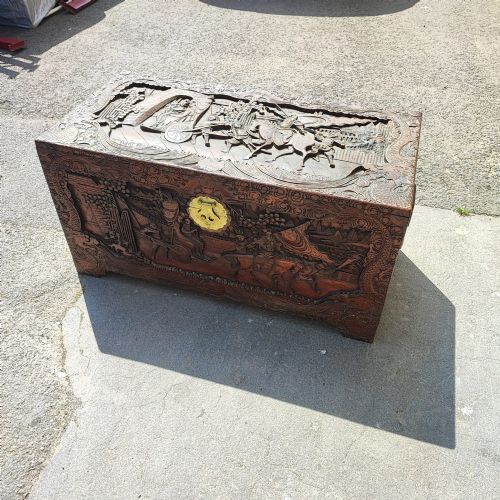
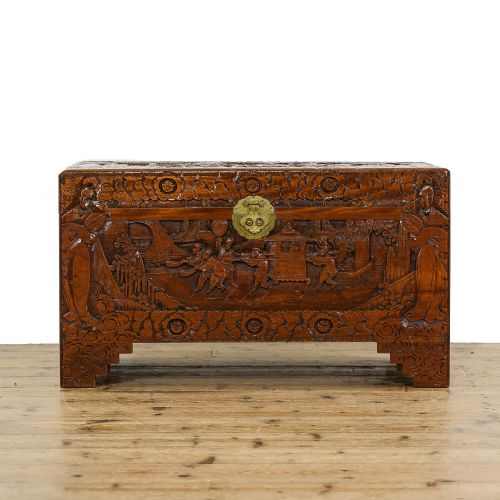
Makers construct these trunks using camphor wood, known for its distinct aromatic properties and resilience against pests. Artisans apply deep surface carving to create raised pictorial motifs across the exterior panels.
Metals such as brass appear in the hinges, corner braces, and central lock plates, providing structural reinforcement and functional closure to the timber boxes.
Selected pieces incorporate lacquered wood surfaces alongside the carved camphor construction, adding varied sheen and colour to the exterior.
Relief Carved Camphor Chest Retail Price Guide 2026
Typical asking prices for relief carved camphor chest among the pieces listed under this phrase on Sellingantiques today, from the lower quarter to the upper quarter. They describe what is for sale here now, not the wider market.
Current listings exclusively feature camphor wood, brass, and lacquered wood across periods spanning the nineteenth century to 1930.
What varies in quality
The depth and intricacy of the carving separate ordinary boxes from superior examples. Skilled carvers achieve high relief with crisp undercut details, whereas lesser work remains shallow and flat.
The thickness of the camphor timber and the weight of the brass mounts dictate the structural integrity of the chest. Substantial boards and robust hardware indicate superior craftsmanship during the manufacturing process.
The Relief Carved Camphor Chest Glossary
- Camphor wood
- An aromatic timber native to Asia utilised for trunk construction. Its natural scent repels insects, making it ideal for storing woollens and linens.
- Relief carving
- A sculptural technique where figures and motifs project from a flat background. Artisans carve these scenes directly into the timber surface of the chest.
- Chinese Export
- Goods manufactured in China specifically for Western markets during the nineteenth and early twentieth centuries. These items often blend Eastern motifs with European functional forms.
- Blanket box
- A large rectangular container hinged at the top used for holding bedding. This represents one of the primary functional categories found among these camphor chests.
Relief Carved Camphor Chest: Frequently Asked Questions
What is a camphor chest?
A camphor chest is a timber storage trunk fashioned from aromatic wood, historically utilised for protecting clothing and textiles from moths and dampness during transit or home storage.
The dense wood releases a distinct medicinal scent that lingers within the fibres of stored garments long after the lid is closed.
How do I date these chests?
Dating relies on examining the construction style, the hardware, and the depth of the carving. Most examples on this page span the nineteenth century through the 1930s.
Earlier pieces often display simpler hardware and heavier timber boards, while 1920s and 1930s trunks frequently exhibit dense pictorial carving associated with Chinese Export production.
How do I use a camphor chest at home?
These chests function effectively as end-of-bed blanket boxes, low coffee tables, or hallway storage furniture. Their internal capacity accommodates bulky textiles while the decorative exterior adds texture to a room.
Keep the interior dry and avoid placing them in direct sunlight to protect the natural timber grain and any applied lacquer.
Why do these chests smell strong?
The pungent aroma comes from the natural oils inherent in the camphor laurel tree from which the chest is made. This strong scent is the primary defence mechanism against insects.
Allowing the interior to air out by opening the lid for a few hours usually reduces the intensity of the aroma in living spaces.