



Oriental Wooden Screen Panels
Oriental wooden screen panels bring layered carving, rich lacquer and intricate fretwork into a room.
Oriental Wooden Screen Panels
Oriental wooden screen panels encompass folding screens, room dividers, wall plaques and fire screens spanning the eighteenth century to the mid twentieth century. Buyers seeking oriental wooden screen panels encounter diverse forms ranging from large multi fold lacquer screens to individual carved wooden wall plaques.
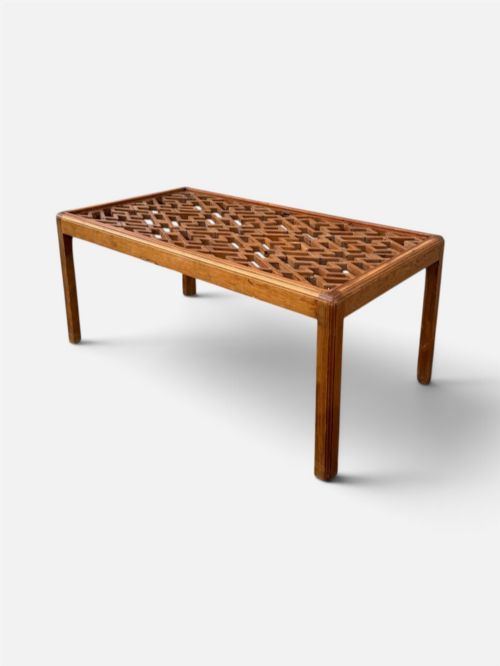
The selections draw on multiple regional traditions including Chinese Qing Dynasty, Japanese Meiji, Anglo Indian and Chinoiserie styles. Folding screens and room dividers dominate the formats, alongside smaller table screens and converted coffee tables featuring antique fretwork panels under glass.
Originating across distinct periods such as the eighteenth century, nineteenth century and early twentieth century, these pieces demonstrate rich cultural craftsmanship. Makers utilised native hardwoods, lacquer and polychrome pigment to construct architectural and decorative room furnishings.
How they were made
Construction relies heavily on dense hardwoods and applied lacquer finishes, often enriched with gold leaf, brass and glass details. Artisans built multi fold structures using intricate joinery to support heavy wooden panels.
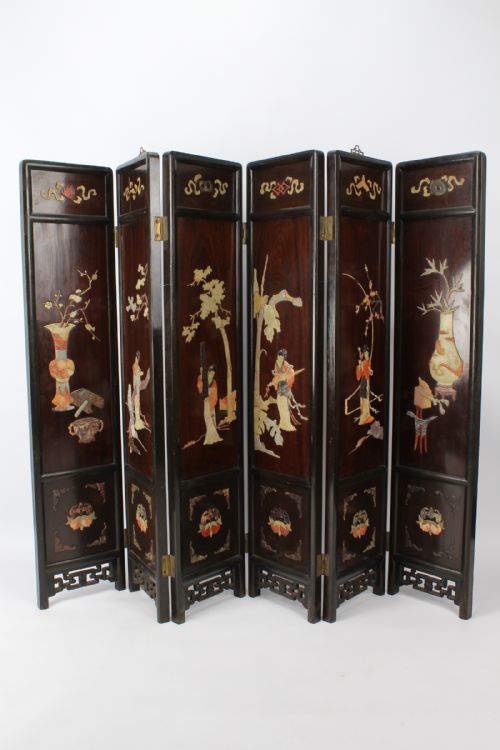
Surface decoration frequently incorporates deep carving, polychrome pigment and inlaid materials such as bone, mop and abalone. Coromandel lacquer techniques involve incised designs filled with colour on a dark lacquered ground.
Detailed fretwork panels demonstrate precise manual woodworking skills, creating geometric or botanical lattice patterns within solid wooden frames.
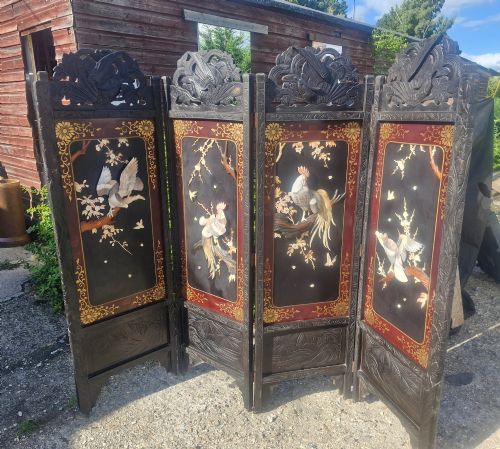
Intricate abalone inlay captures shimmering feathers on birds perched inside branches, preserved across the centuries.
What varies in quality
Quality rests on the depth and precision of the hand carving, alongside the complexity of inlay work such as bone or mother of pearl. Superior examples display crisp definition in feathered birds, foliage and figural scenes.
The integrity of the lacquer finish and the richness of applied gold leaf or polychrome pigment distinguish finer works from simpler decorative items. Original joinery and well preserved hinges on folding screens elevate the standing of a piece.
The Oriental Wooden Screen Panels Glossary
- Coromandel lacquer
- A Chinese incised lacquer technique where the carved design is filled with pigments or gold on a dark ground. This method creates a textured, multi layered surface.
- Fretwork
- Ornamental perforated woodwork formed in geometric or botanical patterns. It appears frequently in panels and room dividers.
- Chinoiserie
- European stylistic interpretations of Chinese and East Asian artistic traditions. This style influenced decorative arts across various periods.
- Meiji
- A period in Japanese history spanning from eighteen sixty eight to nineteen twelve. Works from this era often showcase refined decorative lacquer and metal details.
- Hardwood
- Dense, durable timber utilised for structural stability in traditional furniture and screens. These woods support deep relief carving without splitting.
Oriental Wooden Screen Panels: Frequently Asked Questions
How do I use a folding screen?
Folding screens serve to divide open floor plans, create intimate seating areas, or act as decorative backdrops against a wall.
They offer flexible spatial arrangements while introducing strong architectural texture and historical visual interest to contemporary interiors.
Are these screens heavy?
Many multi fold screens and solid hardwood panels carry substantial weight due to dense timber construction and thick lacquer layers.
Larger eight fold or coromandel examples require stable placement and careful handling when repositioning across a room.
What is Coromandel lacquer?
Coromandel lacquer is an Asian decorative technique involving dark lacquer applied over a wood base, then incised and painted with pigments.
Artisans carve deeply into the surface to reveal contrasting layers, producing rich pictorial scenes of birds, foliage and figures.
How are wall panels mounted?
Wall panels and plaques usually require sturdy concealed fixings or brackets suited to the weight of the specific hardwood timber.
Professional installation ensures the panel frame remains secure without putting undue stress on historical joinery.