



Oriental Style Occasional Table
An oriental style occasional table brings distinct decorative form and varied surface detail into a room, spanning Victorian bamboo to carved hardwood.
Oriental Style Occasional Table
An oriental style occasional table covers a diverse group of small portable furnishings influenced by Asian and Near Eastern design traditions. You will encounter forms ranging from side tables and lamp tables to nests of tables and sewing tables.
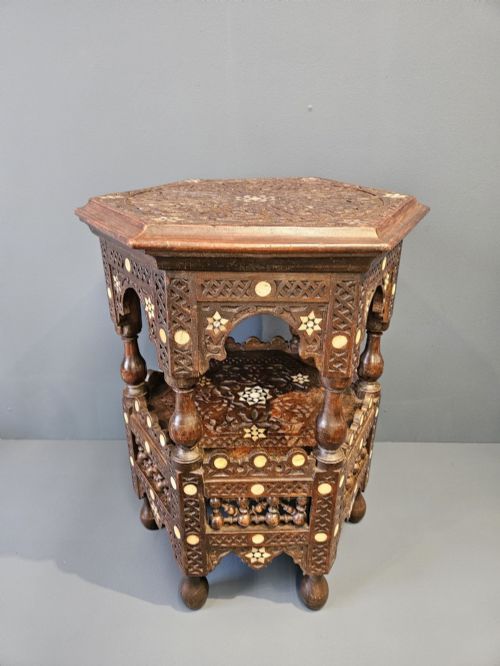
The selections here draw heavily from the nineteenth century and early twentieth century, taking shape through Victorian interpretations, Chinese export work, Anglo-Indian craftsmanship, and Moorish Revival styles.
How they were made
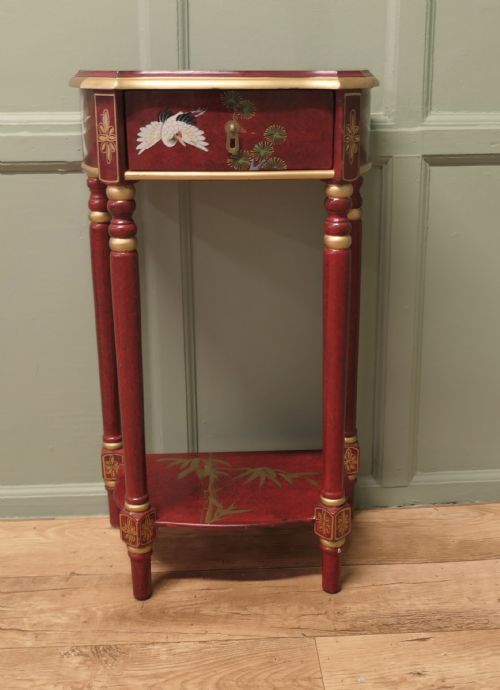
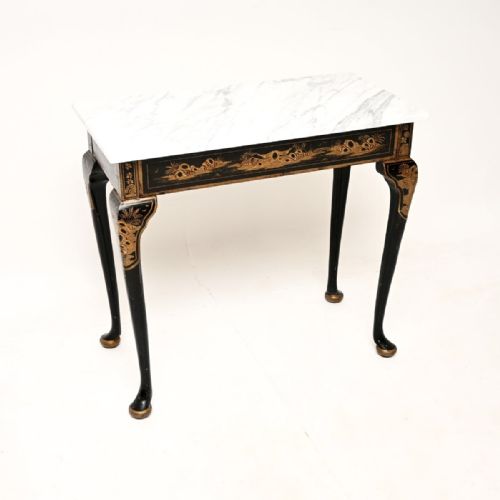
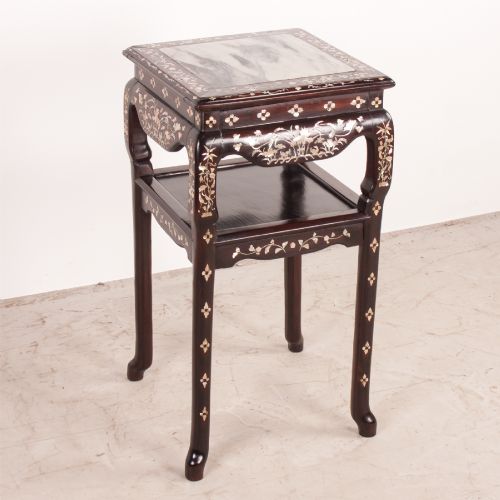
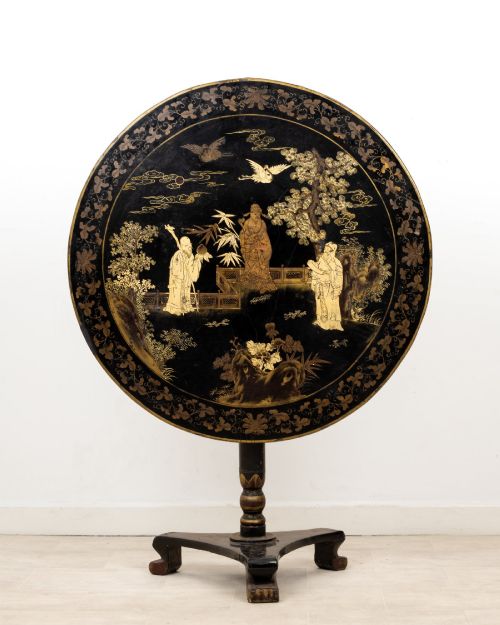
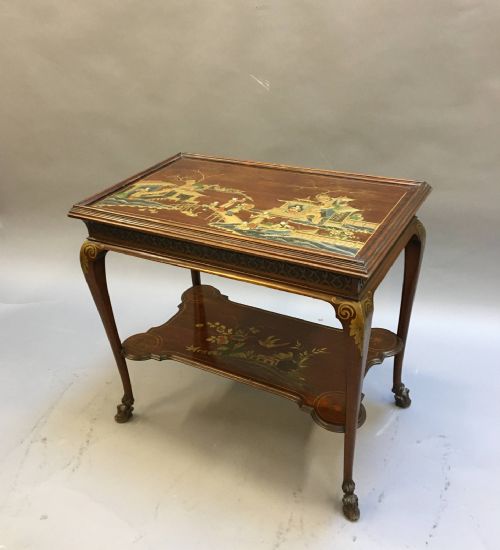
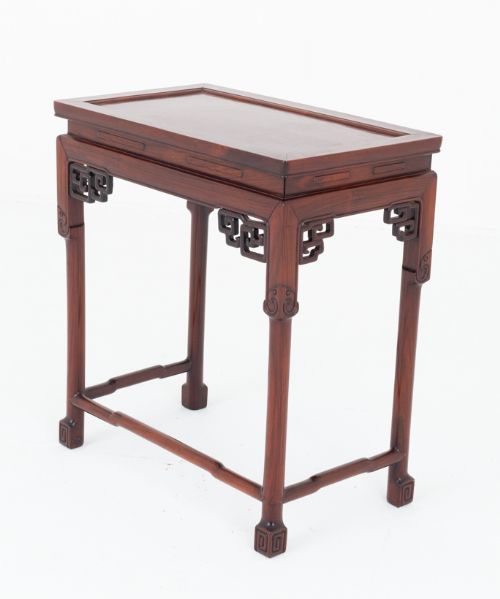
Maker workshops utilised dense timbers such as rosewood, huanghuali, and bamboo, frequently combining them with contrasting inlays of bone, mother-of-pearl, and brass wire. Surface decoration relied upon layers of black or coloured lacquer, gold leaf, and hand-carved relief work.
Structural methods vary from traditional mortise and tenon joinery in Chinese hardwood pieces to flexible bamboo framing secured with bindings and specialised lacquering techniques on panel tops.
What varies in quality
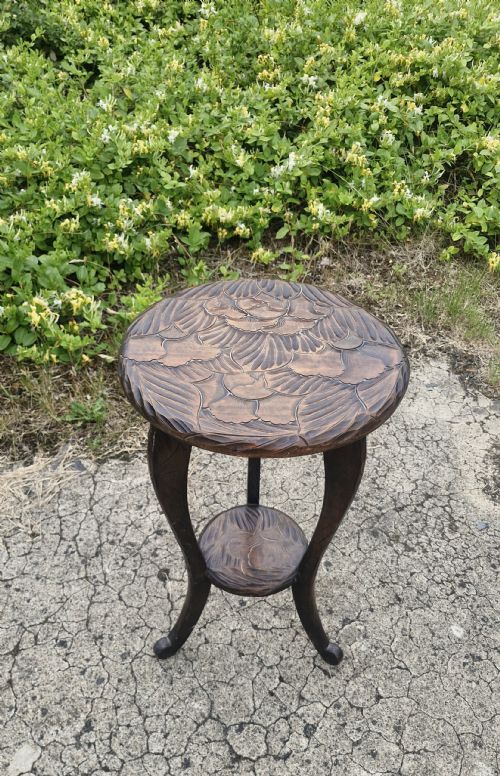
Quality rests upon the depth and precision of the hand-carving alongside the crispness of inlaid materials like mother-of-pearl and bone. Pieces featuring dense hardwoods or intricate lacquer work show superior material selection compared to simpler softwood or painted alternatives.
The integrity of the construction and the preservation of original surface finishes, whether lacquer or polished grain, dictate the distinction between standard production items and finer workshop creations.
Liberty & Co·Gabriel Viardot
The Oriental Style Occasional Table Glossary
- Huanghuali
- A fragrant tropical hardwood native to China. Collectors prize it for its rich colour and distinctive grain patterns.
- Hoshiarpur
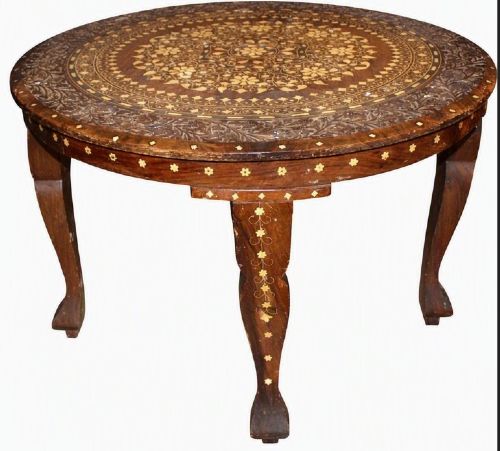
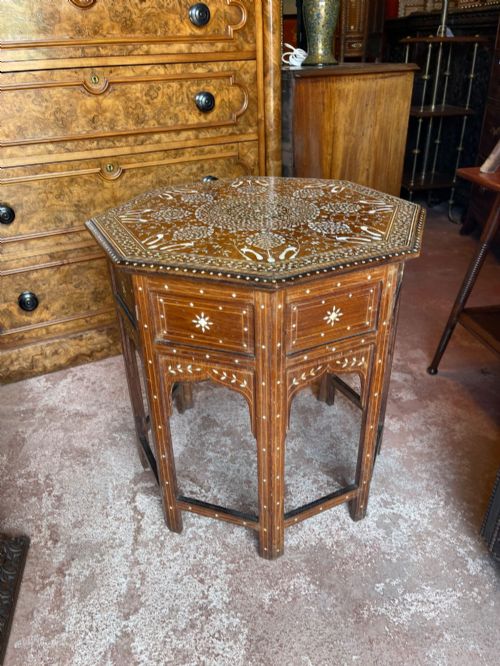
- A city in India known for intricate woodwork. Tables from this tradition feature dense surface carving inlaid with bone or brass.
- Japonisme
- The influence of Japanese art on Western makers during the late nineteenth century. It appears in asymmetrical designs and painted motifs.
- Tiger bamboo
- A specific variety of bamboo marked by mottled brown patterns resembling tiger stripes. Makers utilised it for lightweight Victorian frames.
Oriental Style Occasional Table: Frequently Asked Questions
How do I identify a Victorian bamboo table?
Victorian bamboo tables utilise natural cane framing combined with lacquered papier-mâché or wooden panels. They frequently appear in nineteenth century side table and sewing table forms.
Examine the joints and bindings to understand how the lightweight structure was assembled during the period.
What is an Anglo-Indian table?
Anglo-Indian tables are pieces made in India by local artisans for British patrons during the colonial era. They showcase dense hand carving and geometric bone or brass inlay.
These items often feature regional signatures or specific workshop stamps on the woodwork.
Where should I place a nest of tables?
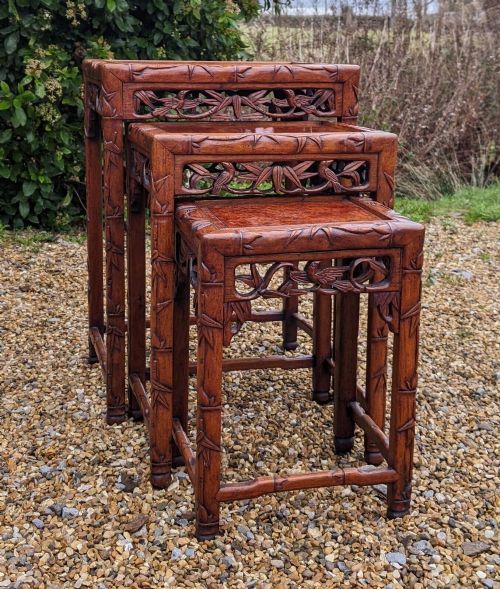
A nest of tables functions well beside seating areas where surface space needs to expand for drinks or lamps. The graduated design allows smaller units to tuck neatly beneath the largest top.
Consider pairing them with a central sofa or placing individual units around a room for matching surface accents.
How do I care for a lacquered surface?
Lacquered surfaces require gentle dusting with a soft, dry cloth to protect the delicate finish. Avoid placing them in direct sunlight or near heat sources to prevent cracking.
Keep moisture away from any exposed wood edges or inlaid bone details during routine cleaning.