




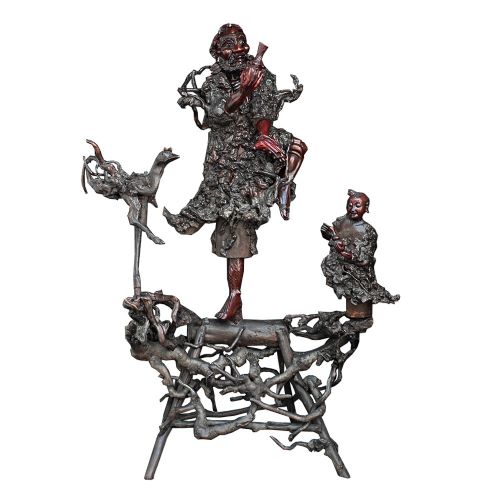


Oriental Root Carving
Oriental root carving brings untamed natural wood shapes and ancient human craftsmanship together in sculptures, lamps, and stands.
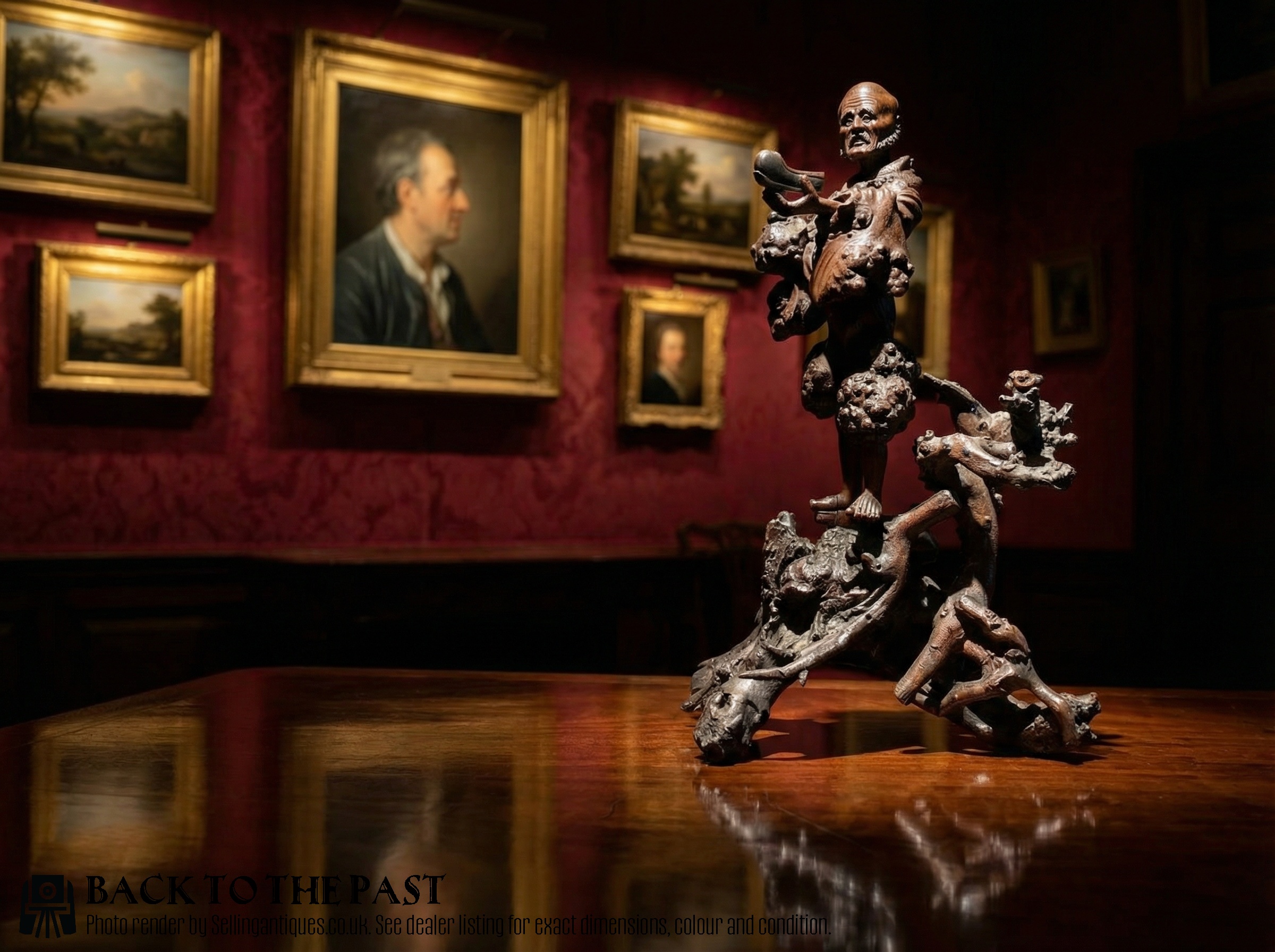
Oriental Root Carving
Oriental root carving transforms gnarled, twisted timber into expressive figures, functional tables, lamps, and display stands. These pieces capture organic forms, often following the natural contours of the wood to suggest figures, animals, or craggy landscapes.
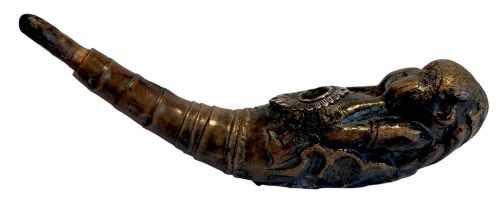
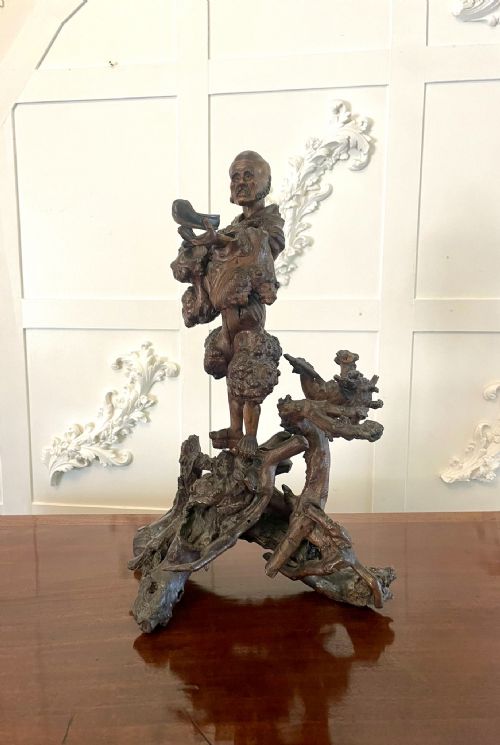
The selections span the eighteenth and nineteenth centuries, with Chinese Qing Dynasty and Japanese Meiji Period examples forming the core of the available objects. Sculptures of scholars, lion dogs, and figures carrying companions appear alongside bamboo pipes and headrests.
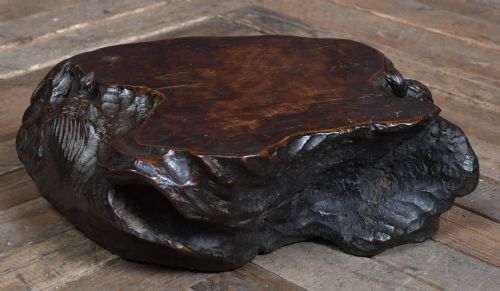
Table lamps adapted from root wood and stands designed for bonsai display represent the practical side of these natural sculptures. Surviving pieces demonstrate how traditional makers preserved the eccentric geometry of root wood while shaping utilitarian or decorative items.
Materials and construction
Makers utilised root wood, hardwood, burr wood, and bamboo, selecting timber with dense grain and complex, natural twists. Lacquer, brass, and quartz occasionally supplement the primary wooden structures, particularly in lamps and stands.
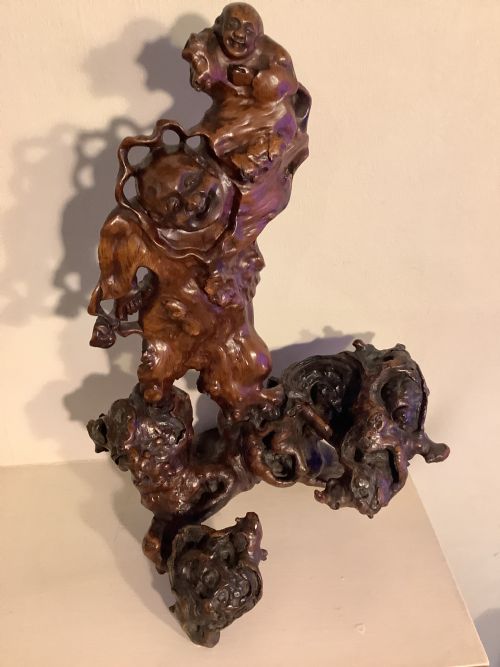
Several pieces capture men carrying children or companions on their shoulders, turning stubborn roots into scenes of piggyback travel.
Judging quality in root carving
Quality rests on the sculptor's ability to work with the natural growth of the timber rather than fighting it. The most successful pieces integrate the gnarled roots seamlessly into the anatomy of a figure or the flat surface of a table.
Surface finish and handling define the better examples, showing deep patination developed through age and use. Sharp definition in carved details, such as facial expressions or hands, distinguishes finer sculptural work from simpler forms.
The Oriental Root Carving Glossary
- Root wood
- Timber taken from the underground root system of a tree, prized for its convoluted grain and irregular shapes. Carvers exploit these natural distortions to create dynamic sculptures.
- Burr wood
- A growth on a tree where the grain has deformed into a swirl or cluster, highly valued for decorative surfaces. It provides rich visual texture in carvings and small stands.
- Bonsai stand
- A low wooden platform designed to elevate a potted tree, often carved to mirror organic forms. These stands frame the living plant with complementary natural woodwork.
- Foo dog
- A traditional guardian lion depicted in Chinese art, commonly modelled with fierce expressions and curly manes. These mythical beasts appear frequently in root and hardwood sculpture.
- Patina
- The glossy sheen and mellow colour developed on wood surfaces over decades of handling and exposure to air. A good patina indicates genuine age and regular contact.
Oriental Root Carving: Frequently Asked Questions
What is oriental root carving?
Oriental root carving is the traditional practice of shaping gnarled tree roots and timber into figurative sculptures, furniture, and display stands. Artisans use the natural twists of the wood to suggest figures, animals, and landscapes.
These works date predominantly from the eighteenth and nineteenth centuries, originating largely from China and Japan. They combine organic shapes with skilled hand carving.
How were these root carvings used?
Many root carvings served as decorative sculptures for scholars' desks, displaying skill and encouraging quiet contemplation. Others had practical functions, such as table lamps, smoking pipes, headrests, and stands for bonsai trees.
Larger pieces acted as occasional tables or heavy sculptural figures in traditional interiors. Their dual nature as art and utility made them versatile items in period homes.
How do I date a root carving?
Dating relies on stylistic markers, tool marks, and the quality of the timber's patina. Pieces associated with the Qing Dynasty or Meiji Period often exhibit specific regional carving conventions and subject matter.
Examine the depth of the wood's finish and the wear patterns around handling points. Natural materials age gradually, leaving visible signs of age across the surface.
How should I care for root wood?
Keep root wood items away from direct sunlight and sudden temperature shifts to prevent the timber from splitting. Dust them gently with a soft, dry cloth without applying modern polishes.
Stable indoor humidity preserves the natural oils and dry patination of antique hardwood and bamboo. Minimal intervention protects the original surface texture.