







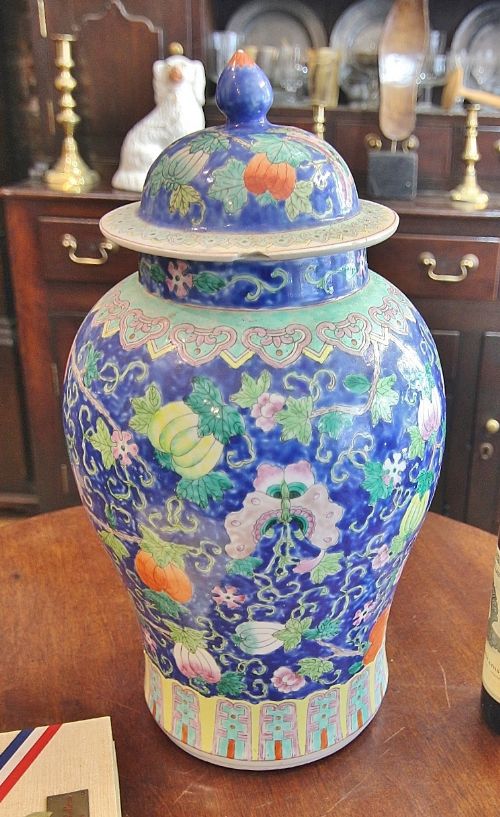

Oriental Porcelain Temple Jar
These substantial oriental porcelain temple jar examples combine hand-painted decoration with historic ceramic forms to anchor a room.
Oriental Porcelain Temple Jar
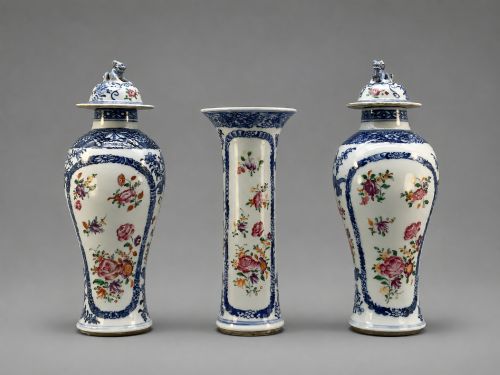
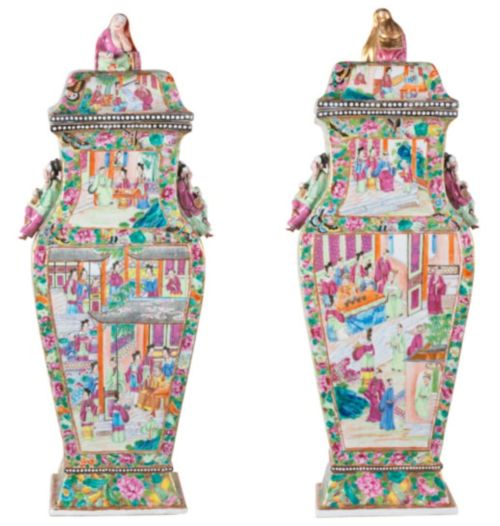
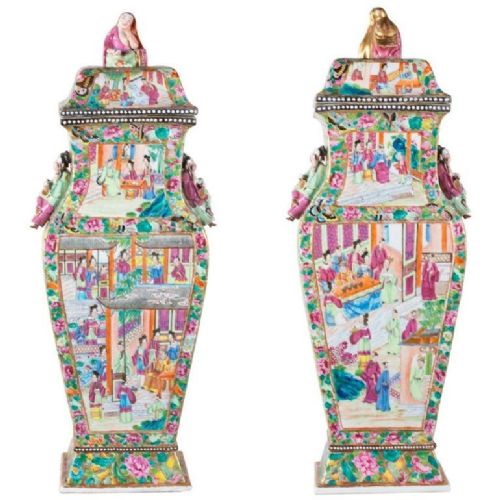
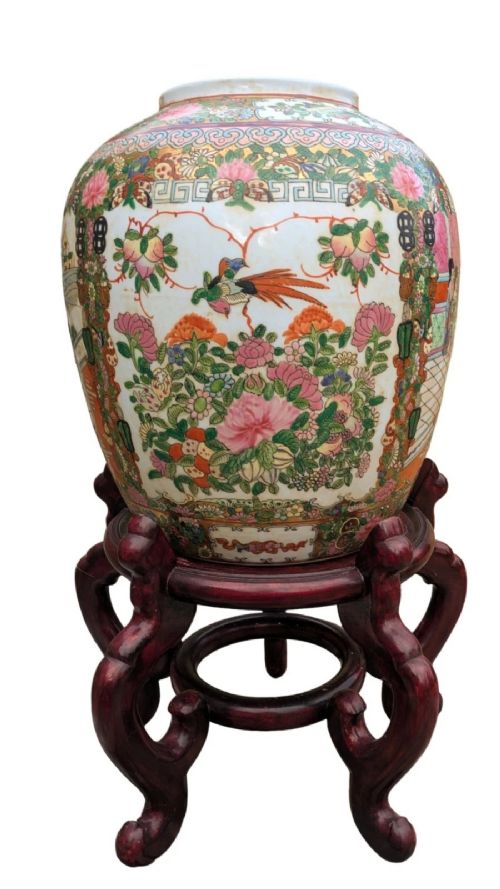
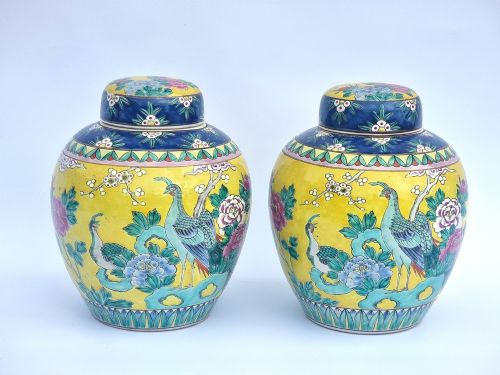
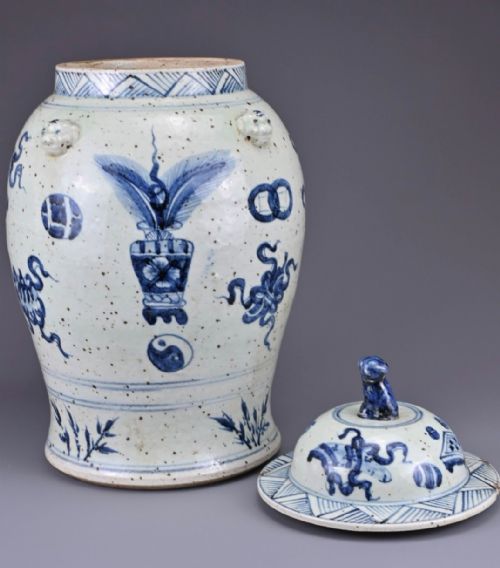
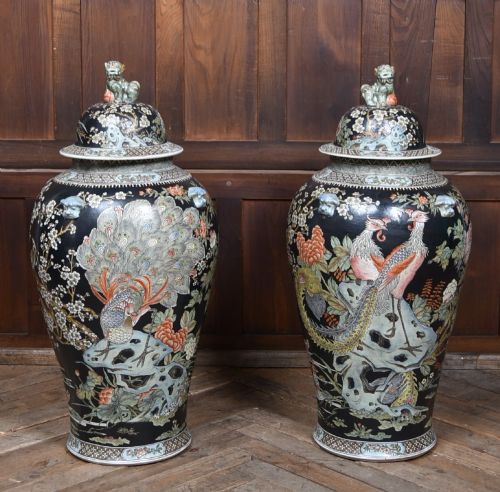
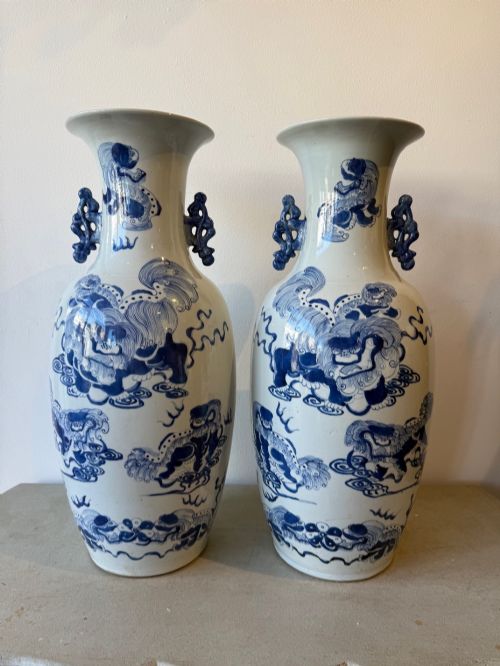
When you search for oriental porcelain temple jar, you are looking at large ceramic vessels created for display in both Chinese and Japanese interiors. The examples met on this page span the nineteenth and twentieth centuries, taking the form of covered lidded vases, ginger jars, and monumental floor jars.
The styles range widely across the evidence, recording Chinese Qing Dynasty blue and white pieces alongside Japanese Imari, Satsuma, and Kutani wares. Many survive as pairs or garnitures, originally intended for formal mantel or console arrangement.
Forms vary from robust baluster shapes to converted table lamps fitted with ormolu mounts, reflecting both original export production and later nineteenth-century interior tastes.
How they were made
The pieces recorded in the evidence rely primarily on porcelain bodies shaped on the wheel or in moulds, then painted by hand before firing. Artisans applied cobalt underglaze for blue and white designs, or layered overglaze enamels and gilding for polychrome palettes.
Specialised regional centres such as Arita and Kyoto utilised local clays and mineral pigments, occasionally incorporating gold leaf and fine glaze finishes to achieve the characteristic depth seen in Imari and Satsuma output.
Oriental Porcelain Temple Jar Retail Price Guide 2026
Typical asking prices for oriental porcelain temple jar among the pieces listed under this phrase on Sellingantiques today, from the lower quarter to the upper quarter. They describe what is for sale here now, not the wider market.
Listings show porcelain decorated in the Imari palette alongside Chinese blue and white and Satsuma wares spanning the nineteenth and twentieth centuries.
What varies in quality
Quality in these ceramics rests on the precision of the brushwork and the clarity of the fired glaze. Finer examples display meticulous detail in facial expressions, foliage, and geometric borders, whereas simpler production shows looser, more repetitive brush application.
The weight and balance of the porcelain body, along with the crispness of the moulding on covers and foot rims, separate standard export pieces from the exceptional signed works recorded by makers such as Yamashu.
The Oriental Porcelain Temple Jar Glossary
- Imari
- A style of Japanese porcelain originating from Arita, traditionally decorated in underglaze blue, iron red, and gilt. This palette became immensely popular across European export markets during the seventeenth century and later.
- Ginger jar
- A ceramic vessel characterised by its broad shoulders and high-domed cover, originally designed for storing spices and herbs. Nineteenth-century examples frequently function purely as decorative garnitures.
- Baluster
- A vase shape with a rounded body that tapers toward the base and flares slightly at the foot and neck. It provides a stable, classical silhouette suited to large-scale floral and landscape painting.
- Garniture
- A set of three or more matching vases and jars designed to be displayed together on a mantelpiece or cabinet top. These matched groupings were a staple of stately home decoration.
- Doucai
- A Chinese porcelain technique involving underglaze blue outlines filled in with contrasting overglaze enamels. This method requires multiple firings to achieve its distinct dual-colour effect.
Oriental Porcelain Temple Jar: Frequently Asked Questions
What is an oriental porcelain temple jar?
These large ceramic vessels served decorative and storage roles in historic interiors across Asia and Europe.
They appear primarily as lidded vases or ginger jars decorated with hand-painted blue and white or polychrome enamel motifs.
How were oriental porcelain temple jars used?
Historic households utilised these jars for interior display on mantelpieces, tables, and monumental floor placements.
Many examples were later converted into table lamps or fitted with metal mounts during the nineteenth century.
How do you date an oriental porcelain temple jar?
Dating relies on examining the painting style, glaze characteristics, and potting techniques recorded across different periods.
Nineteenth-century pieces often display denser enamel colours and heavier bodies compared to earlier eighteenth-century prototypes.
Are these jars usually found in pairs?
Many of the listed pieces survive as matched pairs or larger garnitures intended for symmetrical room display.
Finding matching covers and balanced proportions across both vessels is a common feature of these groupings.