



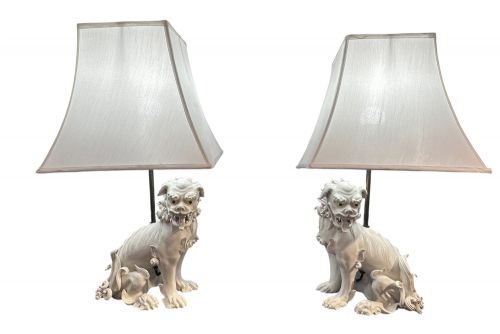


Oriental Porcelain Lamp Pair
These oriental porcelain lamp pair selections bring balanced decoration and historic ceramic forms into domestic lighting schemes.
Oriental Porcelain Lamp Pair
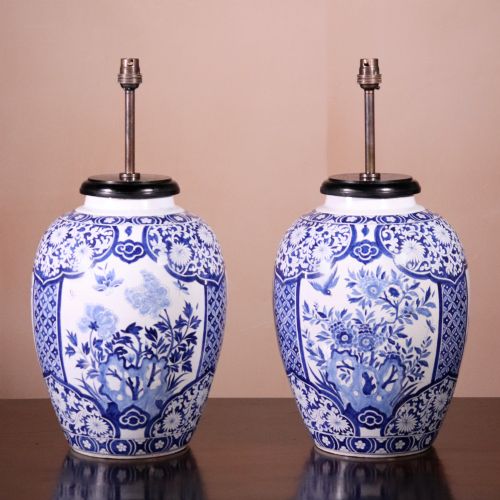
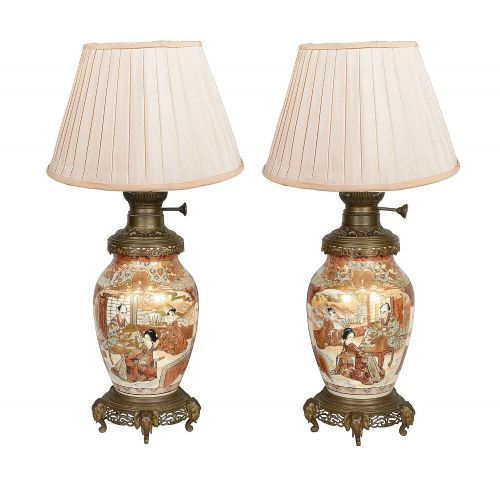
An oriental porcelain lamp pair typically takes the form of converted antique vases, ginger jars, or lidded vessels mounted for electricity. The listings show considerable reliance on nineteenth-century Chinese and Japanese manufacture, including Satsuma, Kutani, and blue and white wares adapted with electrical fittings.
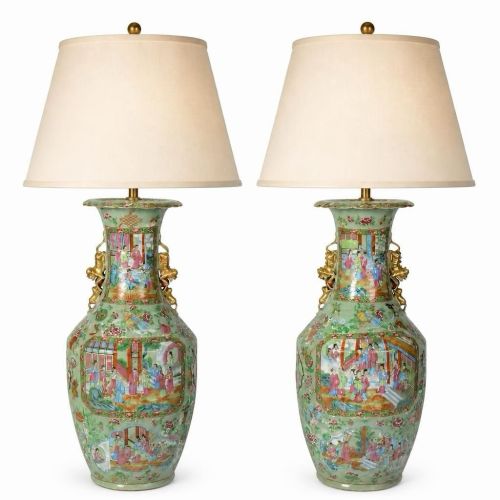
Buyers encounter matching duplicates originating from diverse traditions such as Famille Rose, Rose Medallion, and Canton production. Many examples utilise traditional shapes like baluster vases and cylindrical jars, retaining their original hand-painted palettes while serving contemporary illumination needs.
Materials and mounting
The underlying bodies are formed from high-fired ceramic or porcelain, frequently embellished with enamel pigments, underglaze blue, or crackleware glazes. Artisans applied hand-painted motifs ranging from floral panels to figural scenes before some vessels were fitted with metal mounts.
Secondary materials visible across the pieces include ormolu, brass, wood, and silk shades. Conversion work often integrates metal collars or bases to support electrical hardware while preserving the ceramic body.
Several fierce Foo dogs stand guard on ceramic bases, waiting to illuminate the room.
Execution and symmetry
Quality rests heavily upon the crispness of the hand-painted decoration and the matching precision between the two vessels. Superior examples display finely detailed enamelwork, balanced colour application, and harmonious proportions across both pieces in the pair.
The integrity of the conversion work and the quality of supplementary metal mounts also influence the standing of an object. Integration of brass or ormolu components that complement rather than overwhelm the ceramic body distinguishes finer assemblies.
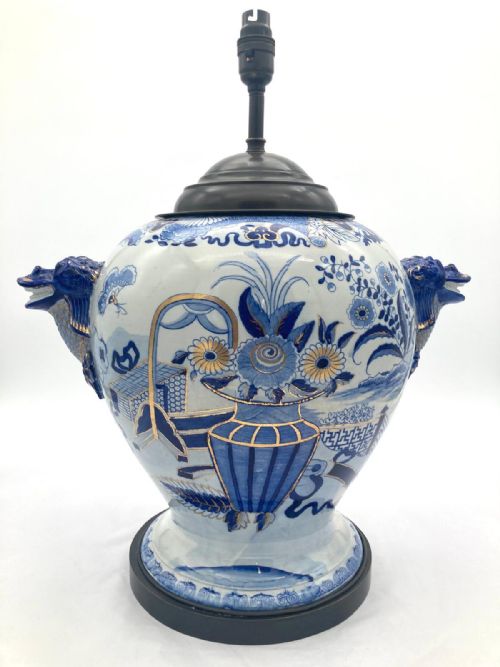
Hicks and Meigh
The Oriental Porcelain Lamp Pair Glossary
- Famille Rose
- A major palette of Chinese ceramic enamels featuring opaque pink or rose colours introduced during the Qing Dynasty. This technique allowed for nuanced shading and detailed pictorial compositions on porcelain surfaces.
- Satsuma ware
- Japanese pottery traditionally characterised by a ivory-coloured crackle glaze decorated with polychrome enamels and gilt. These wares were widely exported to European and American markets from the nineteenth century onward.
- Ginger jar
- A storage vessel featuring a broad shoulders and a rounded body, originally utilised for spices or salt before conversion into decorative lamp bases. Many surviving examples retain their cylindrical or slightly tapered profiles.
- Ormolu
- Gilded bronze mounts applied to furniture and porcelain objects during the eighteenth and nineteenth centuries. In lamp pairs, these metal accents frequently form the base or neck fittings.
Oriental Porcelain Lamp Pair: Frequently Asked Questions
How do I match lamp shades?
Selecting shades involves considering the scale of the porcelain body and the dominant colours in the hand-painted decoration. Neutral silk or fabric shades often complement busy polychrome patterns without causing visual competition.
Proportions matter greatly when pairing shades with ginger jars or tall baluster vases. Ensuring the height and width of the shade correspond to the ceramic base maintains proper visual balance in a room.
Can antique vases be safely wired?
Most converted vessels utilise brass or wired mounts that accommodate modern electrical standards without altering the ceramic structure permanently. Professional rewiring ensures internal components meet safety requirements.
Careful handling of the base and cord prevents strain on delicate porcelain or old ormolu mounts. Regular inspection by an electrician keeps older conversions functional.
How do I distinguish Chinese from Japanese pieces?
Chinese porcelain styles frequently include Famille Rose, powder blue grounds, and celadon glazes with distinct motifs like Foo dogs or floral scrolls. These often reflect Qing Dynasty aesthetics.
Japanese pieces in the listings typically comprise Satsuma or Kutani wares, identifiable by specific crackle glazes, distinct earthy palettes, and dense pictorial detailing often associated with the Meiji period.
Where should I place these lamps?
Placing matching lamps on sideboards, mantelpieces, or bedside tables creates symmetrical illumination and anchors a decorative scheme. Their height makes them suitable for corners or large surfaces needing vertical presence.
Keeping them away from direct foot traffic prevents accidental knocks against delicate ceramic bodies or fabric shades. Ambient placement allows the hand-painted details to catch natural and artificial light.