
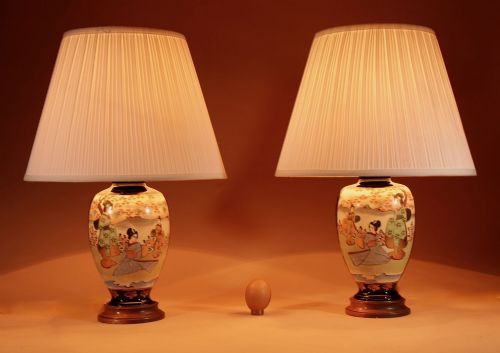
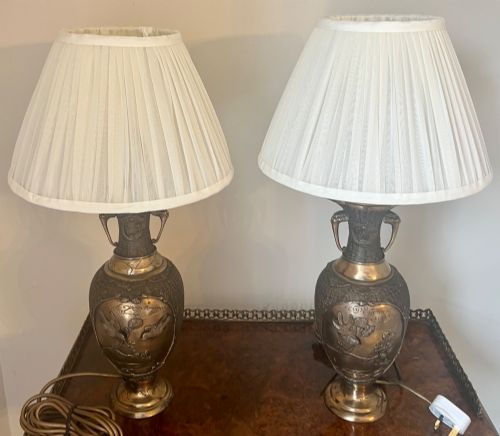


Japanese Urn Lamp Pair
A japanese urn lamp pair brings sculptural presence and rich ornament to a room, drawing on centuries of craftsmanship.
Japanese Urn Lamp Pair
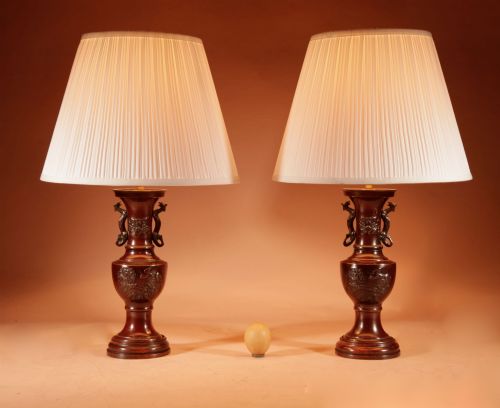
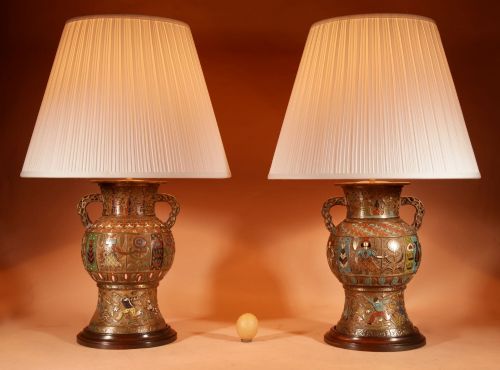
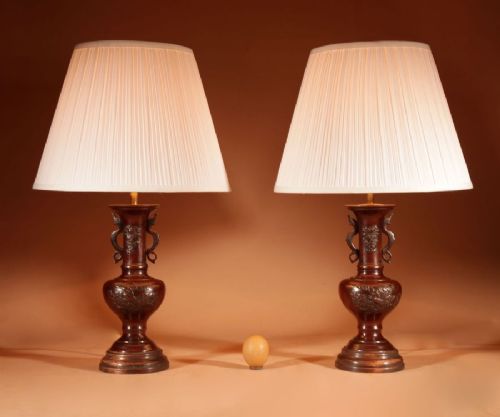
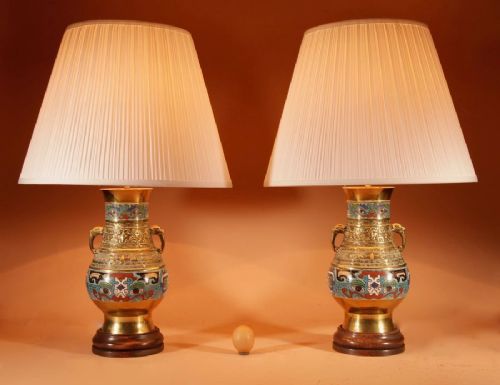
A japanese urn lamp pair consists of matched vessel forms converted to illumination, typically standing upon fitted bases. These pieces draw from a tradition of ornamental pottery and metalwork produced in the Far East.
Buyers encounter Satsuma earthenware, Kutani porcelain, blue and white wares, and champlevé or cloisonné bronze. Each pair serves as a balanced decorative element for interior spaces.
Materials and construction
Potters shaped clay into substantial urns and vases, applying glazes, enamels, and detailed hand-painted scenes. Porcelain and earthenware bodies provide the structural core for many of these converted vessels.
Metalworkers utilised bronze, brass, and enamel to create champlevé and cloisonné surfaces with intricate patterns. Artisans then integrated electrical or mechanical fittings while retaining the character of the original antique vases.
Some vases spent decades holding dried flowers before finally acquiring a brass stem and a lampshade.
Distinctions in quality
The fineness of hand-painted detail and the complexity of enamel work distinguish superior examples from simpler productions. Precision in casting metal mounts and the preservation of original patination also indicate higher craftsmanship.
Condition plays a central part, as intact glazes, unblemished enamel, and matched proportions within the pair elevate the piece. The harmony between the original vessel and its subsequent mounting determines the overall success of the conversion.
Gin Barrie
The Japanese Urn Lamp Pair Glossary
- Meiji Period
- A period of Japanese history lasting from 1868 to 1912, known for distinct artistic output exported to Western markets. Pieces from this era often display advanced metalwork and ceramic techniques.
- Satsuma
- A type of Japanese earthenware featuring a crackled ivory glaze decorated with polychrome enamels and gilt. It remains a popular medium for ornamental table wares.
- Cloisonné
- An ancient metalworking technique employing wire partitions soldered to a metal body to create cells filled with enamel paste. These are subsequently fired and polished to a smooth finish.
- Champlevé
- A technique where troughs or cells are hollowed out of a metal surface and filled with enamel before firing. This method produces bold patterns of colour against a metallic framework.
- Kutani
- Japanese porcelain characterised by vibrant coloured enamels, often incorporating reds and greens in complex pictorial designs. These ceramics were widely produced for both domestic use and export.
Japanese Urn Lamp Pair: Frequently Asked Questions
What periods do these lamps date from?
The pieces span from the eighteenth century through to the early twentieth century, with a heavy representation from the Meiji period.
Craftsmen created these vessels as decorative vases before their later conversion into functional table lamps.
How do I identify Satsuma ware?
Satsuma ceramics are characterised by a distinctive cream-coloured earthenware body covered in a fine, network crackle glaze.
Artists then applied intricate enamel painting and gold highlights over this surface, often depicting figures or floral motifs.
Are these lamps converted antique vases?
Many examples began life as decorative vases or urns before being adapted to house electrical fittings.
This conversion process allows traditional Japanese artistry to function as interior lighting while preserving the original vessel.
How should I place a pair in a room?
Because these pieces are matched, they work well on balanced surfaces such as sideboards, mantelpieces, or large bedside tables.
Their substantial height and decorative detail allow them to function as focal points in traditional or eclectic interiors.