



Oriental Porcelain Incense Censer
An oriental porcelain incense censer brings centuries of ceramic artistry and ritual purpose straight into a modern interior.
Oriental Porcelain Incense Censer
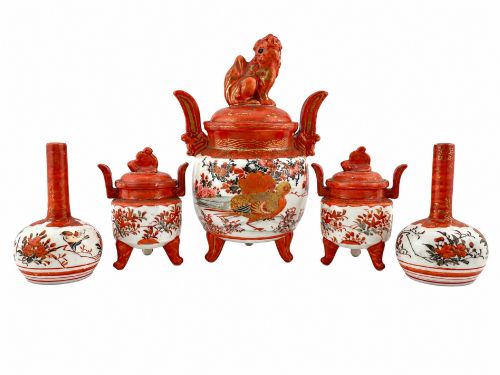
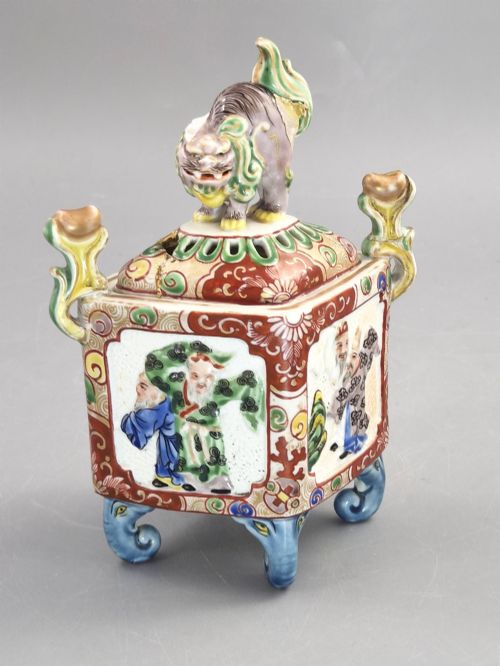
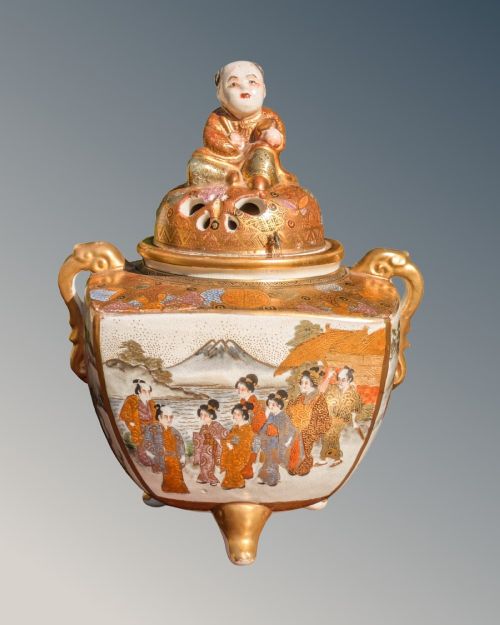
An oriental porcelain incense censer appears in various forms on this page, most commonly as a lidded koro originating from Japan during the Meiji period. These vessels frequently feature tripod feet, sculptural animal finials, and distinct regional styles such as Kutani, Satsuma, and Imari.
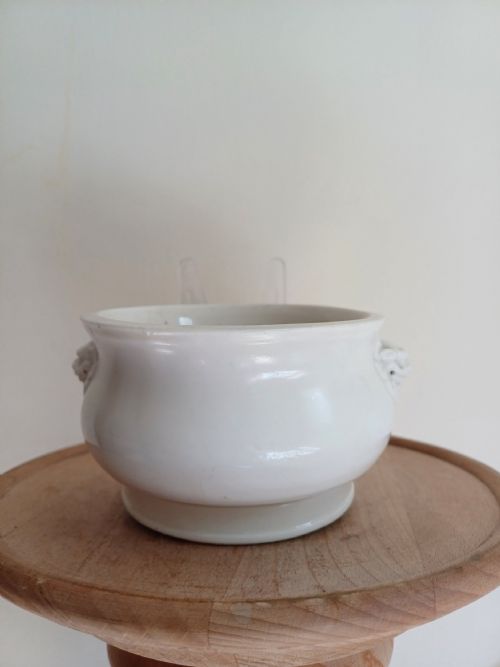
Chinese examples also feature prominently among the listings, ranging from Qing Dynasty creations with dragon motifs to earlier Ming and seventeenth-century blanc de chine pieces. Buyers encounter both utilitarian burners designed for single sticks or cones and larger garniture sets intended for display.
The objects span multiple centuries, uniting Japanese Meiji craftsmanship with older Chinese traditions of ceramic manufacture. Each form reflects the specific aesthetic priorities of its period, whether through overglaze enamels or delicate sculpted details.
Materials and methods of manufacture
Makers utilised fine porcelain and earthenware as the primary body for these vessels, shaping the clay by hand or on the wheel before firing at high temperatures. Cobalt underglaze provided deep blue decoration beneath the clear glaze on many traditional pieces.
Overglaze enamel and gold leaf were applied in subsequent firing stages to add vibrant colour and metallic enrichment to the surface. Sculptural elements such as lion finials and elephant head feet were modelled separately and attached prior to glazing.
The selection includes Japanese Meiji period examples alongside seventeenth-century Chinese blanc de chine and Edwardian Imari wares.
Distinguishing quality across the range
The clarity and precision of the overglaze enamels define the visual success of a piece, with finer examples displaying crisp control over intricate motifs and gilding. Superior specimens balance sculptural weight with delicate reticulation, particularly in complex dragon or floral carvings.
The execution of small details, such as the expression on a shishi finial or the symmetry of tripod feet, reveals the hand of a more accomplished workshop. Pieces carrying historic marks or those forming part of an original garniture set demonstrate higher fidelity to traditional forms.
The Oriental Porcelain Incense Censer Glossary
- Koro
- A traditional Japanese incense burner, usually featuring a lid and supported by three feet. These vessels serve both ritual and decorative functions.
- Shishi
- A mythical lion dog often depicted as a sculptural finial on the cover of an incense burner. Also known as a Foo Dog, it symbolises protection.
- Imari
- A distinct style of Japanese porcelain decorated in underglaze blue, iron red, and gold. This palette developed significant popularity for export markets.
- Kutani
- A style of Japanese coloured porcelain characterised by bold overglaze enamels and intricate pictorial designs. Production flourished particularly during the Meiji period.
- Blanc de chine
- A type of white porcelain made in Dehua, China, featuring a glossy milky glaze. This material gained renown for unadorned religious and decorative figures.
- Garniture
- A set of matching ceramic vessels designed for ornamental display on a mantelpiece or sideboard. These sets typically include jars, vases, or censers.
Oriental Porcelain Incense Censer: Frequently Asked Questions
How were incense burners used?
These vessels held burning incense sticks or aromatic powders during domestic rituals, meditation, or social gatherings. The perforated covers allowed scented smoke to drift gently into the room while containing the ash.
Many examples also functioned purely as decorative objects within traditional interiors. Larger garniture sets adorned temple altars and aristocratic reception rooms alike.
How do I care for my censer?
Dust the surface gently with a soft, dry brush to prevent the accumulation of particles within delicate crevices and reticulated work. Avoid using water or cleaning solutions, particularly on pieces with exposed gold leaf or overglaze enamels.
If you choose to burn incense inside the vessel, place a layer of ash or sand at the bottom to protect the ceramic body from direct heat. Handle the lid by its finial with care to avoid chipping the edges.
What is a Meiji period piece?
Objects dated to the Meiji period originate from the era of Japanese history spanning from eighteen sixty-eight to nineteen twelve. This time marked a rapid expansion of decorative arts created specifically for international export.
Workshops during this era combined traditional ceramic techniques with new aesthetic influences. Pieces from this time often exhibit elaborate surface decoration and skilled sculptural modelling.
How do I identify Chinese Qing pieces?
Qing Dynasty ceramics reflect the artistic standards of the Manchu emperors who ruled China from sixteen forty-four to nineteen twelve. Look for refined potting techniques and specific imperial motifs such as dragons, fish, and floral sprays.
Certain items carry reign marks on the base, though these require careful comparison with authentic period examples. The glaze quality and palette of the enamels provide further clues to their age.