


Meiji Period Porcelain Censer
These Japanese porcelain censers from the Meiji period bring intricate hand-painted enamel and gilded detail to an interior, offering both decorative presence and traditional craftsmanship.
Meiji Period Porcelain Censer
A meiji period porcelain censer is an incense burner originating from late nineteenth-century Japan, produced in forms such as tripod vessels, lidded jars, and sculptural shapes like treasure ships. The listings here show a distinct grouping of incense burners and garniture pieces spanning the Meiji period and Edwardian era.
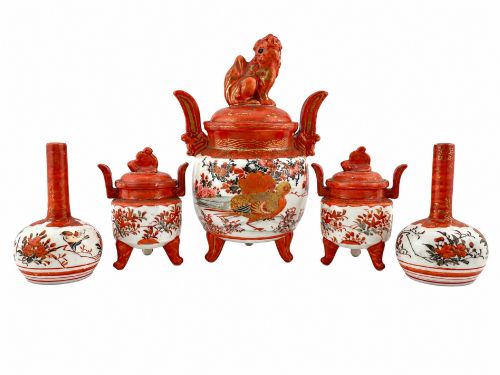
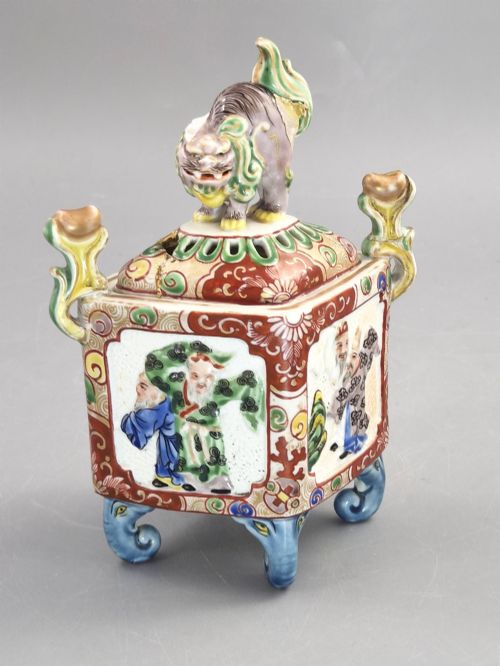
Buyers encountering these pieces will frequently find traditional Japanese Imari, Kutani, and Satsuma wares decorated with overglaze enamel, cobalt underglaze, and gold leaf. Many examples incorporate figural elements such as shishi lions, dragons, and elephant head feet.
The primary forms include lidded koro and multi-piece porcelain garnitures designed for interior display and ritual use. These objects reflect the decorative arts exported from Japan during the nineteenth century and subsequent early twentieth-century revivals.
Materials and construction methods
Makers shaped these vessels from refined ceramic bodies including porcelain and earthenware, often finishing them with cobalt underglaze or detailed overglaze enamel. Gilding and gold leaf were frequently applied to highlight sculptural reliefs and surface patterns.
Construction techniques combined throwing or moulding the ceramic base with intricate hand-sculpted additions such as reticulated panels, dragon motifs, and figural finials. Bronze mounts or fittings occasionally appear alongside the ceramic bodies in the recorded items.
The listings here demonstrate a strong representation of Kutani, Satsuma, and Imari styles produced across the nineteenth century and the Edwardian era.
Distinctions in execution and finish
Quality rests upon the precision of the hand-painting, the clarity of the cobalt underglaze, and the delicacy of sculpted details like shishi finials or reticulated dragon work. Finer examples display rigorous control over the enamels and gold leaf without cluttering the ceramic form.
The complexity of the vessel shape also dictates distinction, moving from standard tripod koro to elaborate figural compositions such as treasure ships and multi-piece garnitures. Marks, signatures, and crests such as the Shimazu crest add documented provenance to specific pieces.
Kizan
The Meiji Period Porcelain Censer Glossary
- Koro
- A traditional Japanese incense burner, frequently fitted with a pierced cover and supported by three feet. These vessels serve both practical incense burning and decorative display.
- Imari
- A style of Japanese export porcelain characterised by a palette of cobalt blue, iron red, and gold. It remains one of the most recognisable aesthetic traditions from the period.
- Kutani
- A style of Japanese painted porcelain and earthenware noted for bold polychrome enamel designs and extensive use of gold. Pieces often incorporate figurative and avian motifs.
- Satsuma
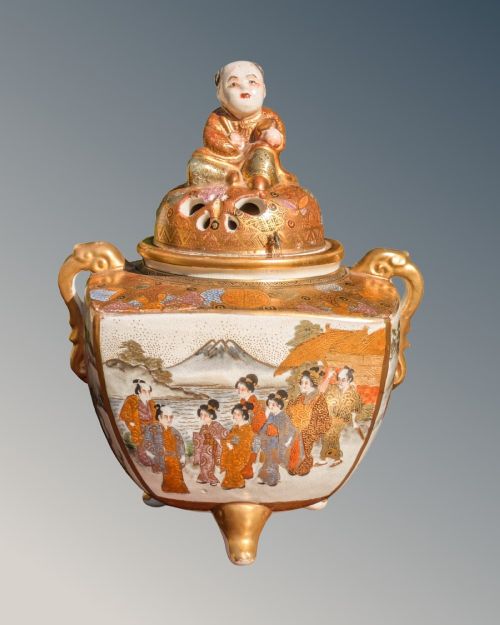
- A type of Japanese earthenware featuring a fine ivory crackle glaze decorated with enamel and gilding. It was widely produced for Western export markets during the nineteenth century.
- Shishi
- A mythical guardian lion or dog frequently depicted as a sculptural finial on vessel lids. The creature symbolises protection and authority in East Asian iconography.
Meiji Period Porcelain Censer: Frequently Asked Questions
How do I distinguish Satsuma from Kutani?
Satsuma ware is typically recognised by its warm ivory-coloured earthenware body covered in a fine network of crackle glaze, over which detailed enamel and gold are applied. Kutani ware relies on porcelain or denser ceramic bodies with strong polychrome enamel painting.
Kutani pieces often feature striking reds and greens alongside gold leaf, whereas Satsuma focuses on densely populated figural and botanical scenes.
Where were these censers placed?
These censers were positioned on mantelpieces, side tables, or as part of larger matching porcelain garnitures in nineteenth-century interiors. Their lids allowed scented incense to diffuse through the room.
As decorative objects, they demonstrated the owner's appreciation for Japanese craftsmanship during the height of the Japonisme movement.
How should I clean porcelain and enamel?
Dust these vessels gently with a soft, dry brush to prevent accumulation in the intricate recesses and reticulated panels. Avoid using water, chemical cleaners, or abrasive cloths that can damage delicate overglaze enamels and gold leaf.
Careful handling ensures the preservation of fragile sculpted elements like dragon tails and figural finials.