



Japanese Meiji Period Koro
These Japanese Meiji period koro are incense burners of exceptional craft, bringing bronze, enamel and porcelain artistry into a room.
Japanese Meiji Period Koro
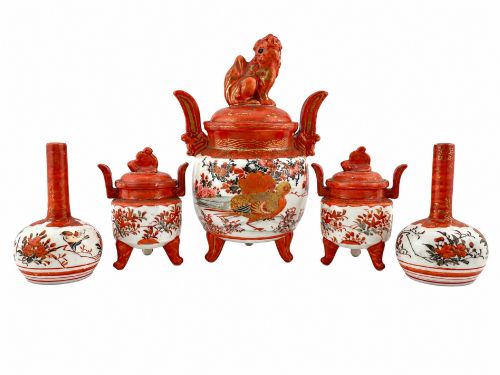
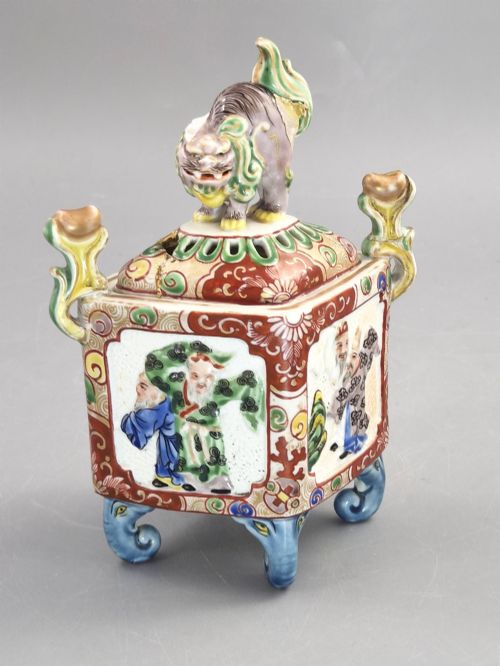
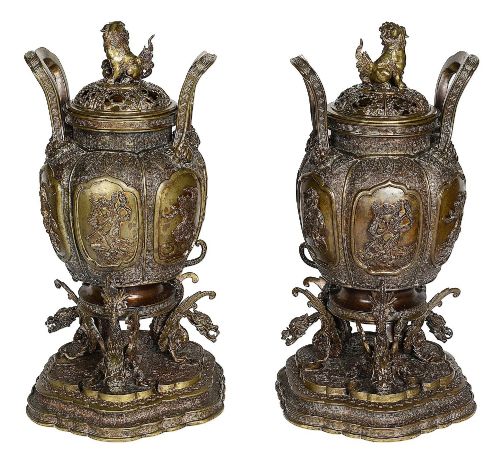
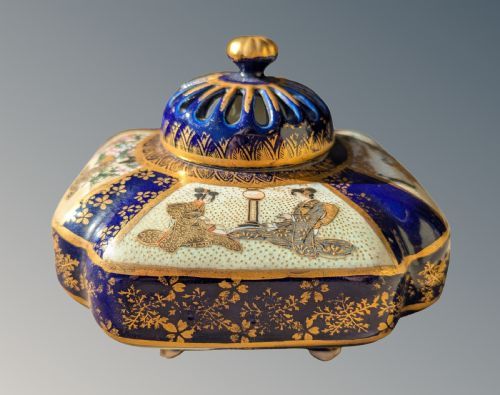
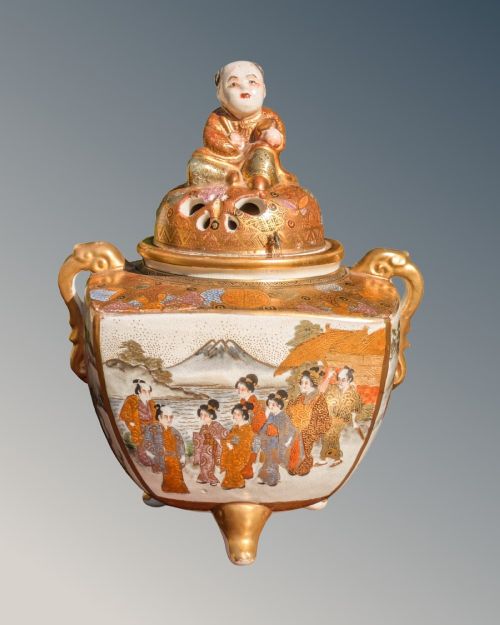
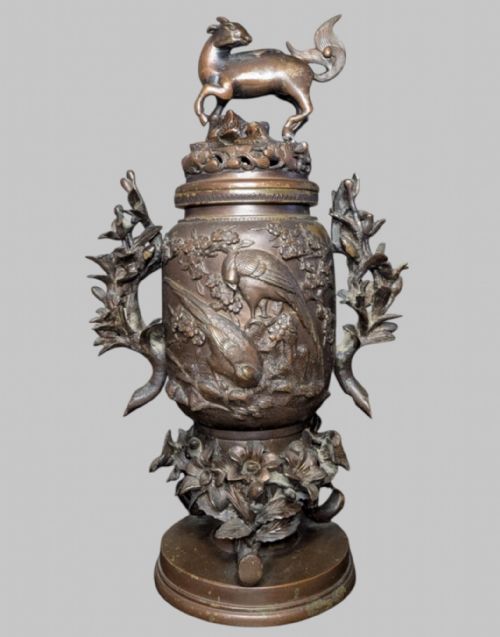
The selection on this page centres on Satsuma earthenware, Kutani and Hirado porcelain, and bronze or copper metalwork. Many examples feature sculpted finials like the shishi lion or karashishi, alongside detailed elephant head feet or intricate pierced lids.
Makers and studios represented include names such as Kinkozan, Kizan, Shizan, Kotobuki-do and Tsukamoto Hikokichi. These pieces range from miniature incense burners to large covered censers and five-piece porcelain garnitures.
How they were made
Metal koro utilise bronze and copper, often enriched with silver, gold leaf and gilding, or paired with cloisonne enamel details. Bronze casting and detailed chasing produce robust tripod vessels and lidded urns with sculptural animal finials.
Ceramic examples rely on Satsuma earthenware, Kutani porcelain and Hirado porcelain. Potters shape these clays into incense burners and decorative vases, applying painted glazes, enamel decoration and reticulated openwork.
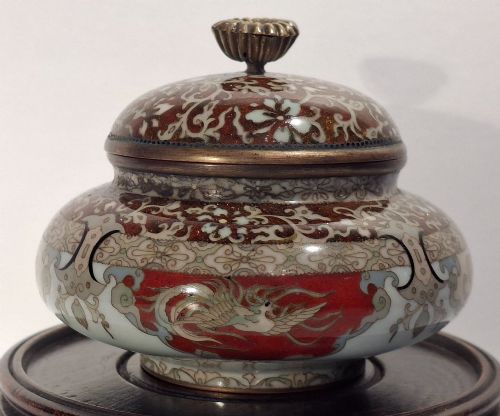
Enamel work employs cloisonne techniques where wire cells hold coloured enamel pastes on metal foundations. Artisans fire and polish these surfaces to create smooth, decorative panels across hanging boat koro and censers.
Listings feature periods spanning the 19th Century, 1890, 1900, 1880, 1910 and the Edwardian era.
What varies in quality
Quality rests upon the precision of the modelling and the clarity of the surface decoration. Finely sculpted lion finials and well-defined elephant head feet show greater sculptural ambition than plain castings.
In ceramic examples, the fineness of the hand-painted Satsuma or Kutani enamel work dictates distinction. Pieces bearing signatures from recognised makers or studios command attention for their documented provenance.
Tsukamoto Hikokichi·Kinkozan·Kizan·Kotobuki-do·Shizan
The Japanese Meiji Period Koro Glossary
- Koro
- An incense burner used in traditional Japanese settings. These lidded vessels appear in bronze, porcelain and Satsuma earthenware.
- Satsuma
- A type of Japanese earthenware featuring a crackled ivory glaze decorated with polychrome enamels and gilding. Pieces from Kyoto workshops are particularly common.
- Cloisonne
- A metalwork technique where flat wires form compartments on a bronze or copper body, which artisans fill with enamel paste. Hanging boat koro frequently employ this method.
- Shishi
- A mythical guardian lion, also known as a foo dog. Sculpted examples frequently serve as finials on koro lids.
- Reticulated
- Openwork decoration cut into ceramic bodies or metal lids to allow incense smoke to rise. Hirado porcelain examples often utilise this technique.
Japanese Meiji Period Koro: Frequently Asked Questions
What is a koro used for?
A koro is a traditional Japanese incense burner designed to hold aromatic wood or incense powders during rituals or quiet reflection. The pierced lids allow scented smoke to drift gently into the room.
Beyond function, these lidded vessels serve as decorative focal points. Collectors display them on mantelpieces and tables for their bronze, enamel and porcelain artistry.
How do I identify a Meiji period piece?
Meiji period items date from the reign of Emperor Meiji, spanning the late nineteenth and early twentieth century. Look for characteristic signatures, studio marks or the Shimazu crest associated with Satsuma production.
Construction methods also help determine the era. Bronze casting techniques and cloisonne enamel styles from this timeframe reflect the opening of Japanese trade and the expansion of export workshops.
What materials were used to make these incense burners?
These incense burners utilise bronze, copper, porcelain and earthenware. Metal examples often incorporate silver, gold leaf and gilding to highlight surface details.
Ceramic variants rely on Satsuma earthenware with crackled glazes, alongside Kutani and Hirado porcelain. Cloisonne enamel pieces combine metal foundations with coloured glass pastes.
How should I clean and care for an antique koro?
Dust bronze and enamel surfaces gently with a soft, dry cloth. Avoid chemical polishes or water, which can damage historic gilding and fragile patinas.
Ceramic and porcelain examples require similar care to protect hand-painted enamel and gold leaf decorations. Keep them away from direct sunlight and excessive moisture.