


Oriental Planter Pair
These oriental planter pair selections bring together striking vessels from Japanese Meiji and Chinese Qing traditions, offering dual decorative focal points for foliage and blooms.
Oriental Planter Pair
An oriental planter pair gathers matching ornamental vessels designed to display foliage or floral arrangements within interior spaces. When you search for an oriental planter pair, you encounter matched sets originating from Asian traditions such as Japanese Meiji and Chinese Qing styles.
The objects span diverse forms including jardinières, garden urns, and plant stands, frequently accompanied by associated hardwood supports. Materials range from cobalt underglaze porcelain and hardstone jade to patinated bronze, brass, and verdigris bronze.
Most examples date from the late nineteenth century, specifically around eighteen eighty to eighteen ninety, alongside occasional early twentieth-century pieces. These matching sets serve as table ornaments or floor displays, bringing coordinated symmetry to a room.
Materials and construction methods
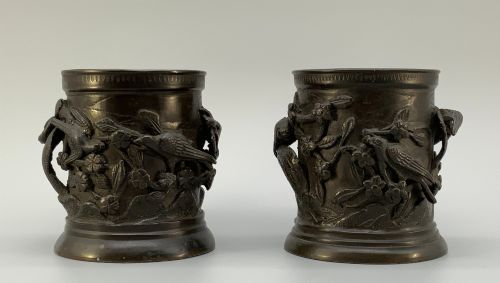
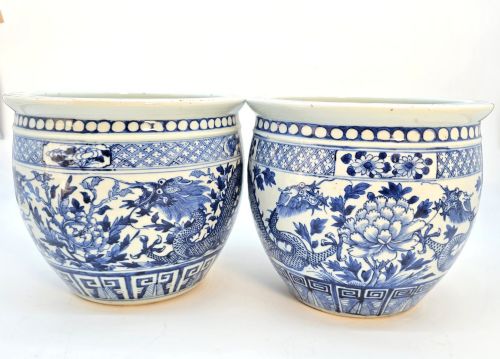
Metal vessels are cast in bronze or brass, sometimes finished with patination or verdigris, and decorated with motifs such as birds and blossom. Ceramic examples utilise cobalt underglaze on porcelain to create intricate blue and white designs characteristic of Qing and Imari traditions.
Organic elements appear in carved hardwood stands fashioned to elevate the jardinières, alongside hardstone jade utilised in delicate floral bonsai arrangements. Each material requires distinct artisan techniques, from metal casting and ceramic firing to precision wood carving.
Several bronze urns come equipped with mysterious internal chambers, originally engineered to keep temple flower stems upright during long ceremonies.
Assessing quality in matched pairs
Quality rests in the harmony of the pair, where matching scale, weight, and decorative detail confirm the pieces were conceived together rather than assembled later. Superior examples display crisp casting in bronze, refined cobalt brushwork on porcelain, or deeply carved detail in hardwood stands.
The integrity of the material finish, whether the depth of a patinated bronze surface or the clarity of an underglaze blue ceramic, distinguishes finer workshop production. Associated stands that complement the proportions of the planter without crowding add to the overall cohesion of the set.
The Oriental Planter Pair Glossary
- Jardiniere
- An ornamental pot or stand for holding plants or flowers. These vessels form the core of many matching sets.
- Usubata
- A specific type of Japanese bronze vase often used for floral arrangements. They frequently feature a distinct two-tier form.
- Imari
- A style of Japanese porcelain decorated in underglaze blue, iron red, and gold. Pieces in this tradition often display vibrant patterning.
- Celadon
- A term for ceramics denoting a pale green glaze imitating jade. It represents a long-standing East Asian glazing tradition.
- Hardwood
- Dense timber such as zitan or huanghuali used for furniture and plant stands. These timbers provide sturdy support for heavy ceramic and bronze vessels.
Oriental Planter Pair: Frequently Asked Questions
How do I style an oriental planter pair?
Place matching vessels symmetrically on side tables, pedestals, or low cabinets to anchor a room's design. They work well filled with trailing foliage or traditional bonsai specimens.
Ensure the scale of the planters complements the surrounding furniture and that any associated hardwood stands sit securely on a flat surface.
What materials are typical for these planters?
Common materials include cobalt underglaze porcelain, cast bronze, patinated brass, and carved hardwood. Some decorative examples incorporate jade and hardstone elements.
Each material brings a distinct weight and surface texture, influencing how the vessel catches the light within a room.
How do I date a nineteenth-century jardiniere?
Examine the casting marks, ceramic body, and hand-finished details for indicators of Meiji or Qing production methods. Nineteenth-century pieces frequently exhibit subtle irregularities from manual manufacture.
Compare the decorative motifs, such as birds and blossom, with established design periods to narrow the timeframe of creation.