


Pair Brass Planters
Pair brass planters bring instant warmth and metallic polish to a room, functioning as robust vessels for large foliage or floral displays.
Pair Brass Planters
When you search for pair brass planters, you are looking at matching dual vessels designed specifically to hold potted plants and flowers within domestic interiors. These decorative items span several centuries, with nineteenth century and early twentieth century examples dominating the selection.
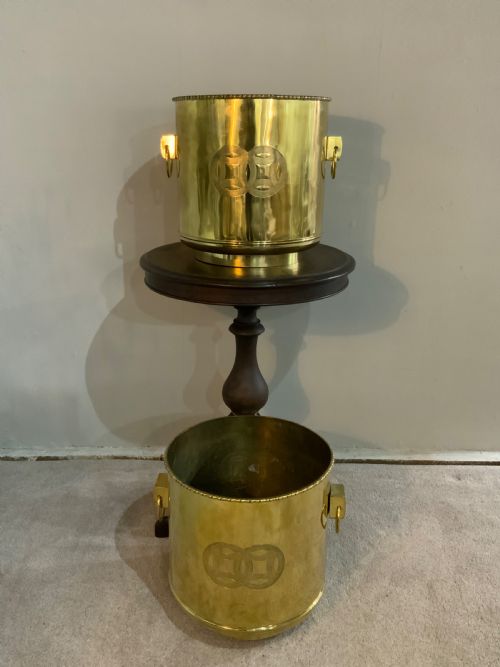
The objects take various forms beyond the standard round pot, appearing as urns, jardinieres, buckets, and even watering cans or pedestal stands. Many pieces show distinct regional or stylistic influences, ranging from French and Dutch designs to Asian revival and Gothic motifs.
Buyers are most likely to encounter nineteenth century French or Dutch brass jardinieres alongside later Victorian and Edwardian examples. These matched sets provide symmetrical balance for mantelpieces, entrance halls, or window ledges.
Materials and Construction Techniques
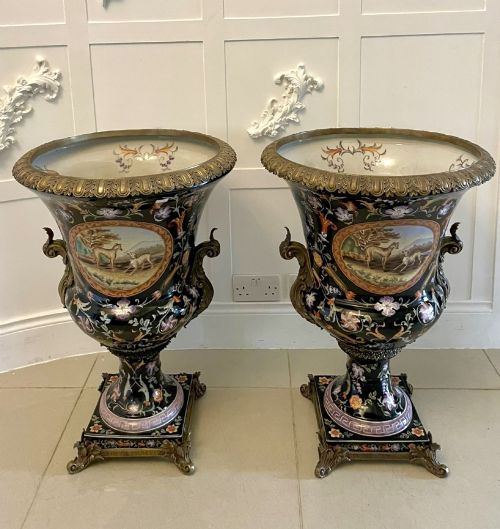
Brass forms the primary material across these pieces, frequently combined with copper, bronze, or ormolu to create contrasting metallic tones. Some items incorporate porcelain panels, enamel work, or wooden elements to enhance the visual appeal of the metal body.
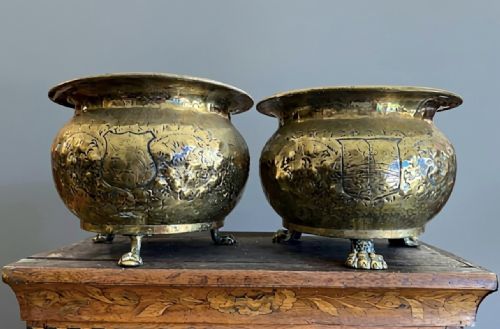
Manufacturing methods involve both hand-embossing, known as dinanderie, and casting techniques that produce heavier structural stands and lion mounts. Artisans utilised rolling, beating, and joining methods to shape sheet brass into durable oval or circular vessels.
Several brass planters feature proud bronze lions guarding the flanks, ready to protect your indoor ferns from rogue housecats.
Distinctions in Quality
Quality rests heavily on the crispness of the chasing, the thickness of the brass sheet or casting, and the integrity of any mounted components like porcelain or bronze. Superior examples display intentional weight and secure construction at the seams and handles rather than thin, pliable metal.
Artisanal execution dictates the finer pieces, where hand-embossed surface patterns or applied decorative motifs show sharp detail and secure fixing. Lesser items rely on plain, unadorned surfaces with simpler joining methods that lack the sculptural depth of better workshops.
Samson
The Pair Brass Planters Glossary
- Jardiniere
- An ornamental pot or stand for holding plants or flowers. These vessels usually sit on tabletops or pedestals rather than directly on the floor.
- Dinanderie
- A medieval term revived for decorative brass and copperware objects. It refers to articles shaped and patterned by hammering and embossing sheet metal.
- Ormolu
- Gilded bronze applications used as decorative mounts on furniture and decorative objects. This technique creates a rich gold-coloured metallic finish.
- Patina
- The surface sheen and colour acquired by metal through age and handling. A natural patina shows the authentic passage of time on brass and copper.
- Repoussé
- A metalworking technique where the artisan hammers the design from the reverse side to form a raised pattern. This method creates tactile relief on planters.
Pair Brass Planters: Frequently Asked Questions
What plants fit inside these planters?
Most of these vessels suit potted houseplants, ferns, or floral arrangements that sit comfortably within the internal diameter of the rim. Using a secondary inner pot protects the historic brass from direct moisture and soil contact.
Larger jardinieres accommodate substantial indoor palms or trailing ivies, while smaller urns work well for herbs or bulb displays on tables and sideboards.
How do I clean antique brass?
Gentle dusting with a soft, dry cloth preserves the aged surface and prevents the buildup of dirt within embossed crevices. Avoid harsh chemical polishes that strip away the historical patina.
If cleaning is necessary, use warm soapy water on a damp cloth, drying the metal immediately to prevent water spots and tarnishing.
Were these originally meant for indoor use?
Many nineteenth and early twentieth century brass vessels were designed specifically for interior display on furniture, stands, or hearths. Their decorative nature suggests they belonged in formal drawing rooms or parlours rather than working gardens.
Heavier bucket forms sometimes served functional domestic roles before transitioning into purely ornamental plant holders in later years.
How do I date a brass planter?
Dating relies on observing manufacturing marks, construction techniques, and stylistic clues such as Victorian, Edwardian, or Dutch design motifs. Hand-beaten seams and specific joining methods often point to nineteenth century origins.
Comparing the weight, type of brass alloy, and decorative mounts against known period examples helps narrow down the decade of production.