


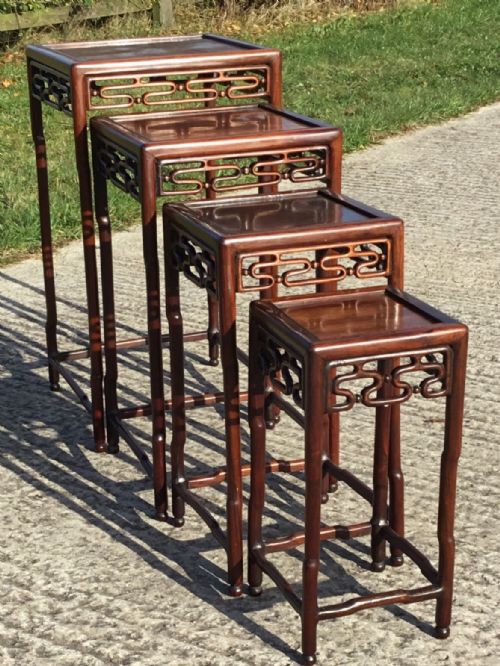
Oriental Nesting End Tables
Oriental nesting end tables pack four surfaces into the footprint of one, offering practical tiered sets made for modern homes.
Oriental Nesting End Tables
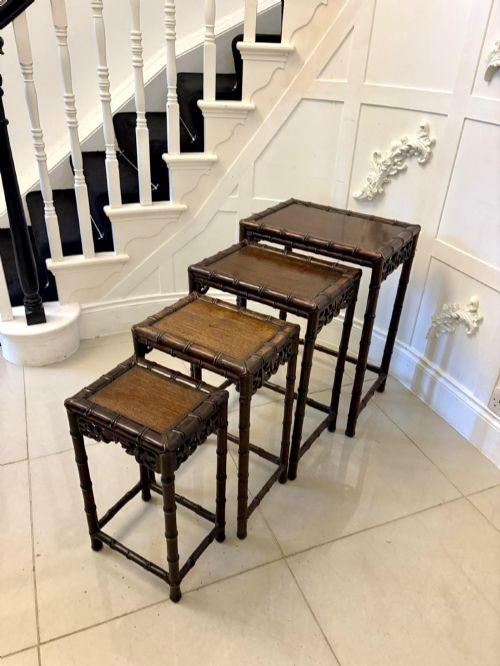
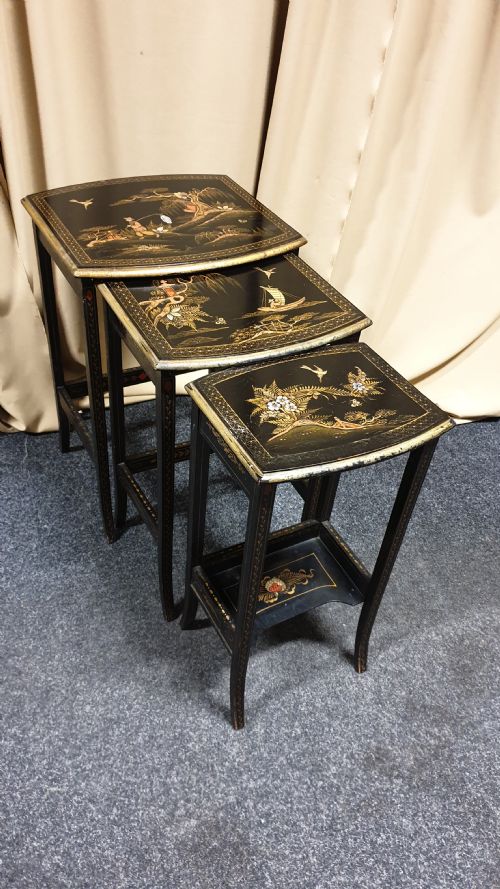
Oriental nesting end tables comprise graduated sets of tables that slide neatly beneath one another when not in use. These pieces primarily emerge from nineteenth-century Chinese export and Qing Dynasty traditions, alongside later Chinoiserie interpretations made in the early twentieth century.
Most entries on this page consist of sets containing four tables, known historically as quartettos, though three-table sets also appear. They function flexibly around a room as side surfaces, coffee tables, or occasional stands.
The aesthetic bridges traditional Asian craftsmanship with Western room planning, making them a staple for functional antique furniture. Buyers find them grouped by size, designed so the smaller tables disappear completely under the largest surface.
Materials and Construction
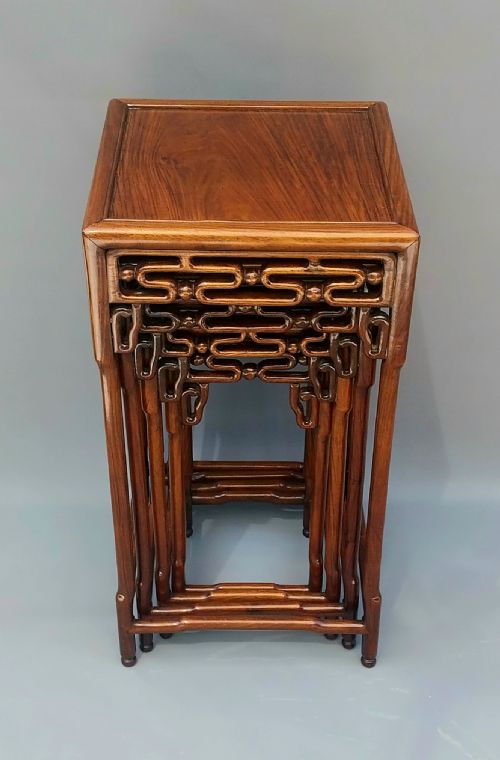
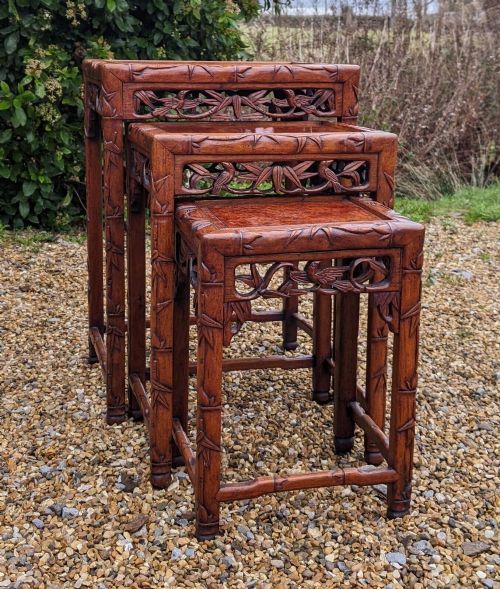
Construction relies heavily on dense Asian hardwoods such as hongmu, huanghuali, and general rosewood, chosen for their structural strength and rich natural grain. Makers also utilise teak and general hardwoods, occasionally pairing them with carved bamboo-style turnings or surface lacquer.
Joinery methods allow these tables to withstand daily sliding without loosening the frames, while surface treatments range from plain polished wood to intricate carvings. Gold leaf and decorative lacquer accents appear on specific stylistic variants like Chinoiserie and Queen Anne style adaptations.
Some sets slide together so tightly they double as secret hiding spots for forgotten love letters.
Quality and Craftsmanship
The distinction between standard and superior sets rests in the density and choice of timber, particularly when makers select highly figured huanghuali or dense hongmu with exceptional colour and grain. Heavy, tight-grained woods resist warping and hold crisp carving details far better than softer or plain alternatives.
Precision in the graduated sizing determines how smoothly the tables slide and lock into their stacked position without wobbling. Hand-carved relief work and the crispness of bamboo-turnings separate workshop pieces designed for export from ordinary decorative furniture.
The Oriental Nesting End Tables Glossary
- Hongmu
- A dense, dark tropical hardwood used in traditional Chinese furniture making. It translates literally to red wood and provides exceptional durability.
- Quartetto
- A set of four matching tables designed to nest together. The term originates from nineteenth-century English usage for graduated stacking sets.
- Chinoiserie
- European decorative style reflecting Chinese artistic influences, popular in furniture design during various periods. It often incorporates lacquer and painted motifs.
- Qing Dynasty
- The final imperial dynasty of China, spanning from sixteen-forty-four to nineteen-twelve. Pieces from this era often feature traditional carving motifs and classical proportions.
Oriental Nesting End Tables: Frequently Asked Questions
What is a nest of four tables called historically?
These sets were frequently referred to as a quartetto in nineteenth-century British records. The term borrows from musical nomenclature to describe four graduated pieces that fit together as a single unit.
Today, they appear under various descriptions including nesting tables or occasional tables, but the function remains identical.
How do I care for antique hardwood nesting tables?
Protect the polished timber surfaces by keeping the sets away from direct heat sources and strong sunlight. Regular dusting with a dry, soft cloth preserves the natural finish of woods like rosewood and hongmu without requiring heavy chemical polishes.
When sliding the tables in and out, lift them slightly rather than dragging them across uncarpeted floors to protect the feet.
Are these tables sturdy enough for daily use?
The dense hardwoods used in Chinese export furniture provide remarkable structural integrity despite the slender legs. They handle everyday placement of cups, books, and lamps without issue.
Because they slide into a compact column, they suit smaller rooms where floor space is limited.
How do I distinguish nineteenth-century sets from later pieces?
Nineteenth-century examples typically display heavier tropical hardwoods, hand-cut joinery, and deeper relief carvings associated with Qing Dynasty production. Later pieces from the early twentieth century often show lighter construction or adopt Western stylistic influences like Queen Anne legs.
Examining the underside and the wear patterns on the runners helps confirm the age of the stacking mechanism.