
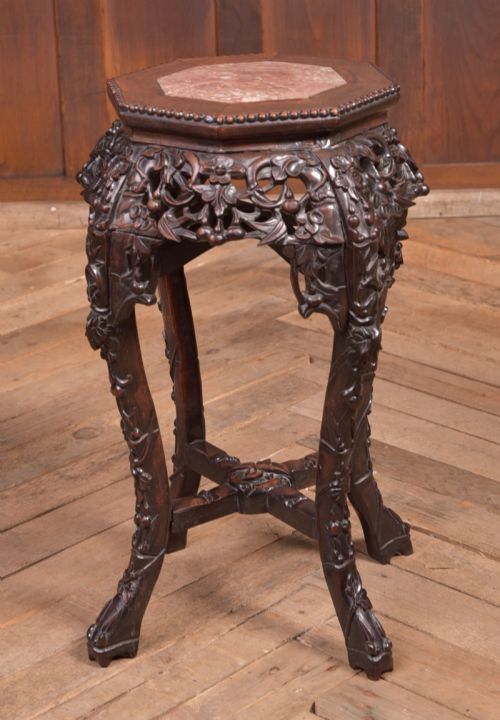
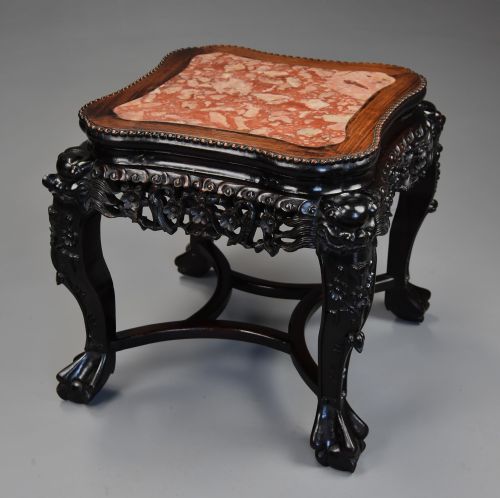
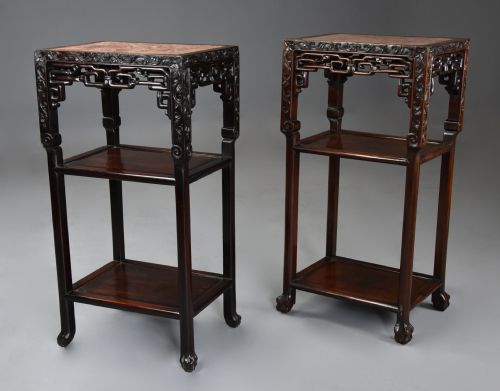
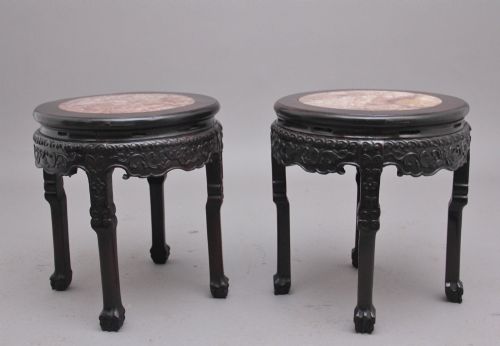

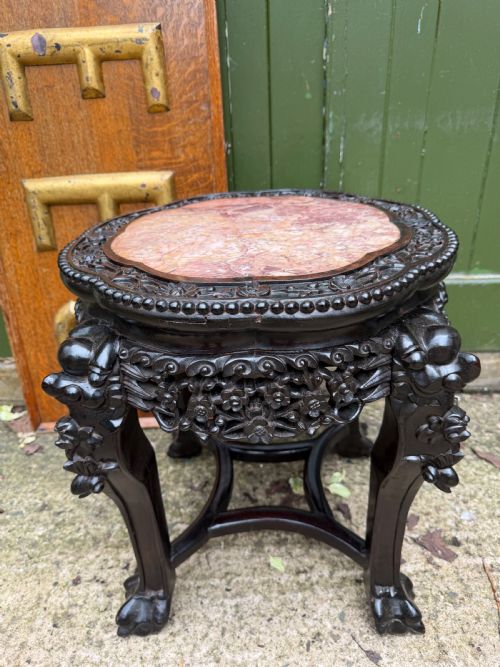


Oriental Marble Plant Stands
Oriental marble plant stands bring solid timber and inset stone together to lift heavy urns and vases.
Oriental Marble Plant Stands
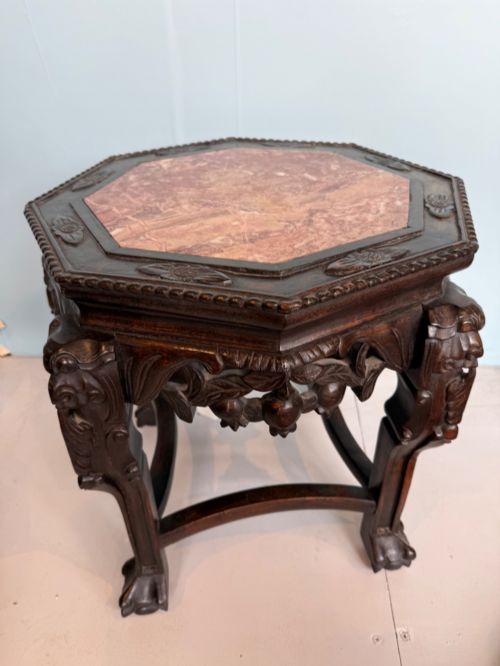
Oriental marble plant stands serve as raised platforms for vases, pots, and lamps in domestic interiors. Most pieces encountered on this page date from the nineteenth century, including Victorian periods and the Meiji era, spanning Chinese Export and Qing Dynasty styles.
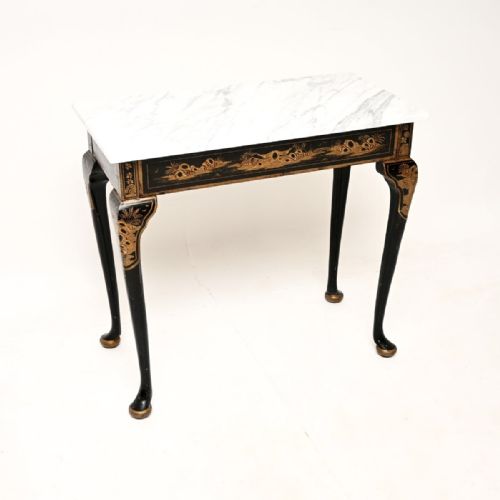
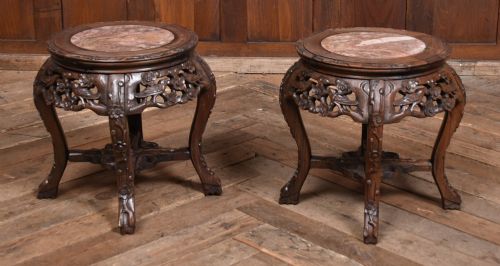
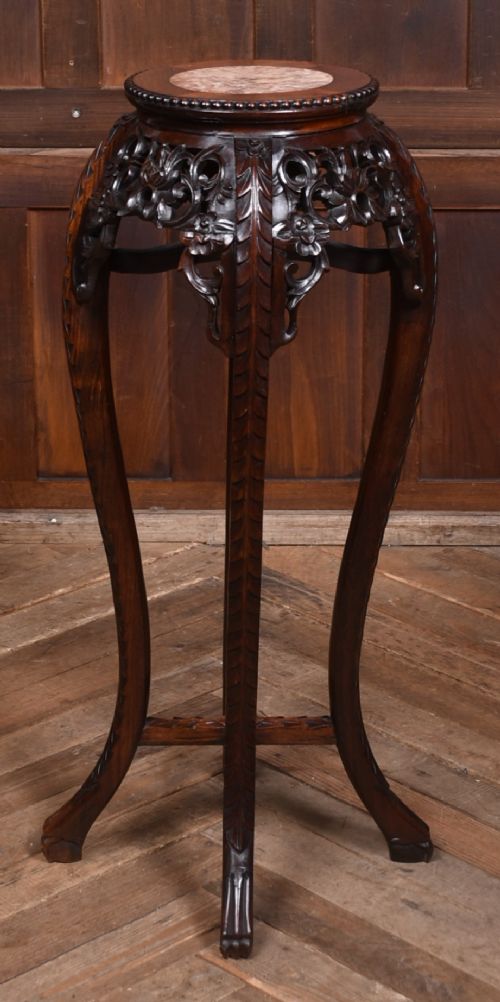
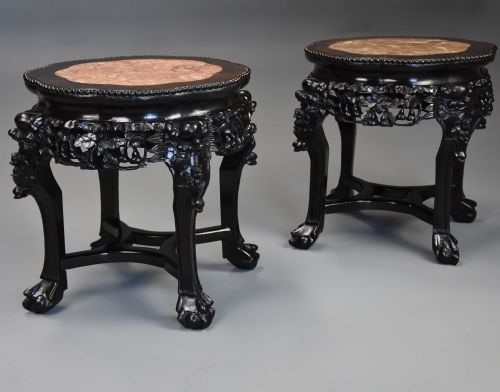
The primary forms take shape as low tables, occasional tables, pedestal stands, and jardiniere supports. Makers designed these items to display decorative items, utilising woods like rosewood and padouk alongside inset stone panels.
Materials and construction
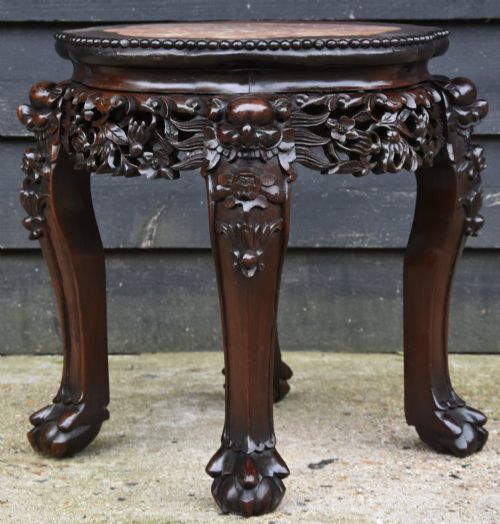
Constructed predominantly from dense exotic hardwoods such as rosewood, hongmu, and padouk, these tables utilise traditional joinery to support heavy loads. Workshops employed skilled carving techniques to create shaped aprons and cabriole legs.
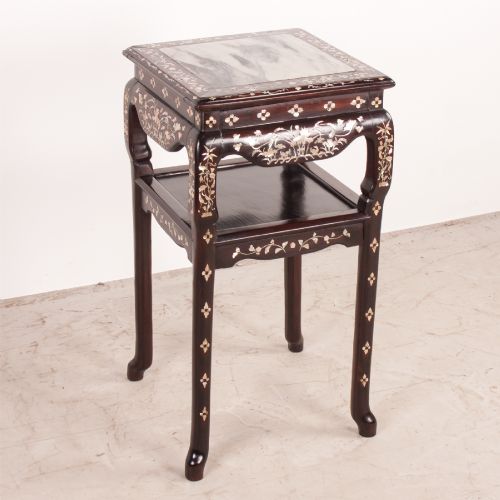
Marble inserts provide a cool, flat surface on top of the timber frame, sometimes accompanied by mother-of-pearl inlay or lacquer finishes. Variations include rootwood frames fitted with quartz tops.
The material record on this site spans rosewood, padouk, hongmu, and rootwood alongside inset marble and quartz.
Distinctions in quality
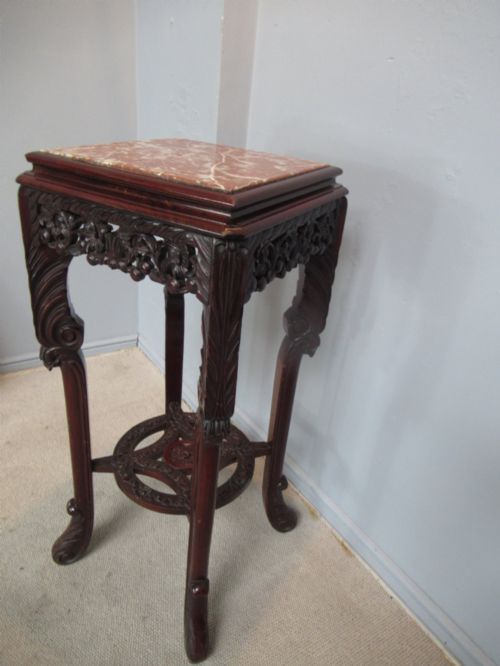
The refinement of the woodcarving separates simpler domestic items from more ambitious commissions. Deeply undercut foliage and crisp botanical motifs demonstrate superior handling of dense timbers like hongmu.
The selection and fit of the marble inset also mark the grade of the piece, with variegated rouge stone or quartz inserts showing greater visual depth than uniform grey slabs. The structural integrity of the tight joinery dictates daily utility.
The Oriental Marble Plant Stands Glossary
- Hongmu
- A dense, dark Chinese hardwood used for traditional furniture and stands. It translates literally to red wood.
- Padouk
- A heavy, durable timber with reddish tones utilised in nineteenth-century Asian furniture production. It resists warping under heavy loads.
- Jardiniere
- A large ornamental pot or planter designed to hold plants or flowers. Stands made specifically for these items often feature reinforced low platforms.
- Qing Dynasty
- The final imperial dynasty of China, spanning from sixteen-forty-four to nineteen-twelve. Many surviving stands reflect the aesthetic conventions of its late period.
- Chinoiserie
- European artistic styles reflecting Chinese motifs and techniques. Victorian examples frequently adapt these decorative schemes for local tastes.
Oriental Marble Plant Stands: Frequently Asked Questions
What were oriental marble plant stands used for?
These tables supported heavy porcelain jardiniere bowls, bronze urns, and large vases to elevate them from the floor. They also functioned as occasional lamp or side tables in nineteenth-century reception rooms.
The raised design protected delicate floor coverings from moisture leaking out of plant pots. Their compact surface area made them suitable for corners and tight spaces.
How do I distinguish Chinese export stands from Victorian pieces?
Chinese export pieces typically display traditional Asian hardwood carving, dense timber weights, and specific joinery methods originating in workshops overseas. Victorian adaptations often incorporate local ebonised finishes and European decorative sensibilities.
Material choices like padouk or hongmu point directly to Asian production centres, even when catalogued under Victorian trade descriptions. Examining the underside reveals construction habits specific to each region.
How do I care for a marble top stand?
Clean the timber using a dry or slightly damp cloth without harsh chemical polishes that might degrade old lacquer or wax. Treat the inset marble gently to prevent staining from stagnant water left by plant pots.
Place protective pads beneath heavy items to avoid scratching the stone surface. Keep the timber away from direct heat sources to prevent shrinkage in the joinery.
What is the difference between a jardiniere stand and an occasional table?
Jardiniere stands generally feature smaller, reinforced tops specifically engineered to bear the concentrated weight of large ceramic plant pots. Occasional tables provide broader surfaces designed for general display and lamps.
Many nineteenth-century examples cross these categories, serving multiple functions depending on the room layout. Height and top shape usually indicate whether the maker intended the piece for plants or general objects.