

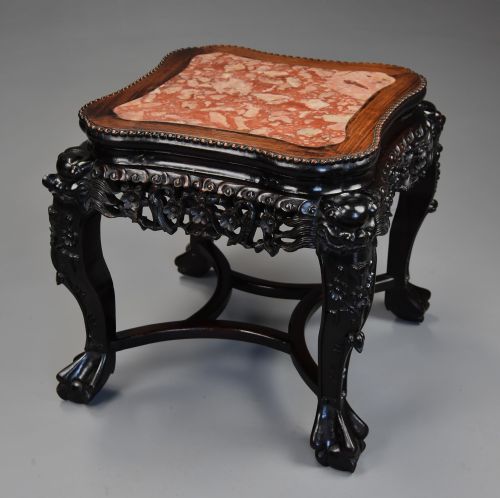
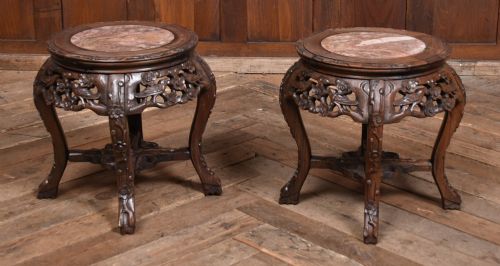


Marble Inset Display Table
A marble inset display table offers a solid stone surface set within finely carved timber, bringing balanced weight and utility to any interior.
Marble Inset Display Table
When searching for a marble inset display table, you encounter robust plant stands, low tables, and jardiniere supports spanning the nineteenth and early twentieth centuries. These pieces serve primarily to elevate ornamental vessels, lamps, and botanical arrangements within a room.
The selection here draws heavily from Chinese export workshops of the Qing dynasty and Meiji period, alongside nineteenth-century French production. Hardwood frames of mahogany, padouk, hongmu, and rosewood predominate, matched with smooth inset marble surfaces.
How they were made
Carpenters utilised dense tropical hardwoods such as padouk, hongmu, and rosewood to construct rigid frames capable of supporting heavy stone slabs. Artisans carved intricate floral and structural motifs directly into the timber surrounds.
Slabs of rouge and white marble were cut and polished to fit precisely within the recessed frames of the stands. Brass mounts appear on select European examples to reinforce joints and accent the dark timber.
Marble Inset Display Table Retail Price Guide 2026
Typical asking prices for marble inset display table among the pieces listed under this phrase on Sellingantiques today, from the lower quarter to the upper quarter. They describe what is for sale here now, not the wider market.
What varies in quality
Quality rests upon the depth and crispness of the timber carving, distinguishing fluid hand-chiselled detailing from shallow or mechanical work. Dense timbers like hongmu and padouk indicate higher grade construction than secondary woods.
The figure and uniform integration of the marble inset also mark distinction, alongside the structural stability of the joined frame. Pieces retaining their original polished surfaces command greater appreciation.
The Marble Inset Display Table Glossary
- Jardiniere stand
- A tall table designed specifically to hold an ornamental plant pot or floral bowl. These pieces elevate greenery to better catch the light.
- Hardwood
- Slow-growing timber such as rosewood, mahogany, or padouk that yields exceptionally heavy and durable furniture. This material resists warping under heavy stone inserts.
- Qing Dynasty
- The final imperial dynasty of China, lasting from the seventeenth to the early twentieth century. Many surviving display tables originate from this expansive era.
- Meiji Period
- A transformative era in Japanese history spanning the late nineteenth and early twentieth centuries. Furniture from this time often combines traditional craftsmanship with export sensibilities.
- Padouk
- A heavy, durable tropical timber with a reddish hue that darkens with age. Cabinetmakers prize it for intricate carved stands.
Marble Inset Display Table: Frequently Asked Questions
What is a marble inset display table used for?
These pieces function primarily as plant stands, vase supports, or small side tables in reception rooms.
Their sturdy stone surfaces accommodate heavy ceramic urns and bronze lamps without sustaining moisture damage.
How do I care for the marble top?
Wipe the stone surface gently using a soft, damp cloth without harsh chemical detergents.
Apply neutral stone wax occasionally to maintain the sheen and protect against minor stains.
Where were most of these stands made?
A significant proportion originates from Chinese export workshops operating during the nineteenth century.
Other examples stem from nineteenth-century French cabinetmakers working in empire and revival styles.
Are these tables suitable for everyday use?
The dense hardwoods and inset stone make these tables remarkably resilient for daily placement.
Care should be taken to balance heavy loads evenly across the central marble platform.