

Carved Hardwood Urn Table
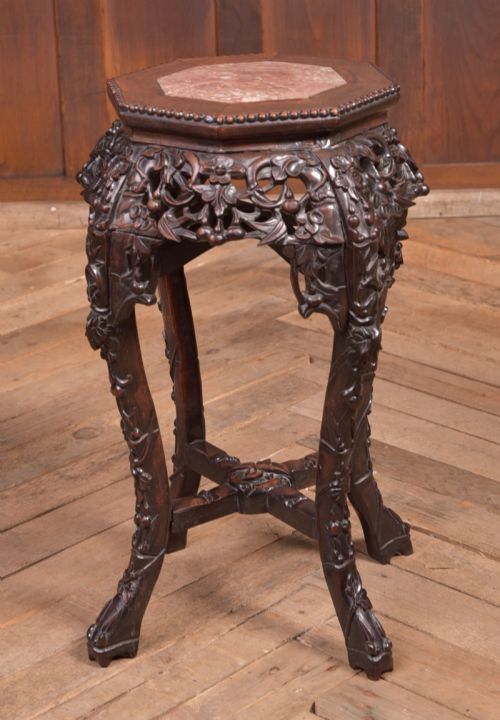
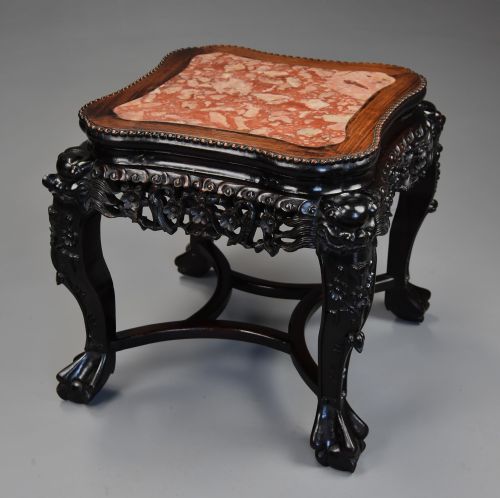
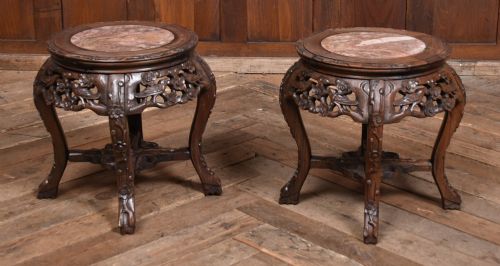
These carved hardwood urn table pieces unite Asian export craftsmanship with domestic utility, offering heavy timber construction and marble surfaces suited for display.
Carved Hardwood Urn Table
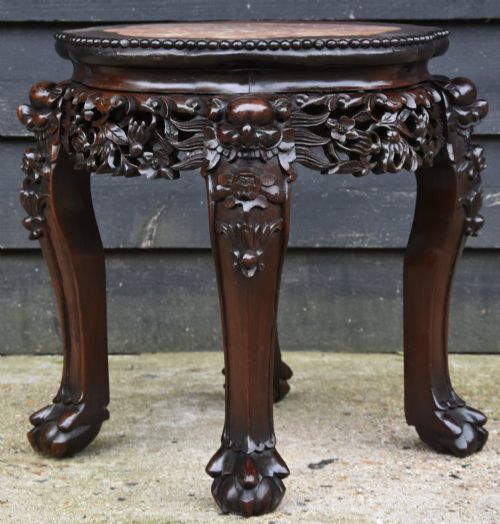
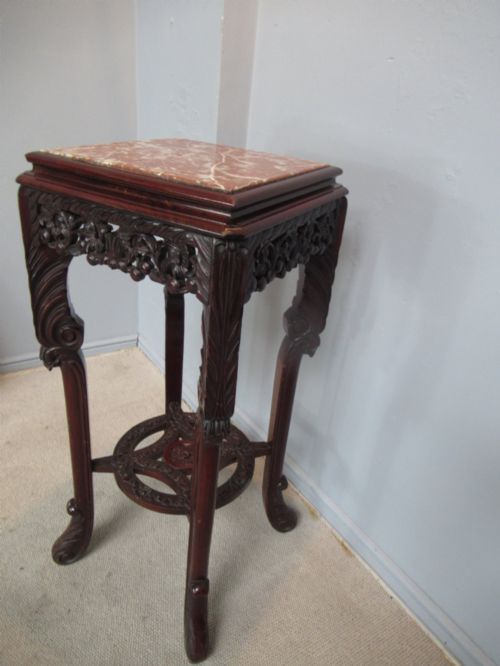
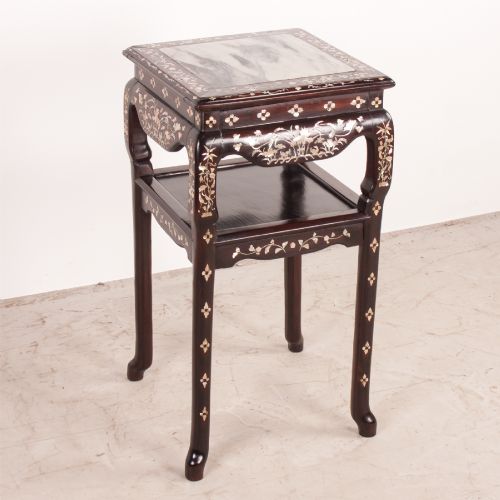
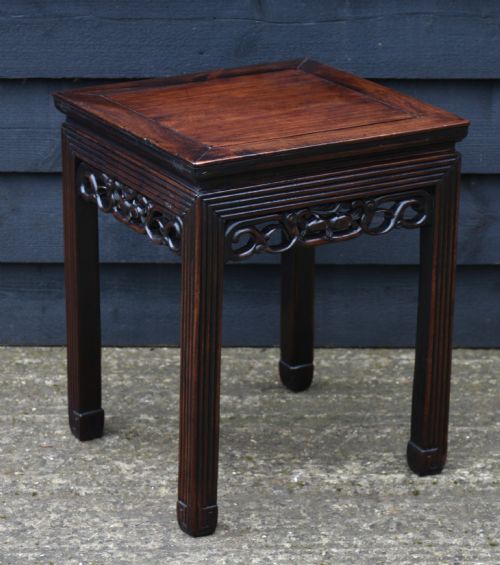
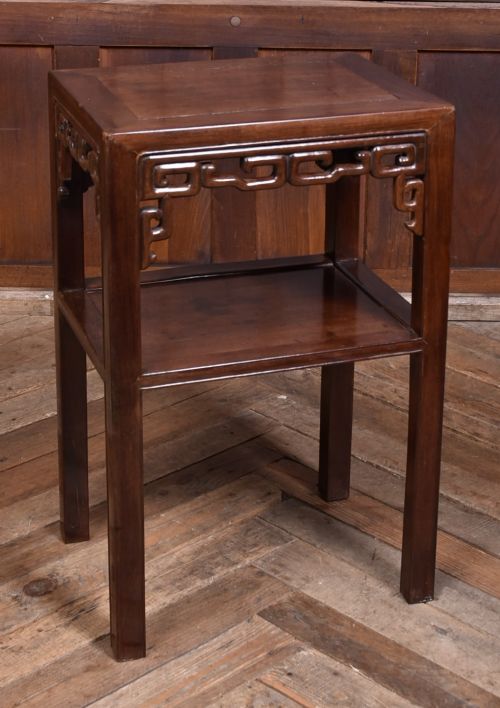
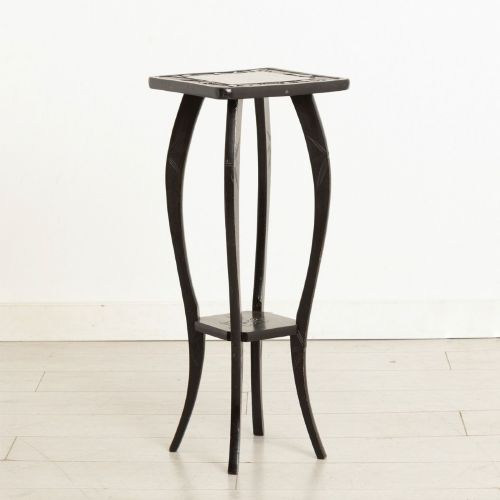
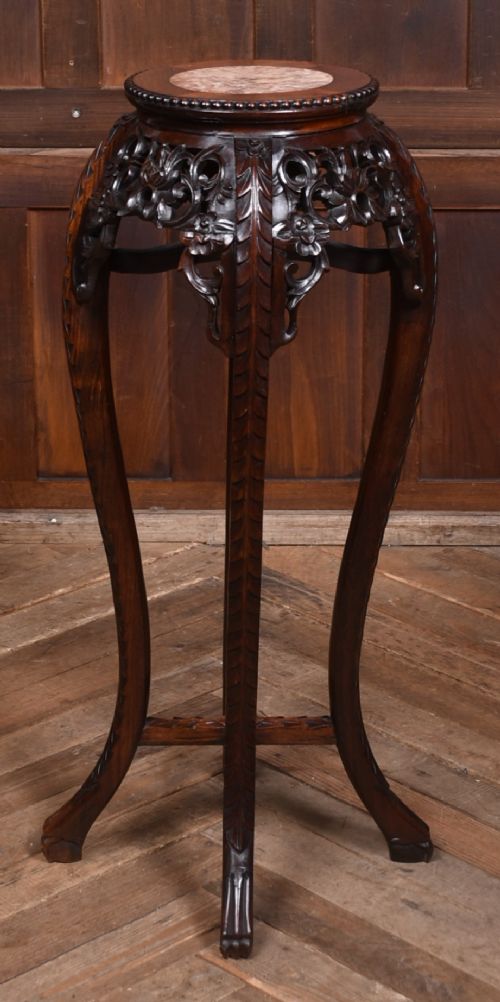
A carved hardwood urn table appears across this selection in various guises, including low pot stands, jardiniere supports, and occasional pedestal tables. Most examples originate from the nineteenth century, spanning Victorian, Edwardian, and late Qing Dynasty periods.
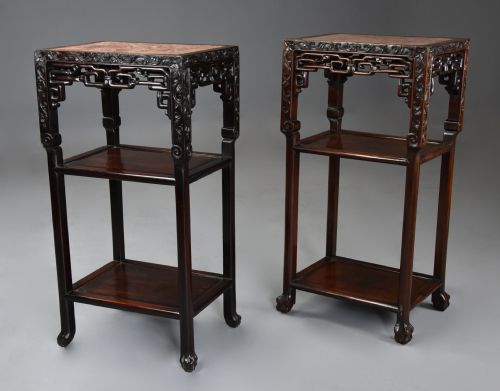
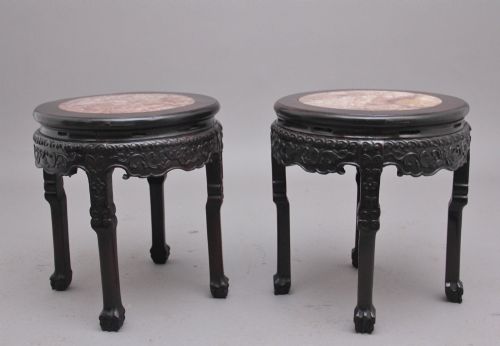
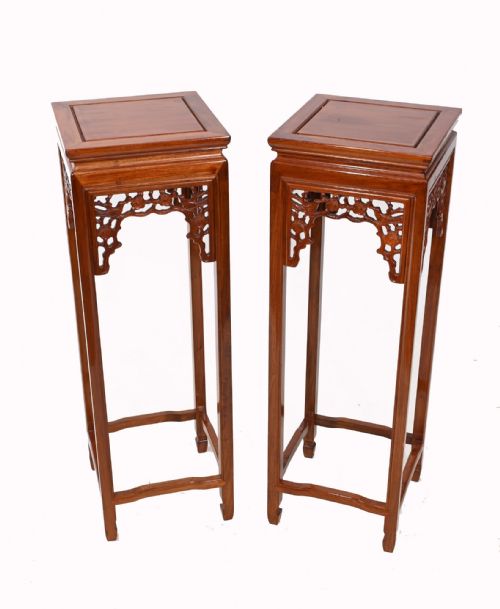
The buyer meets many tables featuring inset marble tops, alongside rosewood and padouk low tables intended to elevate heavy planters, vases, or ornaments. These pieces function equally well as compact side tables or dedicated plant displays within traditional and modern interiors.
Materials and construction
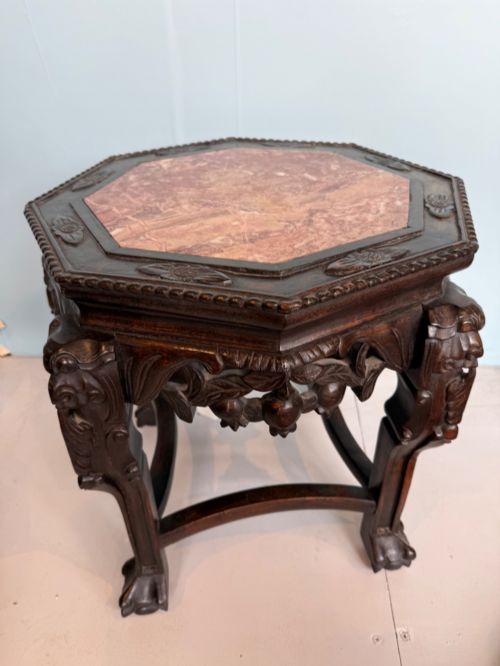
Carpenters utilised dense exotic timbers such as rosewood, hongmu, and padouk, which tolerated intricate hand carving without splintering. These heavy woods support inset panels of variegated rouge or white marble, fitted flush into the timber frame.
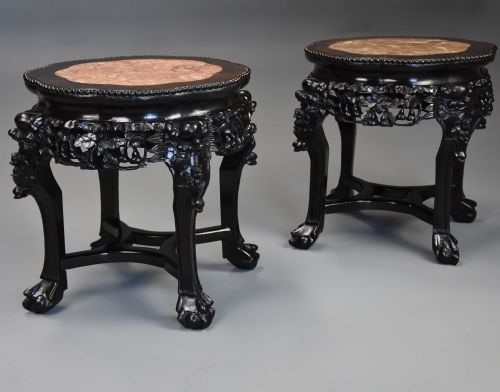
Surface decoration frequently includes deep relief carving depicting floral or traditional motifs, occasionally accented with mother of pearl inlay. Joinery relies on traditional interlocking techniques rather than modern mechanical fasteners, ensuring structural stability across decades of use.
Listings feature numerous nineteenth-century Chinese hardwood stands incorporating inset marble panels alongside Japanese Meiji period examples.
Assessing the execution
Quality rests in the crispness of the hand carving and the selection of timber, where tightly grained rosewood or padouk commands greater appreciation than plain ebonised surfaces. Deep, undercut relief work demonstrates superior artisan skill compared to shallow, mechanical incisions.
The integrity of the inset marble top also dictates standard, with unbroken stone tightly fitted to the surrounding woodwork indicating careful original assembly. Matched pairs and unusual rectangular or shaped forms generally show higher ambition in the initial workshop production.
Liberty of London
The Carved Hardwood Urn Table Glossary
- Hongmu
- A dense, dark tropical hardwood utilised in Chinese furniture manufacturing. It translates literally to red wood and develops a rich patina over time.
- Jardiniere stand
- A tall or low table specifically constructed to hold a heavy plant pot or ceramic planter. These items typically feature water-resistant stone inserts.
- Padouk
- A heavy, durable timber ranging from bright red to deep brown, frequently chosen for nineteenth-century export stands. It finishes to a smooth, lustrous surface.
- Marble inset
- A stone slab fitted directly into the wooden top of a table to protect the timber from moisture. This feature also provides a cool, decorative contrast to carved frames.
Carved Hardwood Urn Table: Frequently Asked Questions
What is a carved hardwood urn table used for?
These pieces serve primarily as elevated platforms for heavy decorative objects, porcelain vases, or potted plants. Their sturdy timber frames and stone tops protect household surfaces from moisture and heavy loads.
Beyond utilitarian plant holding, they function effectively as small lamp tables, wine stands, or bedside occasional pieces in compact spaces.
How do I date a Chinese hardwood stand?
Dating relies heavily on wood patination, construction methods, and stylistic indicators associated with the Qing Dynasty or nineteenth-century export trades. Examining the joinery beneath the top reveals whether hand tools or modern machinery shaped the timber.
Marble thickness and the depth of the hand-carved relief work also provide clues to the era of manufacture, distinguishing nineteenth-century examples from early twentieth-century productions.
Can I place a real plant on the marble top?
The inset marble surface is naturally waterproof, making it ideal for holding potted plants and jardiniere displays without risking water damage to the surrounding wood. It withstands damp clay pots far better than plain timber.
Collectors should still use a protective saucer underneath heavy planters to prevent scratching the stone or staining the grout lines over prolonged periods.
Are these tables sturdy enough for daily use?
Dense tropical timbers like rosewood and padouk provide exceptional structural rigidity, allowing these small tables to support substantial weight despite their slender appearance. The heavy density of the wood prevents standard tipping during normal household activity.
Occasional checking of the joints ensures the frame remains tight, though most surviving examples retain their original stability through solid joinery.