


Oriental Living Room Rug
An oriental living room rug brings deep colour and centuries of weaving tradition straight to the floor.
Oriental Living Room Rug
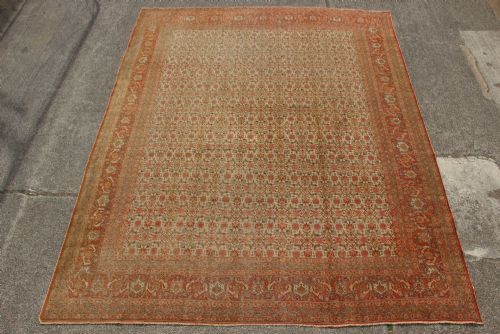
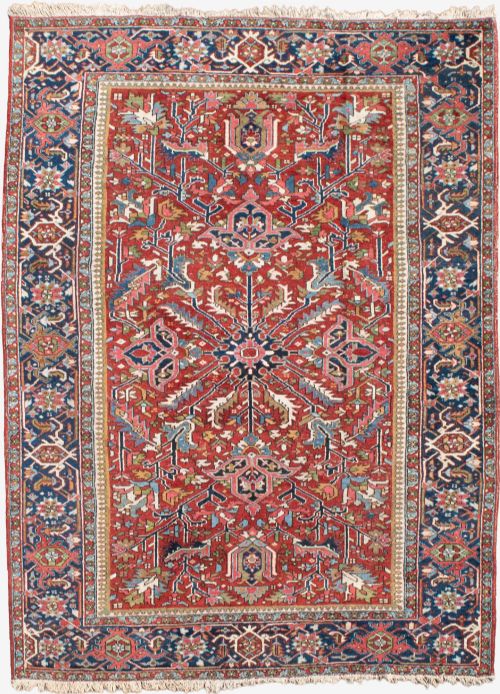
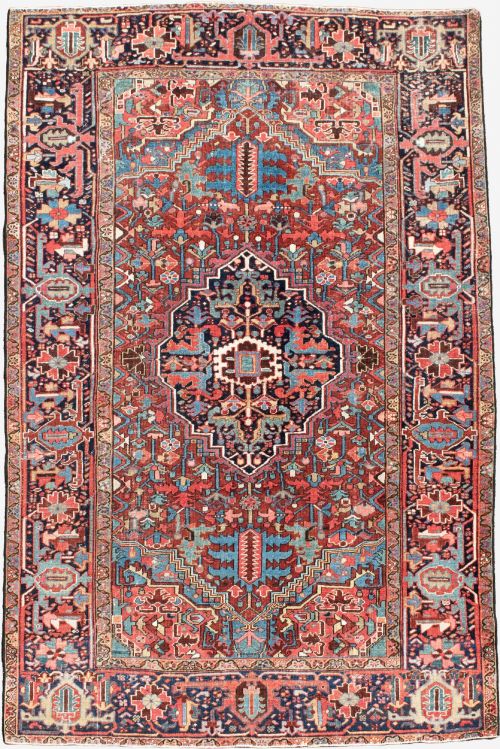
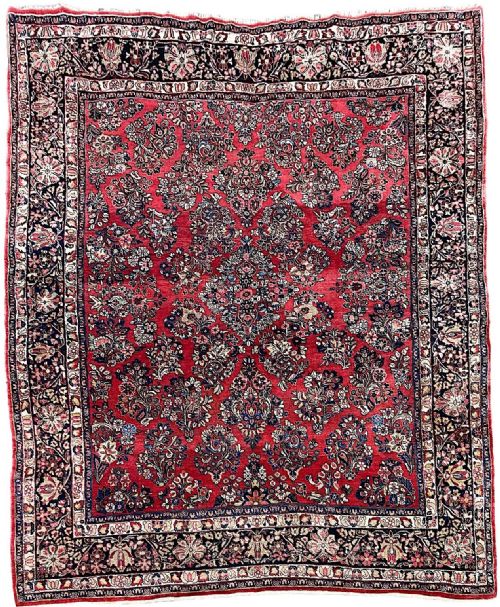
An oriental living room rug encompasses large carpets and smaller floor coverings originating from Persia and Turkey, dating from the late nineteenth century through to the mid twentieth century. Buyers seeking an oriental living room rug will find traditional Persian designs such as Heriz, Tabriz, Sultanabad, and Sarouk, alongside Turkish Oushak carpets.
The selection ranges from expansive room-sized carpets measuring over four metres in length down to smaller area rugs suitable for intimate spaces. Formats include tribal village pieces alongside finer city-woven carpets, reflecting the diverse weaving heritage of the Middle East.
Pieces from this selection bridge historical craftsmanship and practical domestic use, offering robust floor coverings that have endured for over a century. Each rug demonstrates distinct regional motifs, ranging from geometric Heriz medallions to flowing floral Tabriz patterns.
Materials and construction
These floor coverings rely primarily on durable wool foundations and pile, occasionally supplemented with cotton for warp and weft threads to ensure structural stability. Certain specialised pieces incorporate silk elements, particularly in finer urban workshops.
Weavers utilised hand-knotting techniques to build dense, resilient piles capable of withstanding heavy daily foot traffic over generations. Natural dyes provided the deep indigos, soft pastels, and earthy tones seen across the surviving inventory.
Listings feature wool, cotton, and silk materials across Persian and Turkish regional styles dating from the eighteen-eighties to the nineteen-forties.
Assessing quality and character
Knot density and the precision of the design execution separate standard village pieces from master-woven city carpets. Finer wool selection and superior dye stability contribute significantly to the longevity and visual depth of the pile.
The artistic merit of the individual design, including the balance of the central medallion and the complexity of the border bands, dictates the distinction of each carpet. Overall condition and even wear across the surface also influence the standing of an individual piece.
Benlian·Maples·Ziegler
The Oriental Living Room Rug Glossary
- Heriz
- A style of Persian carpet known for bold geometric medallions and robust, durable wool construction. These pieces originate from the Heris region in northwestern Iran.
- Tabriz
- A city in northwestern Iran renowned for sophisticated workshop carpets featuring intricate floral motifs and central medallions. Tabriz pieces often demonstrate exceptional knot density.
- Oushak
- A Turkish carpet style originating from Usak, characterised by soft pastel colour palettes and large-scale geometric or floral designs. Maples and other historical retailers frequently imported these distinctive floor coverings.
- Sultanabad
- A nineteenth-century Persian carpet style featuring large-scale, open floral patterns adapted for Western decorative tastes. These rugs typically employ subdued, earthy ground colours.
- Warp
- The vertical threads stretched tightly on the loom before knotting begins, forming the structural skeleton of the rug. These foundational threads are usually composed of cotton or wool.
- Weft
- The horizontal threads passed through the warp threads after each row of knots is secured, binding the structure together. The tension of the weft affects the rigidity and drape of the textile.
Oriental Living Room Rug: Frequently Asked Questions
How do I choose the right size for my room?
Measure your floor space carefully to ensure the rug allows adequate clearance around the perimeter of the furniture. Large room-sized carpets anchor central seating arrangements effectively.
Smaller formats suit distinct zones within a larger living area or sit comfortably beneath a coffee table.
Are these rugs suitable for daily use?
Hand-knotted wool construction provides exceptional durability, making these textiles well-suited for everyday domestic environments. Their robust natural fibres handle normal foot traffic reliably.
Regular gentle care ensures the pile remains resilient and preserves the structural integrity of the foundation.
How do I distinguish between Heriz and Tabriz rugs?
Heriz carpets feature strong geometric medallions and bold, architectural designs woven with sturdy wool. They project a more tribal and structural aesthetic.
Tabriz carpets showcase flowing curves, intricate floral arrangements, and refined workshop execution. Their designs appear more curvilinear and delicate by comparison.
What causes variations in rug pile texture?
The choice of materials, such as pure wool versus blended cotton foundations or the inclusion of silk, alters the tactile quality of the surface. Different regional spinning and knotting traditions also influence how dense the pile feels underfoot.
Age and historical usage contribute further to the patina and softness developed by individual carpets over time.