
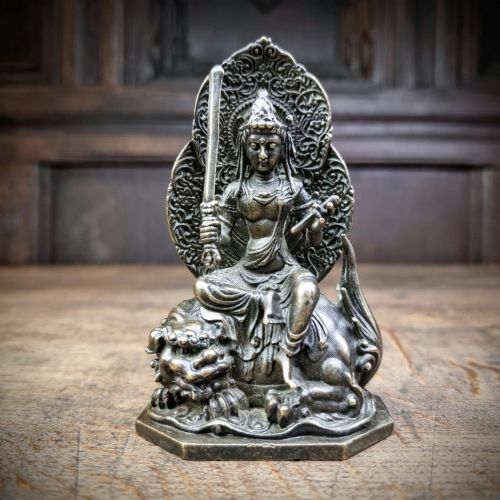
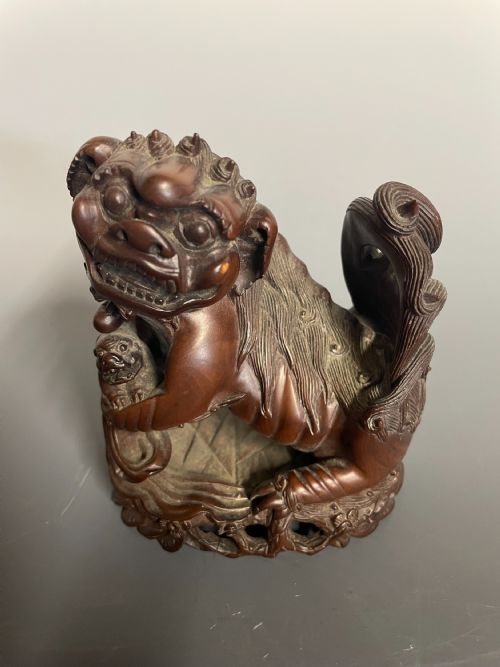


Oriental Lion Statues
These oriental lion statues are powerful guardian figures cast in bronze, carved in wood, or modelled in ceramic to protect domestic and sacred spaces.
Oriental Lion Statues
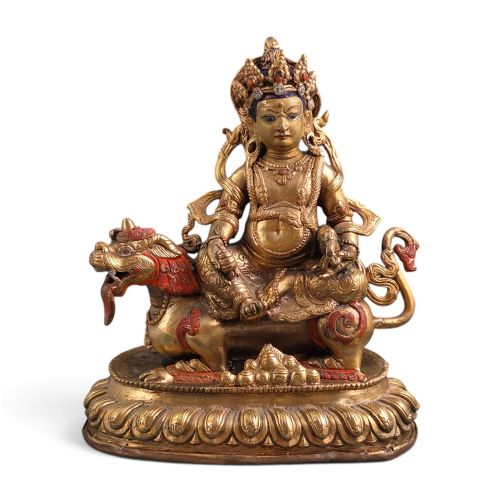
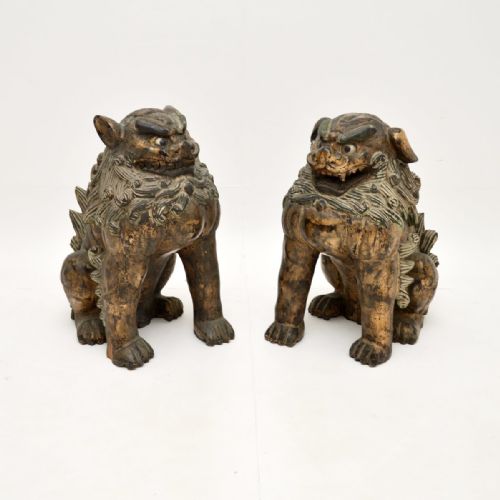
Oriental lion statues encompass temple guards, guardian lion dogs, Foo dogs, and Shishi figures originating from China, Japan, Tibet, and Burma. These sculptural forms range from domestic bookends and small ceramic figures to monumental bronze temple pieces.
The selections span multiple centuries, incorporating 18th-century root wood carvings, Victorian jade marble bookends, and 19th-century cast iron pairs. Buyers encounter traditional forms rooted in regional styles such as the Qing Dynasty, Meiji period, and Sino-Tibetan traditions.
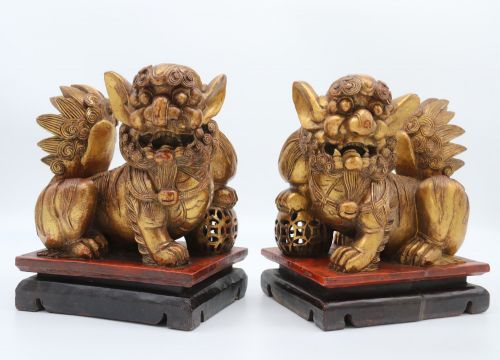
The most common versions on this page are matched pairs of temple lions and guardian figures designed for display. These objects appear in materials as diverse as gilt bronze, porcelain, boxwood, and soapstone.
How they were made
Metal versions utilise bronze and brass, often finished with fire gilding or patination. Founders employed lost-wax casting for substantial temple lions, capturing intricate manes and muscular forms.
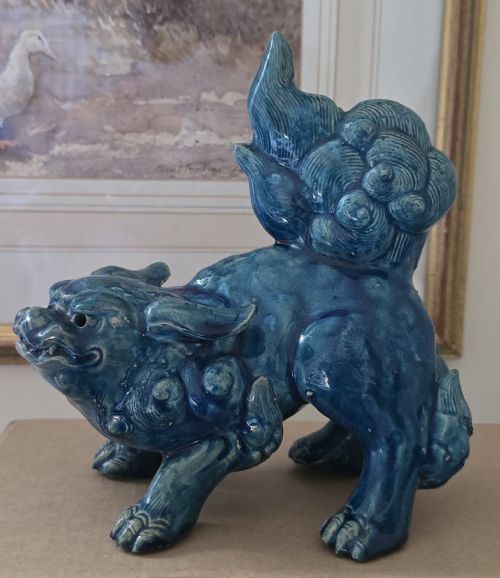
Ceramic and pottery pieces utilise earthenware, porcelain, and stoneware bodies finished with specialist glazes including turquoise, pale green, Sancai, and Hirado finishes. Firing techniques achieved the glossy surface depths seen on Japanese Kutani and Chinese Shiwan figures.
Listings feature materials spanning bronze, gilt wood, porcelain, soapstone, and stone, originating from 18th-century to early 20th-century workshops.
What varies in quality
Sculptural execution separates standard figures from superior work, observable in the crispness of facial carving, the definition of claws, and the symmetry of matched pairs. Master carvers and founders achieved dynamic tension and anatomical realism that lesser workshop pieces miss.
Material selection dictates the longevity and visual weight of each piece, from dense, heavy bronze and fine-grained boxwood to translucent porcelain and detailed soapstone. Surface treatments like preserved gilding and original Sancai glazes preserve the integrity of the object.
Seiunsai Miyamoto Sei
The Oriental Lion Statues Glossary
- Foo dog
- A traditional western term for Chinese guardian lions, which are stylized representations of lions rather than dogs. These figures traditionally stand outside temples and palaces to provide protection.
- Shishi
- The Japanese term for a Buddhist lion, commonly depicted in porcelain, bronze, and earthenware during the Meiji and Edo periods. They serve a similar protective function to their Chinese counterparts.
- Sancai
- A three-colour ceramic glaze technique prominent in Chinese pottery, typically employing amber, green, and cream-white tones. This glaze creates colourful, glossy surfaces on sculptural figures.
- Meiji period
- A historic era of Japanese craftsmanship dating from 1868 to 1912, known for exceptional metalwork, ceramics, and detailed sculptural models. Works from this time often exhibit refined naturalism.
- Sino-Tibetan
- An artistic style blending Chinese and Tibetan cultural motifs, frequently seen in gilt bronze religious figures and temple lions. These pieces reflect shared Himalayan and East Asian iconography.
Oriental Lion Statues: Frequently Asked Questions
What is a Foo dog?
A Foo dog is a traditional guardian lion figure originating in China, positioned as a pair to ward off negative spirits.
Despite the name, these statues represent lions rather than dogs, combining fierce expressions with symbolic ornaments like brocade balls.
How were these statues used?
These sculptures served primarily as protective guardians for temples, palaces, and domestic thresholds.
Smaller versions functioned as scholarly desk objects, decorative figures, or functional bookends in later Victorian collections.
How do I date an antique lion statue?
Dating relies on identifying material characteristics, regional art styles, and manufacturing techniques like lost-wax casting or specific glaze formulas.
Reference points include imperial dynasties such as the Qing period or Japanese eras like the Meiji period.
Are these statues always displayed in pairs?
Traditional guardian lions were designed and sculpted as matched pairs to represent yin and yang forces.
One figure typically holds a ball under its paw while the other restrains a cub, though individual sculptures and single bookends also appear.