






Oriental Lacquered Screen
An oriental lacquered screen divides a room or frames a hearth with layered depth, bringing dark polished surfaces and intricate painted detail into a space.
Oriental Lacquered Screen
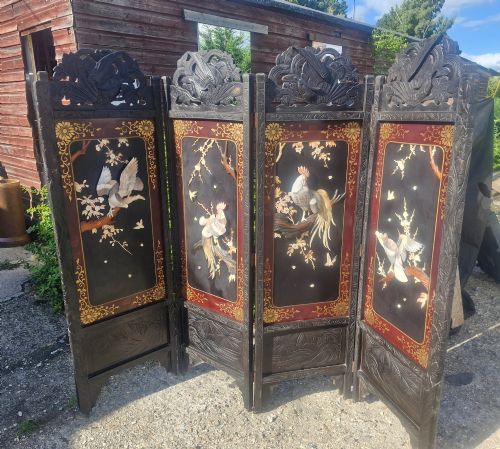
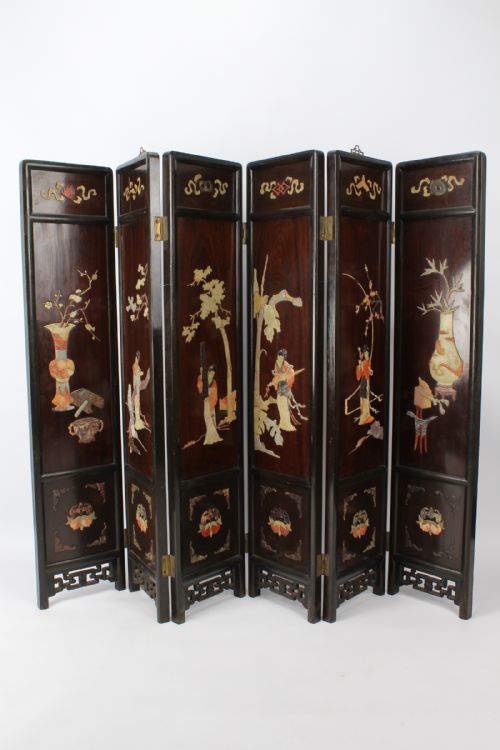
An oriental lacquered screen appears in several distinct forms on this page, ranging from grand multi-fold room dividers to compact table screens and domestic fire screens. The larger examples span multiple leaves, creating substantial partitions for rooms and dressing areas.
Most pieces date from the nineteenth and early twentieth centuries, drawing on Chinese Qing and Japanese Meiji traditions as well as Regency and Victorian Chinoiserie revivals. Makers utilised wood, hardwood and papier mâché as foundational structures before applying layers of dark lacquer.
Smaller formats include wall plaques and pole screens designed for specific domestic corners rather than wide partitions. These diverse objects share a reliance on surface decoration executed in paint, leaf and inlay.
Materials and technique
The construction of these pieces relies on wood and hardwood frames coated in successive layers of lacquer to achieve a durable, glossy ground. Artisans built up these surfaces over weeks, sanding and polishing the finish between coats to create a deep sheen.
Decoration involved meticulous hand-painting, gilding with gold leaf and applying intricate relief work using bone, mother-of-pearl, abalone and hardstone. Coromandel work involved incising designs directly into the lacquer layers and filling the recesses with pigments.
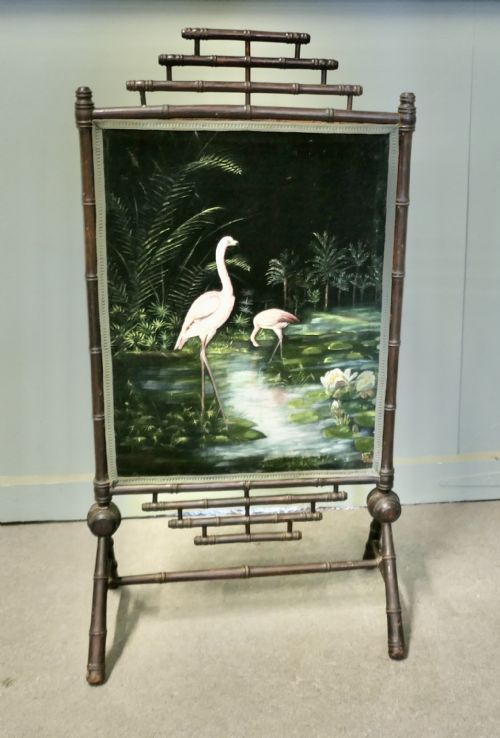
Flamingos occasionally march across nineteenth-century fire screens, proving that exotic birds found enthusiastic fans in Victorian drawing rooms.
Evaluating craftsmanship
Quality rests on the depth of the lacquer layers and the precision of the surface carving or inlay work. Superior examples exhibit tightly fitted hinges, stable frames and crisp details in the bone, mother-of-pearl or painted motifs.
The complexity and narrative clarity of the pictorial scenes separate standard decorative pieces from finer works. Master carvers achieved remarkable dimension in deep-cut panels, whereas lesser items rely on flat painted surfaces with minimal relief.
The Oriental Lacquered Screen Glossary
- Coromandel lacquer
- A Chinese incised lacquer technique where designs are cut into the dark ground and filled with colour. This method creates a distinctive carved relief effect across multi-fold room dividers.
- Chinoiserie
- European artistic styles reflecting Chinese motifs and decorative techniques, popular during the Regency and Victorian eras. These designs adapt traditional oriental imagery into Western furniture forms.
- Shibayama
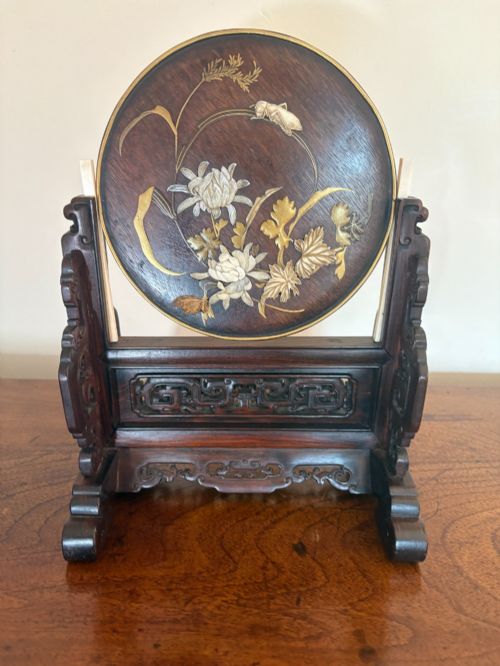
- Japanese decorative work utilising inlaid materials such as mother-of-pearl, ivory and bone to form raised pictorial scenes. This technique appears on fine table screens and panels.
- Table screen
- A small decorative screen supported by a stand, designed for placement on desks or tables. These pieces often feature detailed inlay or painted decoration on both sides.
Oriental Lacquered Screen: Frequently Asked Questions
How do I place a large room divider?
Multi-fold screens stand independently to zone open areas, create private dressing spaces or soften large blank walls.
Position them away from direct heat sources and strong sunlight to protect the lacquer finish over time.
What is a pole screen used for?
Pole screens feature an adjustable vertical screen mounted on a slender stand, historically placed near hearths to shield the face from radiant heat.
Today they function primarily as decorative vertical art pieces in sitting rooms.
How do I care for antique lacquer?
Dust surfaces gently with a soft, dry cloth and avoid chemical cleaners or excessive moisture.
Maintaining stable room humidity prevents the wooden substrate from expanding and cracking the lacquer layer.
How can I tell Coromandel work apart?
Coromandel panels feature incised carving where the background is cut away to reveal layers of contrasting colour beneath.
This method differs from flat painted lacquer or applied bone relief by creating a recessed, tactile surface.