


Oriental Lacquered Boxes
Oriental lacquered boxes bring tactile history into a room, offering intricate surfaces and secretive compartments that collectors have prized for centuries.
Oriental Lacquered Boxes
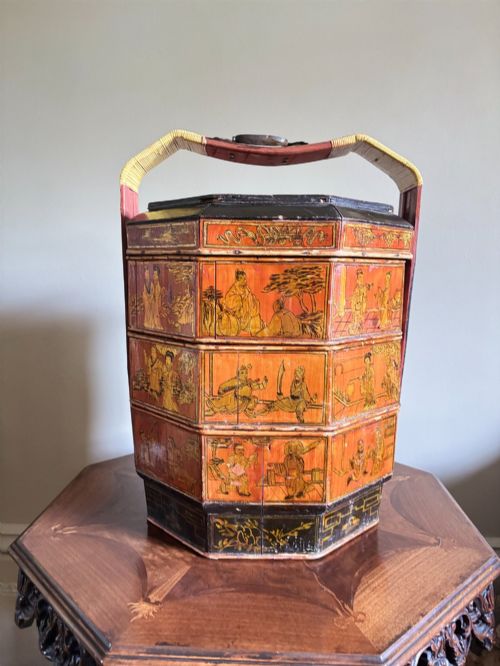
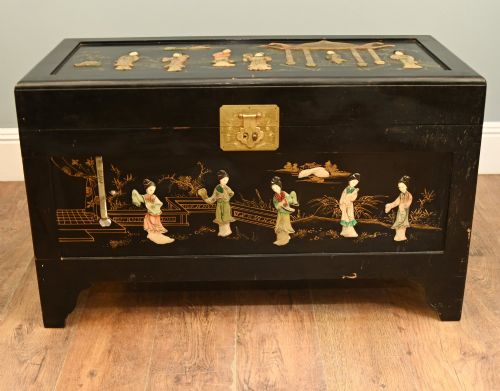
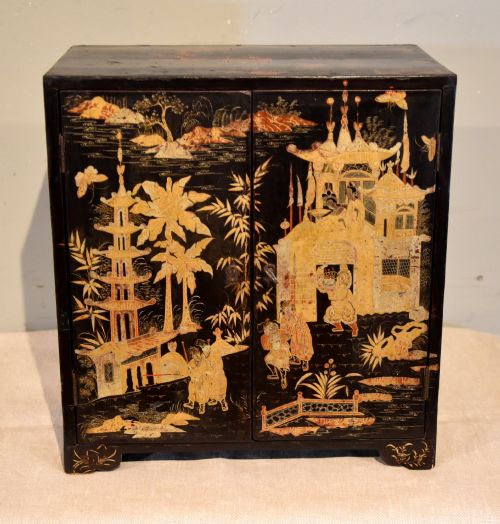
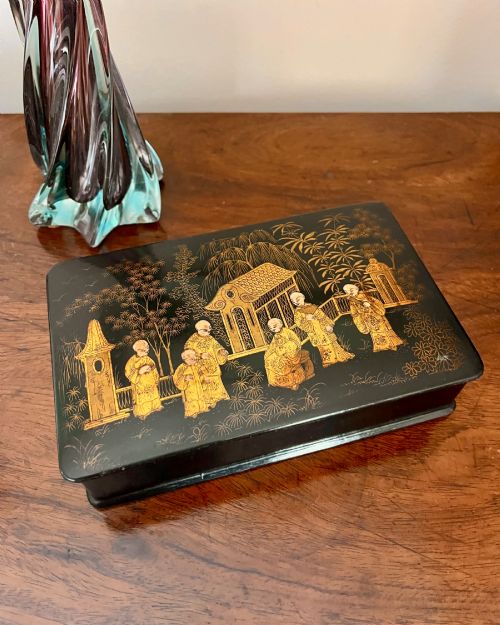
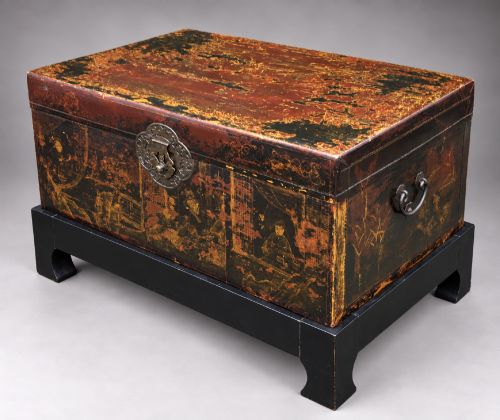
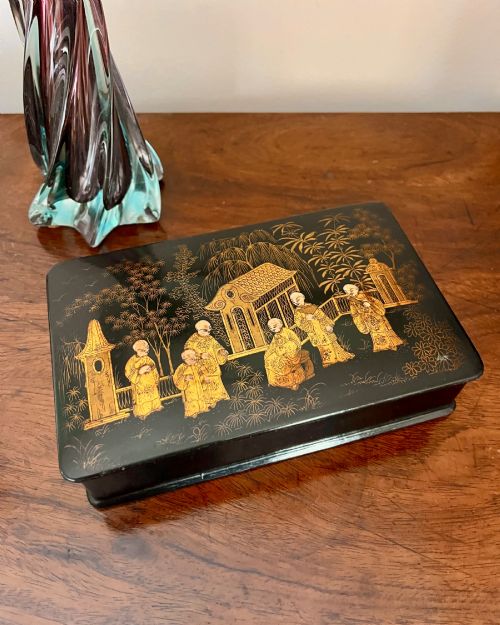
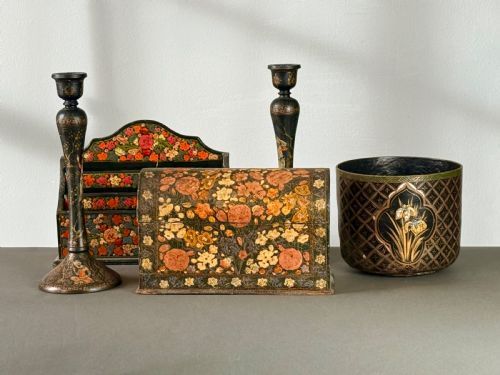
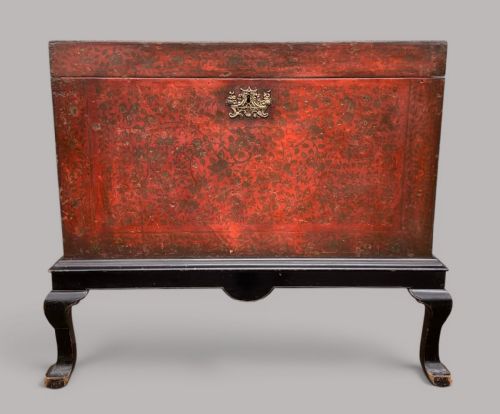
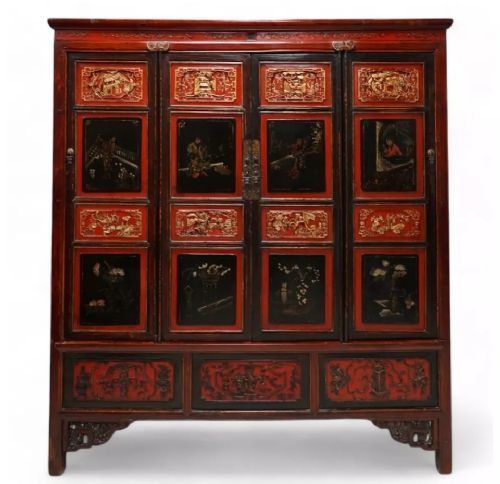
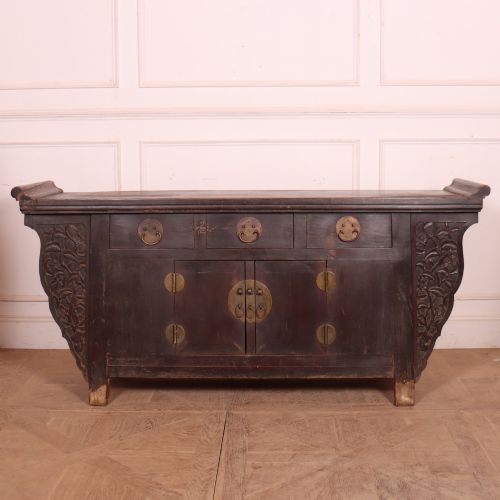
When buyers search for oriental lacquered boxes, they encounter an array of storage vessels ranging from compact tea caddies and jewellery cases to substantial trunks and table cabinets. These pieces originate from diverse traditions including Chinese Export, Qing Dynasty, and Japanese Meiji period workshops, alongside Anglo-Indian and Kashmiri variations.
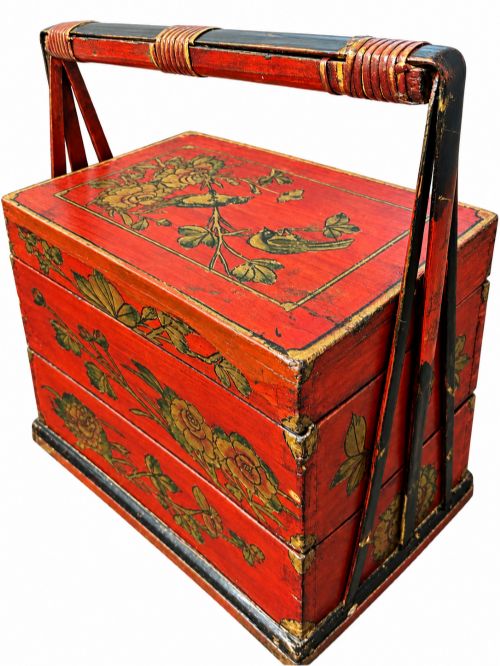
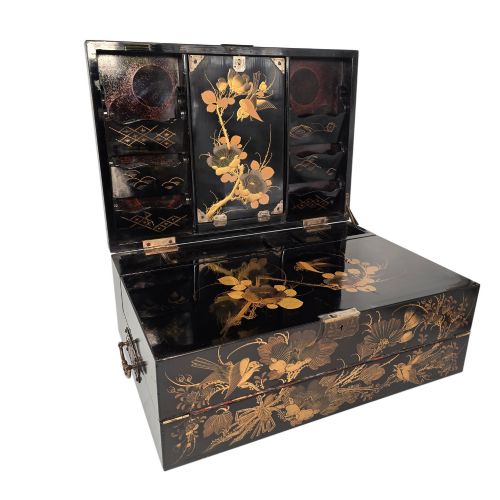
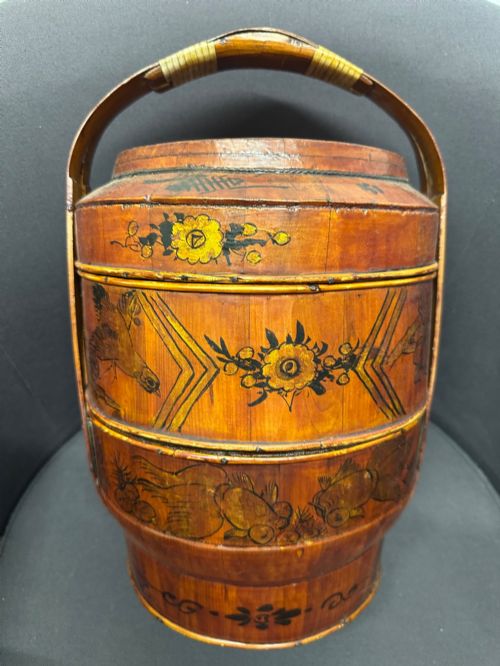
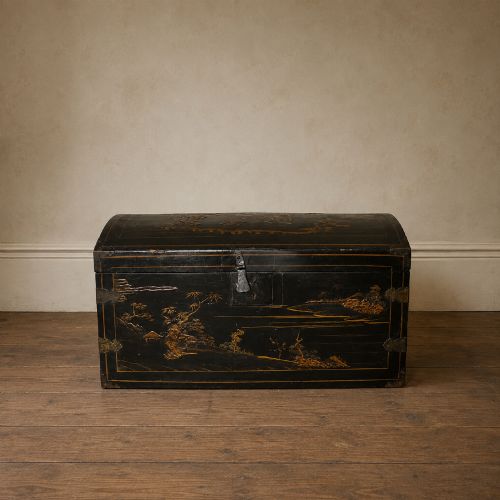
The selection on this page spans several centuries, drawing heavily from nineteenth-century craftsmanship with occasional eighteenth-century coffers and early twentieth-century examples. Form meets function across diverse object types, including writing boxes, wedding baskets, and sewing tables, all sharing a distinct decorative language.
How they were made
Wood serves as the foundational core for these items, sometimes supplemented by papier-mâché or bamboo, onto which successive coats of lacquer are applied. Artisans then build up the surface, incorporating gold leaf and gilt decoration to render pictorial scenes of flora, fauna, and figures.
Metal mounts in brass are frequently employed to reinforce corners and secure closures on chests and trunks. The resulting finish provides a durable, lustrous exterior that protects the underlying timber while creating depth through contrasting red and black hues.
Oriental Lacquered Boxes Retail Price Guide 2026
Typical asking prices for oriental lacquered boxes among the pieces listed under this phrase on Sellingantiques today, from the lower quarter to the upper quarter. They describe what is for sale here now, not the wider market.
Several boxes were designed specifically to house loose tea leaves, keeping expensive imports dry during long sea voyages.
What varies in quality
The distinction between standard containers and superior examples rests on the depth of the lacquer layers and the precision of the gilt or gold leaf detailing. Master artisans achieve crisper pictorial reliefs and smoother finishes that endure decades of handling without significant degradation.
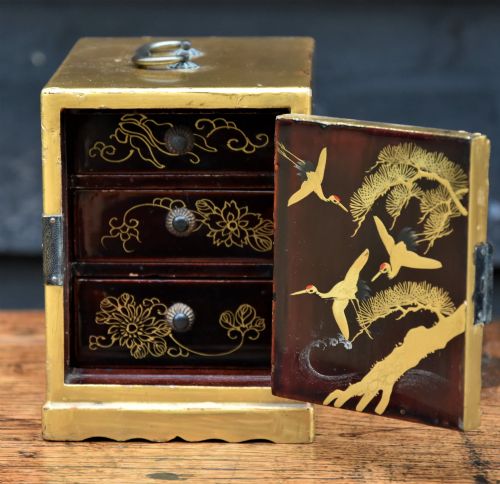
Structural integrity also separates the grades, visible in the careful joinery of miniature drawers within a table cabinet or the alignment of lids on tea caddies and coffers. Pieces retaining their original brass hardware and untouched interior fittings command greater appreciation from purists.
The Oriental Lacquered Boxes Glossary
- Lacquer
- A durable resin finish applied to wooden substrates, dried to form a hard, smooth coating. It is characteristic of Asian decorative arts and provides the primary visual sheen.
- Kodansu
- A small Japanese table cabinet fitted with multiple internal drawers for storing documents or valuables. These miniature pieces often display meticulous gilt decoration.
- Chinoiserie
- European artistic interpretation of Chinese and East Asian motifs, prevalent in decorative objects and furniture. It combines Western forms with oriental pictorial themes.
- Cinnabar
- A bright scarlet mineral pigment mixed into lacquer to produce deep red carved surfaces. This technique creates tactile relief designs on boxes and trinket cases.
- Inro
- A traditional Japanese multi-tiered case hung from a sash, used for carrying small personal items. They demonstrate exceptional miniature craftsmanship and lacquerwork.
Oriental Lacquered Boxes: Frequently Asked Questions
How were oriental lacquered boxes originally used?
These vessels served practical purposes for storage and transport, holding precious commodities like tea, documents, jewellery, and textiles.
Larger chests accommodated wedding dowries or clothing, while compact caddies and writing boxes kept personal writing implements and consumables secure.
What is the difference between Chinese and Japanese lacquer work?
Chinese pieces often feature deep carved cinnabar or bold black lacquer painted with gilt Chinoiserie scenes depicting landscapes and figures.
Japanese examples frequently showcase intricate Meiji period gold hiramaki-e techniques on smaller kodansu cabinets, inro, and writing boxes.
How do I care for antique lacquer surfaces?
Keep these items away from direct sunlight and dramatic fluctuations in humidity to prevent the wood underneath from expanding and cracking the lacquer.
Dust gently with a dry, soft cloth and avoid chemical polishes or modern cleaning agents that can permanently damage the finish.
How can I tell the period of a lacquered box?
Examine the construction methods, timber types such as camphor wood or elm, and the style of the brass hardware or hinges.
Stylistic motifs and registration marks, alongside the ageing pattern of the lacquer itself, help narrow down whether a piece dates to the eighteenth, nineteenth, or early twentieth century.