





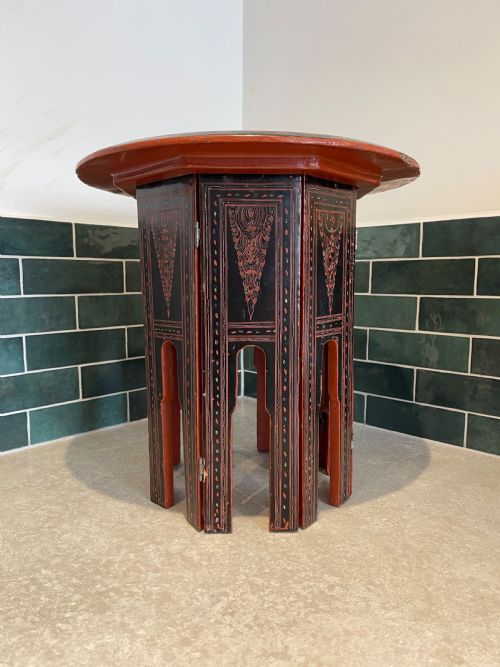


Vintage Red Lacquerware
Vintage red lacquerware brings bold colour and rich regional craftsmanship into a room through decorative boxes, tables, vases, and bowls.
Vintage Red Lacquerware
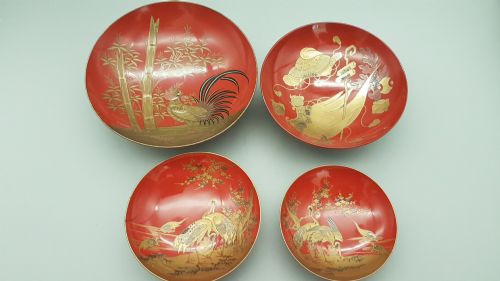
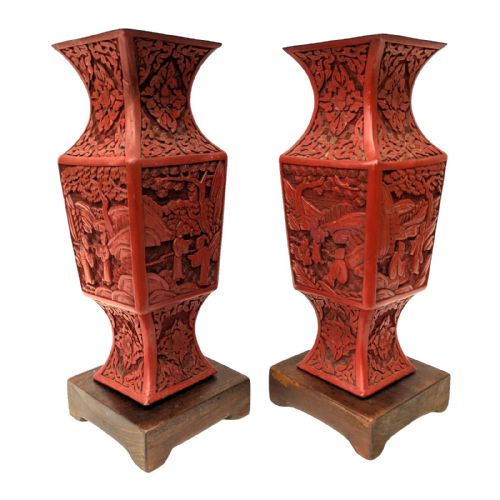
Vintage red lacquerware encompasses a striking variety of decorative and utilitarian objects made across different regions and centuries. When buyers search for vintage red lacquerware, they encounter items ranging from Meiji period Japanese sake cups and plaques to Chinese cinnabar vases and Burmese tables.
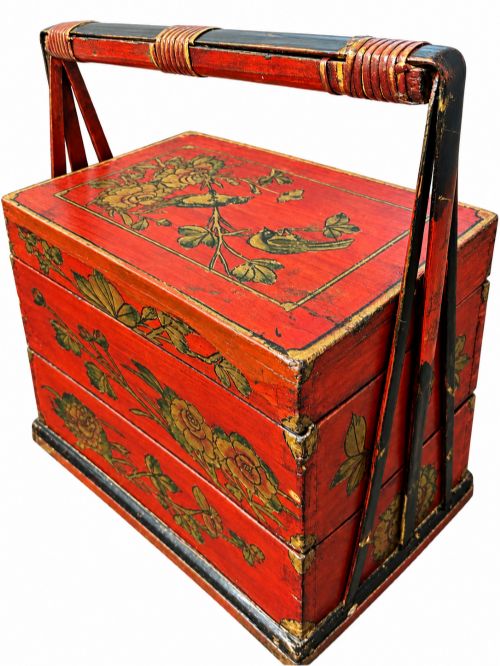
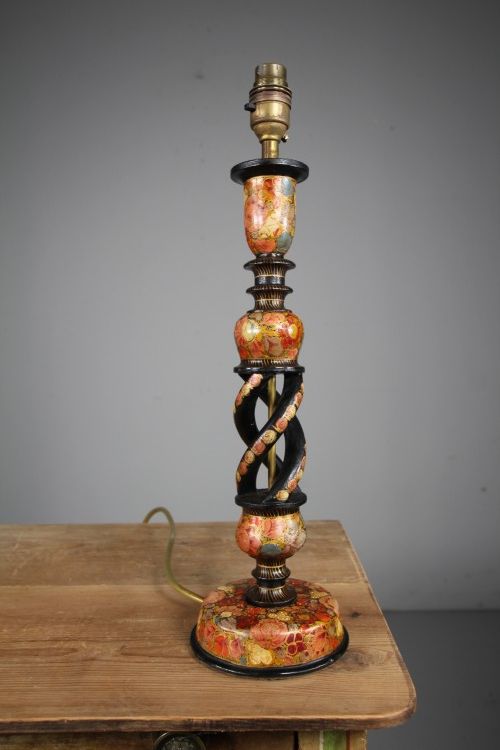
The pieces on this page span several eras, including the Victorian period, the nineteenth century, and the early decades of the twentieth century. Forms include nested sets of boxes, tall table lamps, tiered dowry baskets, and side tables, reflecting diverse cultural traditions.
Asian and South Asian origins dominate the selection, with specific pieces originating from Japan, China, Burma, and Kashmir. Each region contributes distinct techniques and motifs, ensuring that no two items share the exact same aesthetic.
Materials and construction methods
Construction relies heavily on a wooden or papier-mache substrate that receives repeated layers of lacquer, such as urushi lacquer, to build a durable and smooth surface. Artisans apply these coats patiently, often adding paint or gold leaf details to create intricate seascapes, Mount Fuji motifs, or floral patterns.
Certain items incorporate mixed media, evidenced by pieces featuring brass elements, porcelain bases with lacquer over-paint, or hand-painted surfaces. This combination of traditional lacquering over carved wood or papier-mache yields the characteristic deep red finish seen across the selection.
Vintage Red Lacquerware Retail Price Guide 2026
Typical asking prices for vintage red lacquerware among the pieces listed under this phrase on Sellingantiques today, from the lower quarter to the upper quarter. They describe what is for sale here now, not the wider market.
Listings feature items spanning the Victorian era, the 19th century, and the early 20th century up to 1930.
Markers of quality
Quality in these pieces depends on the depth and complexity of the lacquer layering, the precision of the hand-painted or carved details, and the overall preservation of the surface. Items with intact gold leaf, clear pictorial scenes, and stable structural foundations stand apart from simpler iterations.
The intricacy of the form also dictates the tier of the piece, moving from straightforward single vessels to multi-tiered baskets or graduated sets of boxes. Maker execution and regional artistry determine whether a lacquered item achieves high decorative distinction.
The Vintage Red Lacquerware Glossary
- Urushi lacquer
- A natural resin derived from the sap of the lacquer tree, utilised to coat and protect wooden objects. It hardens into a durable, moisture-resistant finish.
- Cinnabar lacquer
- A carved red lacquer technique where multiple layers of red pigment are built up and carved with intricate motifs. It is frequently seen on nineteenth-century Chinese vases.
- Dowry basket
- A multi-tiered vessel traditionally used in Asian cultures to transport gifts or ceremonial items during marriage rites.
Vintage Red Lacquerware: Frequently Asked Questions
What is vintage red lacquerware made from?
These items are constructed primarily from wood, papier-mache, and lacquer, with some incorporating brass or porcelain foundations.
Artisans apply multiple coats of lacquer to achieve a smooth red surface, often embellishing the exterior with paint or gold leaf.
How do I care for red lacquerware furniture?
Keep lacquered tables and boxes away from direct sunlight and extreme humidity to preserve the delicate finish.
Dust gently with a soft, dry cloth and avoid harsh chemical cleaners that can damage the surface layers.
Where do these red lacquer items originate?
The pieces originate from various regions including Japan, China, Burma, and Kashmir, each reflecting local cultural traditions.
Styles range from Meiji period Japanese lacquerware to nineteenth-century Chinese cinnabar and Kashmiri painted boxes.
How can I identify the age of lacquerware?
Dating relies on stylistic clues, regional manufacturing techniques, and historical periods such as the Victorian era or Qing Dynasty.
Examining the base materials and construction methods helps place items within the nineteenth or early twentieth century.