




Oriental Folding Screen
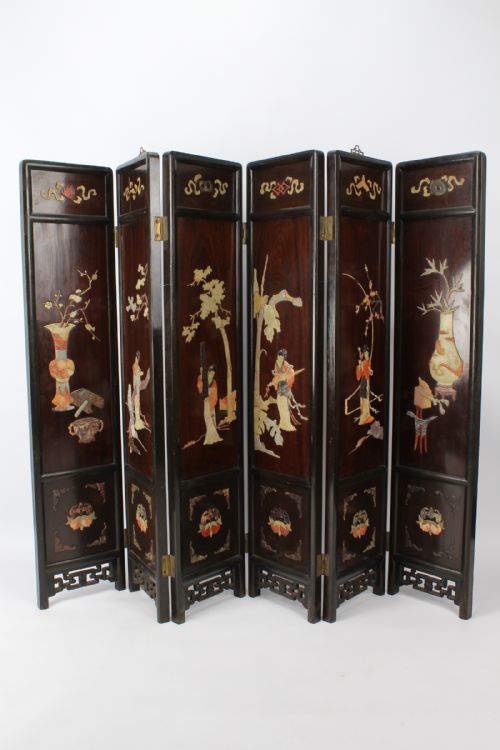
An oriental folding screen divides a room with deep black lacquer, carved bone, and folding panels that catch the eye from across the floor.
Oriental Folding Screen
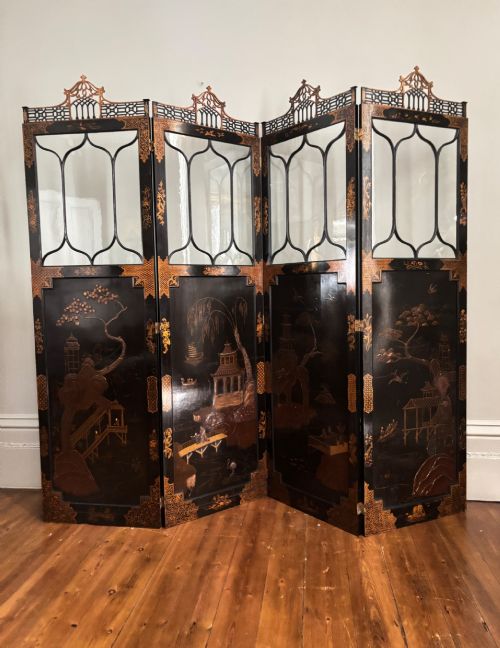
When you search for an oriental folding screen, you encounter multi-panel divisions designed to separate spaces or adorn a room. These pieces appear in configurations ranging from three folds up to eight folds, functioning as dressing screens, room dividers, and fire screens.
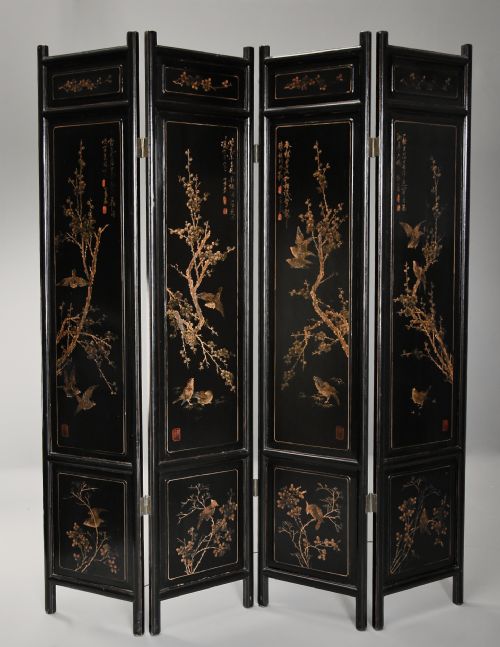
The examples gathered here span from the eighteenth century through the nineteenth and twentieth centuries, taking the form of Chinese coromandel lacquer panels, Japanese decorated lacquer pieces, and Indian fretwork designs. Many incorporate black lacquer grounds, while others utilise hardwood or painted surfaces to achieve their visual impact.
Buyers select these objects to anchor a large interior or to provide a decorative backdrop within a domestic setting. The variety includes tall freestanding room dividers as well as smaller dressing screens intended for intimate corners.
How they were made
The primary materials recorded in these pieces are wood and lacquer, frequently augmented by applied decoration. Artisans built the core frames from hardwood, applying layers of black or coloured lacquer to create smooth, durable surfaces.
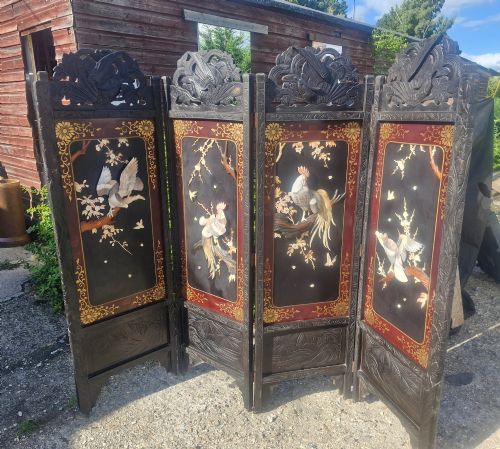
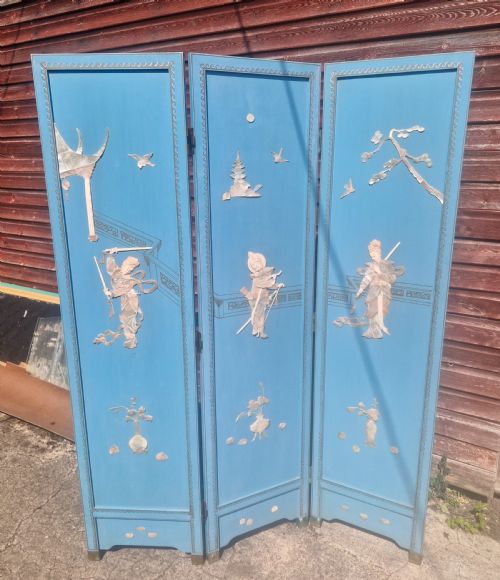
Decoration relied on skilled hand-craftsmanship, incorporating carved bone figures, mother of pearl inlay, hardstone mounting, and painted details. Panels were joined with hinges to allow flexible folding across multiple leaves.
Oriental Folding Screen Retail Price Guide 2026
Typical asking prices for oriental folding screen among the pieces listed under this phrase on Sellingantiques today, from the lower quarter to the upper quarter. They describe what is for sale here now, not the wider market.
At least one screen on this page doubled as a photographic prop for Victorian portrait sessions.
What varies in quality
Quality reveals itself in the depth and precision of the carved details and the richness of the lacquer surface. Pieces featuring deep carved bone, intricate mother of pearl, or complex hardstone inlay demand greater labour than simpler painted versions.
The scale and proportion of the folding panels also distinguish the work, with larger multi-fold screens requiring superior structural joinery to maintain stability across eight or more leaves.
The Oriental Folding Screen Glossary
- Coromandel lacquer
- A Chinese incised lacquer technique where designs are carved into a dark ground and filled with colours or gold. This method creates a textured surface across multi-fold screens.
- Chinoiserie
- A European decorative style reflecting Chinese artistic influences. It appears frequently on lacquer furniture and room dividers from the nineteenth and twentieth centuries.
- Meiji
- A period in Japanese history spanning from 1868 to 1912, known for fine decorative arts. Screens from this era often feature detailed painted or lacquered motifs.
- Fretwork
- Openwork ornamentation carved or cut into wood. Indian and Chinese screens utilise this technique for decorative upper panels.
Oriental Folding Screen: Frequently Asked Questions
How do I use a folding screen at home?
These screens work well to zone large open areas or to create a private dressing space in a bedroom. They also serve as decorative wall backdrops behind seating furniture.
Position the panels at slight angles to ensure the screen stands securely without stretching the hinges flat.
How do I tell Chinese and Japanese screens apart?
Chinese pieces often utilise coromandel lacquer, deep carving, and hardstone or bone inlay depicting traditional court scenes or flora. Japanese examples frequently focus on painted silk, delicate gold details, and natural motifs.
Examining the specific carving style and materials helps clarify the origin of each multi-fold panel.
Are these screens heavy?
Larger multi-fold pieces made from solid hardwood and thick lacquer carry substantial weight. Smaller dressing screens and fire screens remain much lighter and easier to reposition.
Two people are usually required to move and unfold the larger eight-panel room dividers safely.
What is a fire screen?
A fire screen is a smaller single or multi-panel screen originally designed to shield a person's face from the radiant heat of an open fireplace. In modern interiors, they function primarily as decorative fireplace furnishings.
Many antique examples feature embroidered silk, glass, or decorated wood panels held within a sturdy wooden frame.