
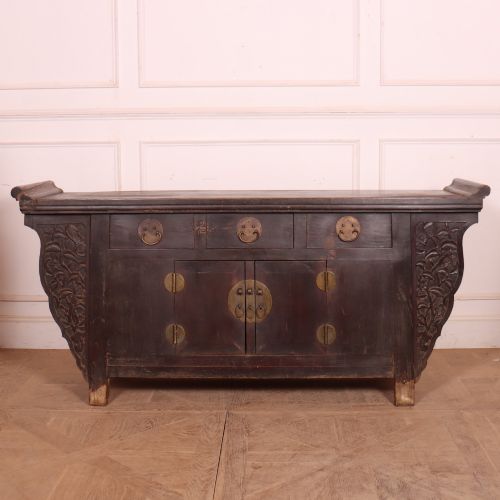
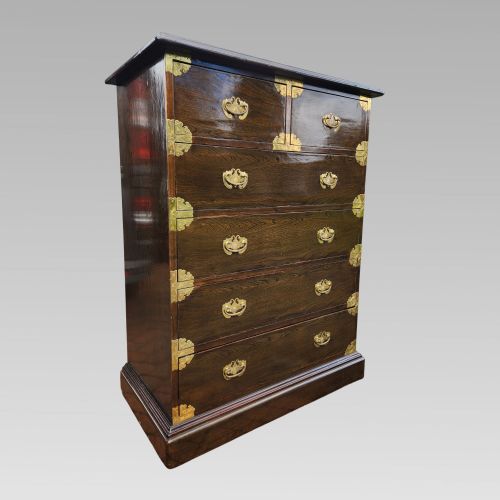


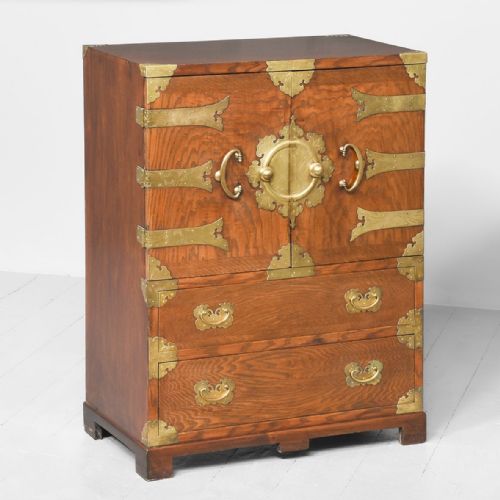


Oriental Elm Storage Chest
An oriental elm storage chest brings warmth and historic utility into a room through rich timber grain and traditional metal fittings.
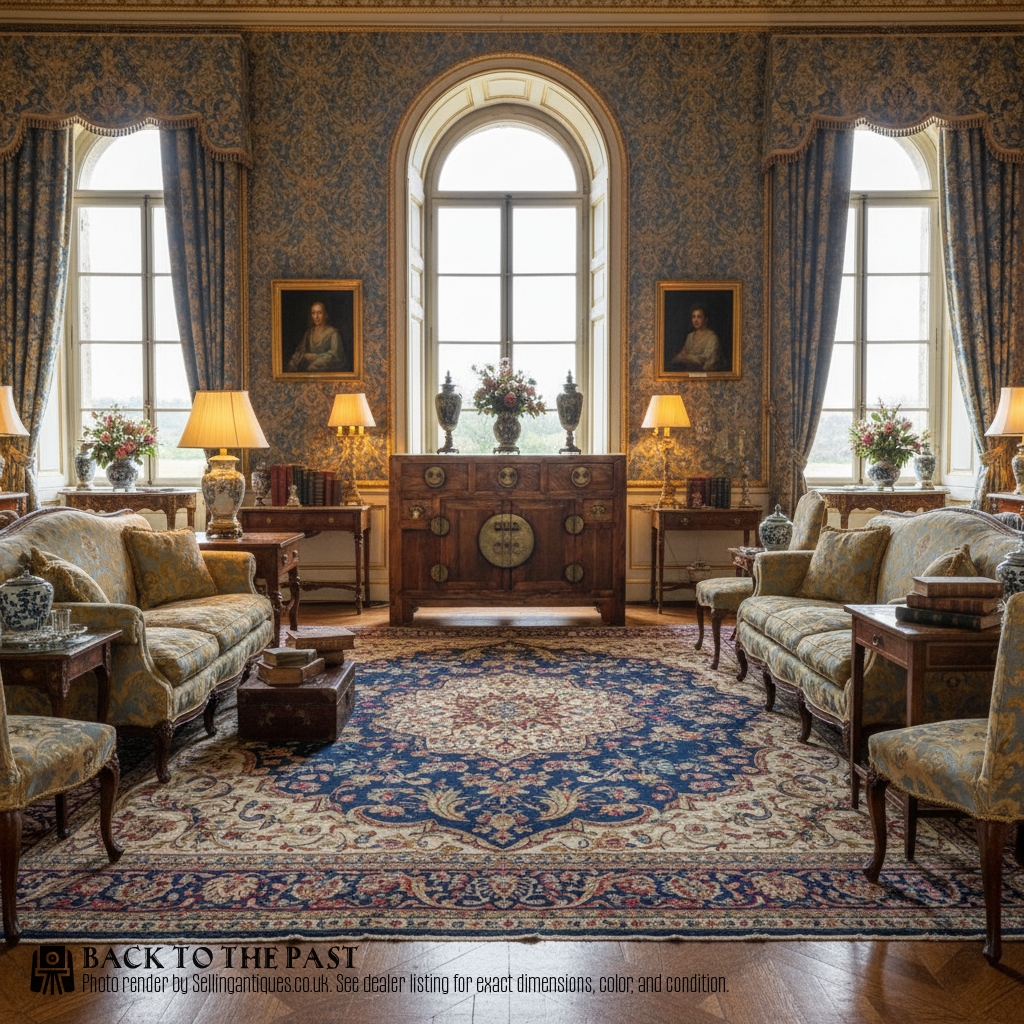
Oriental Elm Storage Chest
An oriental elm storage chest spans several centuries of craftsmanship from China and Korea, appearing in forms such as sideboards, side cabinets, and tabletop chests.
The pieces on this page range from 18th-century examples to pieces from the 1920s and 1930s, reflecting Qing Dynasty and Korean Joseon traditions.
Buyers encounter substantial floor-standing coffers alongside compact tabletop boxes, all constructed from elm, burr elm, and general hardwood.
Materials and Construction
Joinery relies on solid elm and burr elm timber, which provides a durable body with distinct grain patterns.
Makers integrated brass and iron hardware to reinforce corners and secure doors, doubling as decorative mounts.
Materials recorded across the inventory include standard elm, burr elm, hardwood, brass, and iron.
Assessing Quality
Quality rests on the choice of timber figure, particularly where burr elm veneer displays rich movement across the panels.
The sophistication of the brass and iron hardware influences the overall distinction of the piece, as does the crispness of any carved detailing.
The Oriental Elm Storage Chest Glossary
- Bandaji
- A traditional Korean storage chest with a front-opening drop-down door. These pieces often feature prominent brass straps and hinges.
- Burr elm
- Elm wood grown with a distorted grain pattern that creates intricate swirls and knots. Cabinet makers prize this timber for decorative panel veneers.
- Qing Dynasty
- The final imperial dynasty of China, lasting from the mid-seventeenth to the early twentieth century. Furniture from this era often emphasises functional elegance.
- Joseon
- A Korean dynastic period spanning five centuries until 1897. Woodworking from this tradition favours restrained lines and expressive metalwork.
Oriental Elm Storage Chest: Frequently Asked Questions
What is an oriental elm storage chest used for?
These pieces function as practical storage units for linens, tableware, or everyday items while serving as focal points in living spaces.
Their sturdy construction allows them to double as sideboards or display surfaces in modern interiors.
How do I date an oriental elm chest?
Dating relies on stylistic markers associated with periods like the Qing Dynasty or Korean Joseon era, alongside construction methods and material wear.
Documentation or stylistic parallels from specific decades such as the 1880s or 1920s also help establish age.
How do I care for antique elm furniture?
Maintain the timber by keeping the piece away from direct heat sources and sudden humidity changes that can affect the wood.
Regular dusting with a dry cloth preserves the finish and the original brass or iron hardware.