
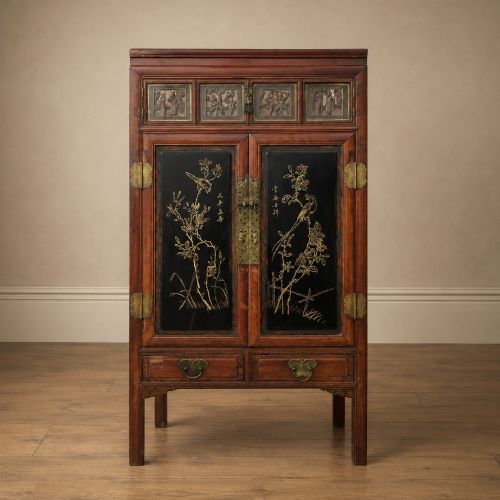
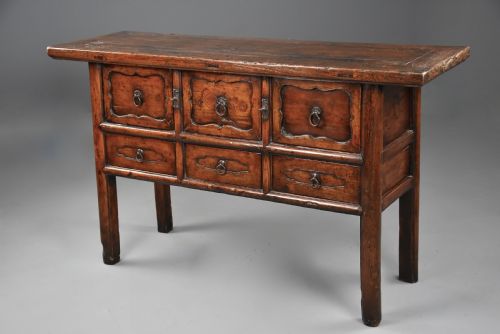
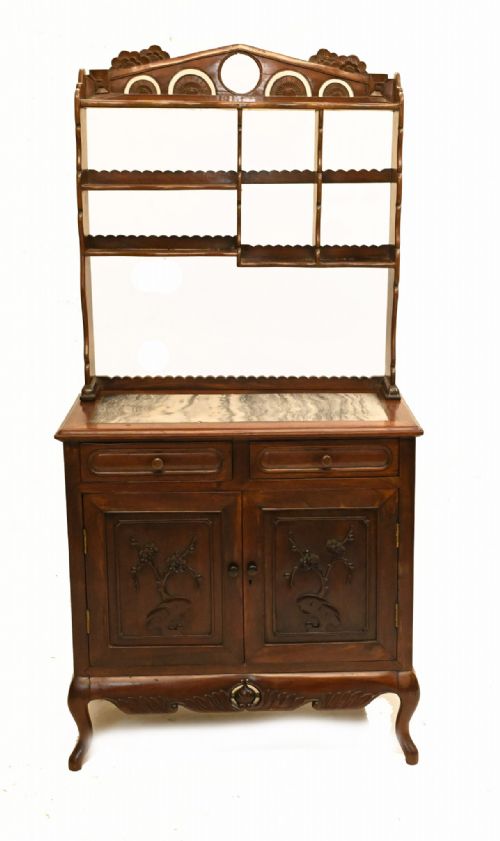


19th Century Chinese Sideboard
A 19th century chinese sideboard brings heavy timber, rich lacquer and practical storage together in a single striking statement piece for the home.
19th Century Chinese Sideboard
A 19th century chinese sideboard encompasses versatile storage furniture built during the Qing Dynasty and late Victorian periods, spanning robust elm, hardwood and lacquered finishes. You will frequently encounter elm sideboards, red and black lacquer cabinets, console tables and provincial dressers across these listings.
These pieces originated to serve domestic and export markets, shifting from utilitarian storage to decorative reception furniture. The selection ranges from rustic elm dressers with fine patinas to intricately inlaid black lacquer side cabinets and export altar tables.
How They Were Made
Carpenters utilised native timbers like elm and dense hardwoods joined with traditional mortise and tenon construction to build the structural carcase. Iron and brass fittings, including hinges and mounting plates, reinforced the corners and doors while adding functional contrast to the wood.
Surfaces received multiple coats of red or black lacquer, sometimes incorporating inlaid decoration or carved details. Marble panels occasionally appeared within the design to provide durable tops and decorative accents.
Listings feature items built from elm, hardwood, brass, iron and marble across the nineteenth century.
What Varies in Quality
Quality rests in the integrity of the timber and the depth of the finish, distinguishing simple provincial utility work from finer court or export pieces. Elm surfaces show variations in patina and grain movement, while lacquer work ranges from smooth, uniform applications to heavily worn surfaces.
The sophistication of the hardware and any carved or inlaid decoration further separate standard side cabinets from exceptional console tables and sideboards. Original mountings and stable joinery indicate superior craftsmanship maintained over generations.
The 19th Century Chinese Sideboard Glossary
- Qing Dynasty
- The final imperial dynasty of China, spanning from sixteen forty-four to nineteen twelve, during which many of these sideboards and cabinets were produced.
- Elm
- A durable, fibrous hardwood favoured by provincial Chinese cabinetmakers for its strong grain and resistance to splitting.
- Lacquer
- A natural resin applied in successive layers to wood to create a hard, glossy protective coating, commonly seen in red and black on these pieces.
- Chinoiserie
- European decorative style influenced by Chinese artistic traditions, appearing on nineteenth-century pieces designed for Western export markets.
- Altar table
- A traditional Chinese table form with upturned flange ends, adapted in the nineteenth century for wider export and domestic use.
19th Century Chinese Sideboard: Frequently Asked Questions
How are these sideboards used today?
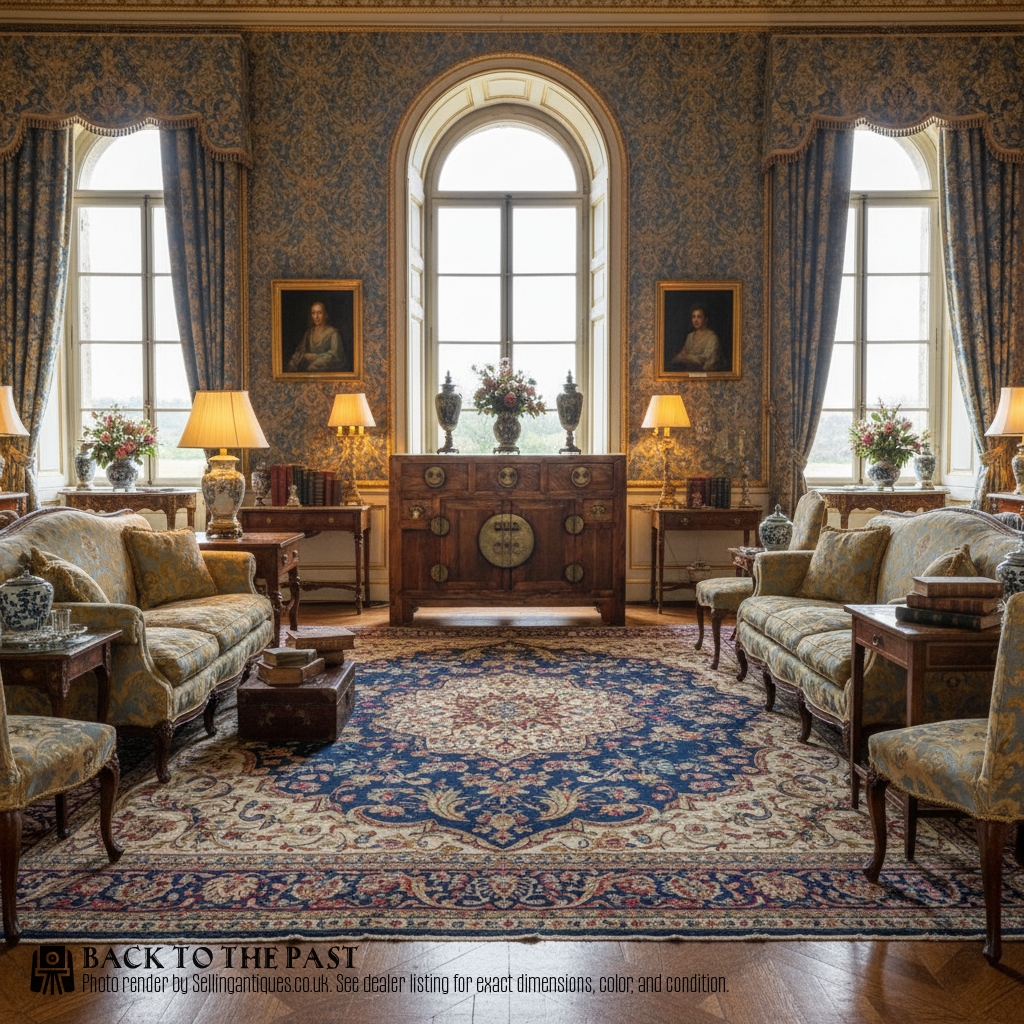
These cabinets provide practical surface space and enclosed storage for dining rooms, hallways and living areas. Their substantial proportions make them suitable for holding tableware or supporting lamps and decorative objects.
Positioning a sideboard against a main wall allows the lacquered surfaces and timber patinas to function as a focal point within a room. The interior shelving accommodates modern storage needs while retaining historical character.
What is the difference between elm and hardwood pieces?
Elm offers a fibrous, rustic grain that typically shows lighter tones and a warm, natural patina developed through extensive use. Hardwood versions utilise denser timber species that provide a heavier weight and a darker, more formal appearance.
Both materials were selected for structural stability, but hardwood often allowed for sharper carved details. Elm pieces lean towards provincial charm, whereas dense hardwoods align with more formal interior settings.
How do I care for a lacquered wood surface?
Lacquered finishes require protection from direct sunlight and excessive moisture to prevent fading and cracking. Dusting with a soft, dry cloth is sufficient for routine maintenance.
Avoid chemical polishes or abrasive cleaners that can damage the delicate resin layers. Maintaining a stable indoor temperature preserves both the timber substrate and the lacquer coating.
Are these pieces purely decorative or functional?
Nineteenth-century Chinese storage furniture was built for daily utility, featuring functional doors, drawers and internal compartments. The original purpose combined household storage with display.
Today, they retain this dual utility, offering concealed storage space behind traditional wooden doors. The robust construction ensures they remain practical items of furniture rather than fragile display objects.
How can I tell the period of a Chinese sideboard?
Dating relies on construction methods, timber characteristics, and stylistic markers associated with the nineteenth century. Details such as traditional joinery, wear patterns and original brass or iron hardware provide clues to the era of manufacture.
Export pieces often incorporate Western stylistic influences, like Chippendale details, alongside traditional Chinese forms. Comparing the lacquer technique and wood preparation against documented nineteenth-century examples helps confirm the age.