
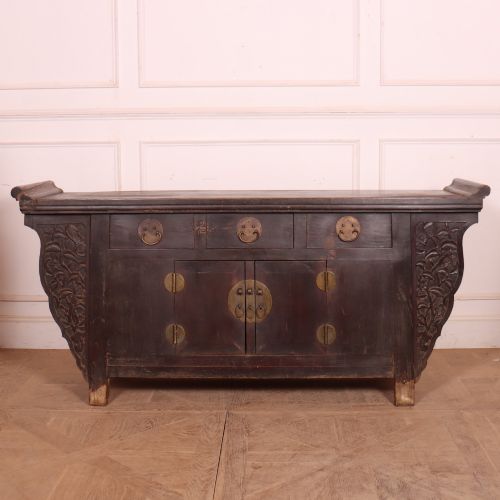


Chinese Elm Coffer
A Chinese elm coffer brings straightforward storage and warm timber grain into a room, offering practical utility rooted in traditional craftsmanship.

Chinese Elm Coffer
When someone searches for a Chinese elm coffer, they are looking at sturdy storage pieces that emerge from various periods including the eighteenth and nineteenth centuries. The selection on this page shows pieces originating from traditional Chinese and Qing Dynasty styles, encompassing forms such as chests, sideboards, and side cabinets alongside direct coffer designs.
The objects listed display the natural character of elm timber, often shaped within regional traditions like the Shanxi Province style. Buyers will encounter items ranging from compact side cabinets to larger altar-style tables and storage cabinets that share similar construction foundations.
These pieces function reliably in modern interiors for storage or display, carrying historical weight through their timber construction and regional design variations. The nineteenth-century examples and turn-of-the-century items dominate the available forms.
How they were made
The construction relies primarily on elm timber, paired with functional hardware forged from brass and iron. These metals provide structural reinforcement and closure mechanisms for doors and lids.
Makers utilised traditional joinery methods suited to hardwood and softwood varieties, occasionally finishing surfaces with lacquer to protect the timber grain. The combination of durable iron fittings and warm elm wood defines the physical makeup of these items.
Listings feature items spanning the eighteenth and nineteenth centuries, constructed from elm, hardwood, brass, iron, and lacquer.
What varies in quality
Quality separates through the crispness of carved details and the proportional balance of the timber frame. Pieces featuring finer surface carving or well-preserved lacquer display greater handcrafting skill.
The integrity of the brass and iron hardware also dictates the standard of the piece, alongside the preservation of the original elm grain. Higher-grade examples maintain strong structural joinery and subtle patination across the timber surfaces.
The Chinese Elm Coffer Glossary
- Coft
- A traditional box or chest used primarily for storage. These items often feature hinged lids and sturdy timber construction.
- Elm
- A durable hardwood known for its interlocking grain pattern and resilience. It serves as the primary material for the furniture on this page.
- Qing Dynasty
- The final imperial dynasty of China, spanning from sixteen forty-four to nineteen twelve. Pieces from this era often influence traditional Chinese furniture styles.
- Altar table
- A long, narrow table traditionally used in domestic or ceremonial settings. They typically feature distinctive upturned ends or recessed legs.
Chinese Elm Coffer: Frequently Asked Questions
What is a Chinese elm coffer used for?
These pieces serve as practical storage furniture for living spaces or hallways. They hold household items while adding historical character to a room.
The sturdy timber construction allows the top surface to function as a display area for lamps, ceramics, or books.
How do I date a Chinese elm coffer?
Dating relies on examining the timber wear, construction methods, and the style of brass or iron hardware attached to the piece. Items often date from the eighteenth or nineteenth centuries.
Comparing the joinery details against documented regional traditions helps narrow down the period of manufacture.
Are these pieces made of solid elm?
The listings indicate construction using elm timber, often combined with iron and brass hardware. Solid hardwood forms the structural core of these storage items.
Lacquer finishes sometimes coat the timber surfaces to protect the wood and enhance its visual depth.
How do I care for a wooden coffer?
Maintain the timber by keeping the piece away from direct heat sources and sudden humidity changes. Regular dusting preserves the natural finish of the elm.
Avoid harsh chemical cleaners on the brass or iron hardware to protect the surrounding wood grain.