


Oriental Ceramic Vase Set
When you search for oriental ceramic vase set, you find matched groupings of Japanese porcelain and earthenware created for display.
Oriental Ceramic Vase Set
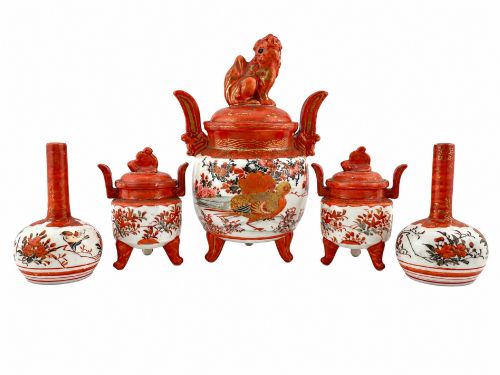
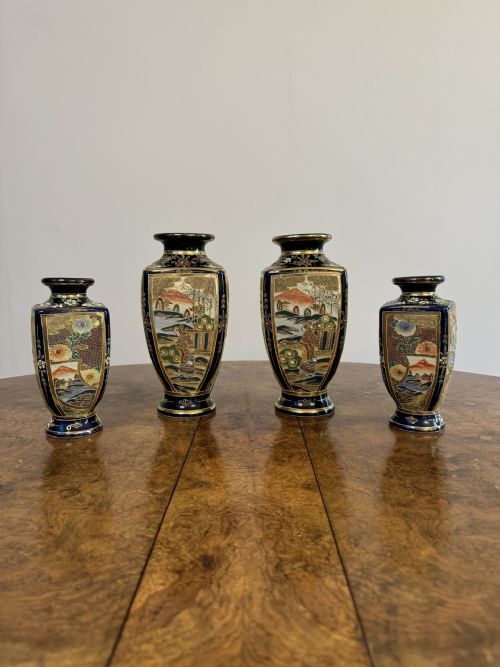
An oriental ceramic vase set typically comprises a garniture or matched grouping of vessels designed to sit together on a mantelpiece or cabinet. These groupings range from trios and quartets to larger collections of varying scales, predominantly originating from Japanese workshops.
The periods represented stretch from the late seventeenth and early eighteenth centuries through the nineteenth century and into the early twentieth century. You encounter forms decorated in the Imari palette alongside Satsuma and Kutani wares.
Makers and decorators utilised traditional techniques across these groupings, producing matching lidded vases and shaped vessels intended for unified interior display.
Materials and construction
Potters shaped these vessels from porcelain and earthenware before applying elaborate painted decoration. The construction relies on traditional ceramic bodies fired at high temperatures to achieve durable forms.
Decorators applied cobalt, enamel, and glaze by hand, often incorporating gold leaf and gilt highlights to enrich the surface. These combined materials create the distinct visual weight characteristic of Imari, Satsuma, and Kutani pieces.
Listings span multiple centuries, ranging from eighteenth-century Edo examples to twentieth-century export sets.
Judging quality in sets
Quality rests in the harmony of the grouping and the precision of the hand-painted brushwork across each vessel. Sets that maintain consistent colour saturation and crisp detail across every piece demonstrate superior workshop execution.
The refinement of the ceramic body and the careful application of gilt and enamel accents distinguish finer productions from standard commercial output. A well-preserved matching garniture exhibits uniform ageing and disciplined artistry throughout the entire collection.
Kinkozan
The Oriental Ceramic Vase Set Glossary
- Garniture
- A matched set of three or more vases designed for symmetrical display on a mantelpiece or sideboard. These groupings typically feature a central vessel flanked by smaller matching companions.
- Imari
- A traditional Japanese style of porcelain decorated in underglaze blue, iron red, and gold. This palette was widely exported to Europe from the Edo period onwards.
- Satsuma
- A type of Japanese earthenware characterised by a crackle-glaze ivory body and detailed polychrome enamels enriched with gold. It became particularly prominent during the Meiji period.
- Kutani
- Japanese porcelain known for bold pictorial designs, often featuring strong greens, blues, purples, and reds alongside gold leaf. These wares were produced in the Ishikawa prefecture.
- Edo Period
- A defining era in Japanese history lasting from seventeen to nineteen hundred, associated with significant artistic development. Ceramics from this time laid the groundwork for later export wares.
Oriental Ceramic Vase Set: Frequently Asked Questions
What is a garniture set?
A garniture set is a coordinated grouping of three, four, or five vases designed to be arranged together as a decorative centrepiece. These sets provide visual symmetry when placed on large pieces of furniture.
Historically, they served a purely ornamental function in elite interiors, showcasing the skill of the potter and decorator across multiple related vessels.
How do Imari and Satsuma differ?
Imari pieces are made of porcelain decorated with a distinctive palette of underglaze blue, iron red, and gilt. They present a crisp, glossy surface finish.
Satsuma pieces utilise an earthenware body with a characteristic creamy crackle glaze, decorated with dense enamel and gold leaf. They offer a more opaque, matte texture compared to porcelain.
Were these sets made for export?
Many of these ceramic groupings were produced specifically for international export markets during the late nineteenth and early twentieth centuries. European collectors prized these elaborate multi-piece sets for formal reception rooms.
Workshop production responded directly to Western demand for traditional Japanese motifs and decorative schemes.
How should I display a vase set?
Arrange the pieces symmetrically, placing the tallest vessel in the centre with the matching smaller vases flanking it. This traditional arrangement emphasises the unified design of the garniture.
Ensure the display surface is stable and keep the pieces out of direct sunlight to protect the enamel and gilt highlights over time.