

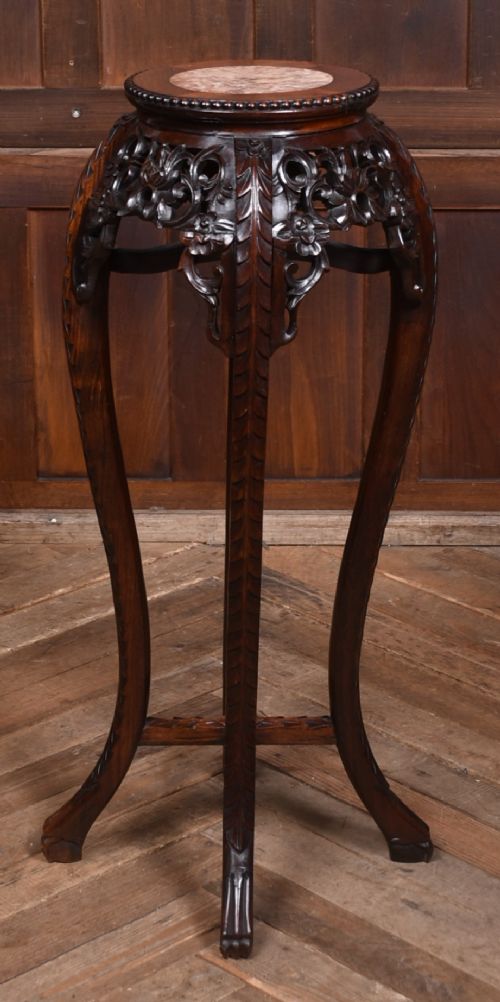


Oriental Carved Tall Stand
An oriental carved tall stand elevates a room with dense foliage and heavy timber, holding plants and lamps with historic weight.
Oriental Carved Tall Stand
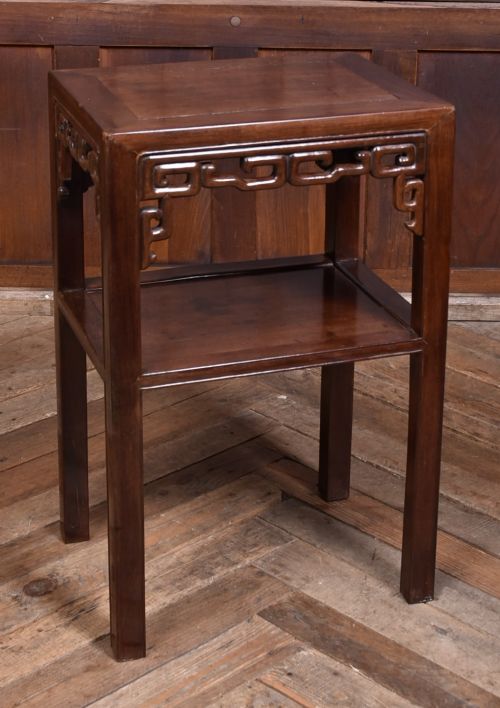
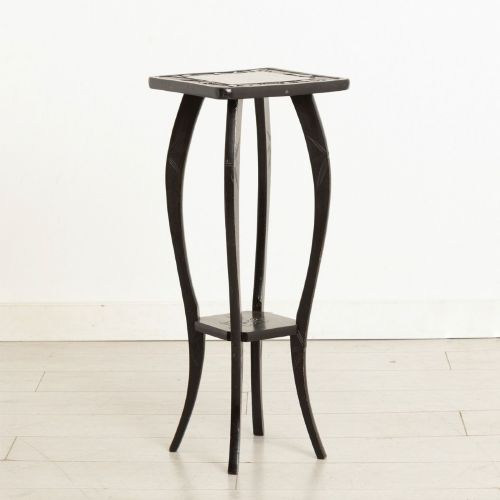
When you search for an oriental carved tall stand, you find vertical furnishings built to elevate plants, vases, and lamps in nineteenth and early twentieth century interiors. These pieces appear in forms such as plant stands, jardiniere stands, pedestal tables, and lantern stands.
The selections on this page run from the Victorian period through to the nineteen thirties, spanning the Qing dynasty and Chinese export traditions alongside Japanese works. Hardwood frames dominate the groupings, frequently paired with inset marble tops or mother-of-pearl inlay.
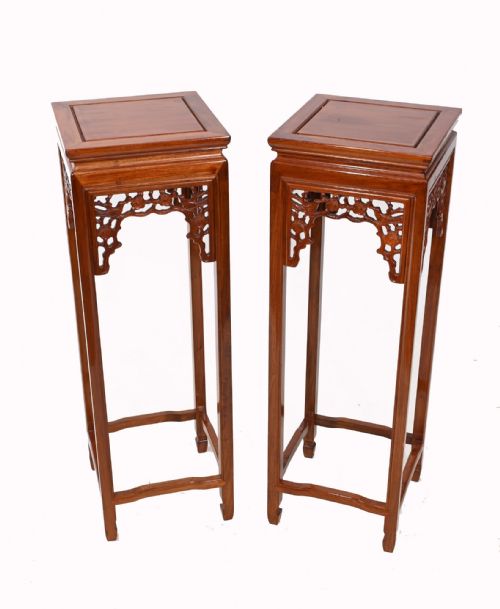
Buyers encounter single tables and matched pairs designed to anchor corners or frame larger furniture arrangements. The forms serve both decorative and practical functions within domestic spaces.
How they were made
Carpenters utilised dense regional hardwoods such as huali and hongmu to construct these tall supports, employing traditional joinery alongside intricate hand carving. These timbers provide the structural strength necessary for supporting heavy stone inserts and porcelain vessels.
Surfaces feature deep relief carving depicting dragons, foliage, and traditional motifs, alongside ebonised finishes and mother-of-pearl inlay. Marble and porcelain panels are fitted directly into the timber tops to create durable display surfaces.
Some tall stands double as card butlers, holding court with rigid politeness beside your parlour door.
What varies in quality
The distinction between tiers rests upon the crispness of the hand carving and the selection of timber. Dense woods like hongmu and huali hold finer detail and exhibit greater weight than softer alternatives.
The integration of inset materials determines the refinement of the piece. Well-fitted marble panels and secure mother-of-pearl inlay demonstrate superior workshop execution.
Liberty of London
The Oriental Carved Tall Stand Glossary
- Hongmu
- A dense tropical hardwood frequently utilised in fine Chinese furniture construction. It provides a heavy, durable frame for intricate carving.
- Huali
- A prized Chinese timber known for its rich grain and stability. Makers selected this hardwood for export and domestic display pieces.
- Jardiniere
- A large ornamental pot or container for plants. Stands built for these vessels feature reinforced tops to bear significant weight.
- Torchiere
- A tall standing lamp or candleholder. These vertical forms illuminate corners and large rooms.
- Qing Dynasty
- The final imperial dynasty of China, spanning from sixteen forty-four to nineteen twelve. Pieces from this era often display traditional symbolism and deep relief carving.
Oriental Carved Tall Stand: Frequently Asked Questions
How do I use a tall stand at home?
These pieces suit corners, hallways, and reception rooms where vertical height breaks up flat walls. They function well beneath tall windows or beside seating.
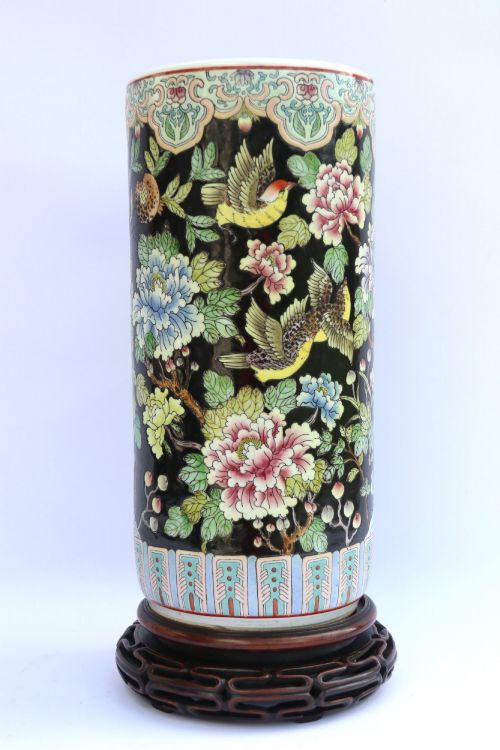
Place heavy plants, porcelain vases, or table lamps upon the top surface. Ensure the weight remains balanced across the central axis.
What periods do these stands cover?
The listings span the nineteenth century through the Edwardian era up to the nineteen thirties. Victorian and Qing dynasty examples appear frequently alongside later Edwardian pieces.
Dates derive from construction styles, timber choices, and design motifs. Many pieces reflect late nineteenth century export traditions.
Are marble tops original to the stands?
Marble and porcelain inserts were integrated during manufacture to provide stable, water-resistant surfaces for plants and vases. These stone panels sit flush within the carved wooden frame.
Inspect the seating of the stone within the rebate to understand its construction. Original panels match the proportions of the overall stand.
How do I care for carved hardwood?
Dust the deep relief carvings regularly with a soft brush to prevent dirt accumulation within the recesses. Keep timber away from direct heat sources and strong sunlight to protect the polish.
Apply a neutral furniture wax sparingly if the wood appears dry. Avoid harsh liquid cleaners on both the timber and any mother-of-pearl inlay.