
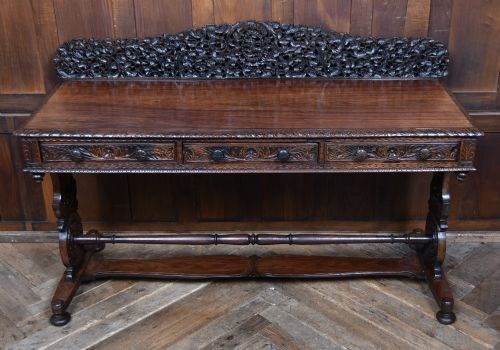
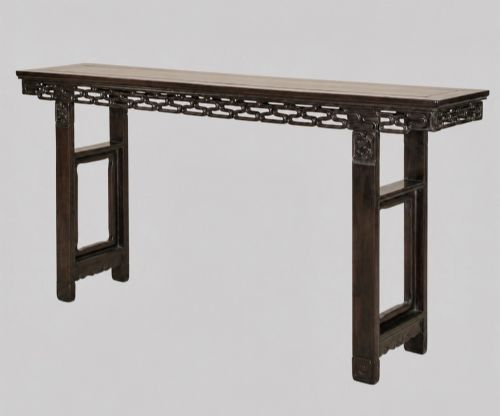
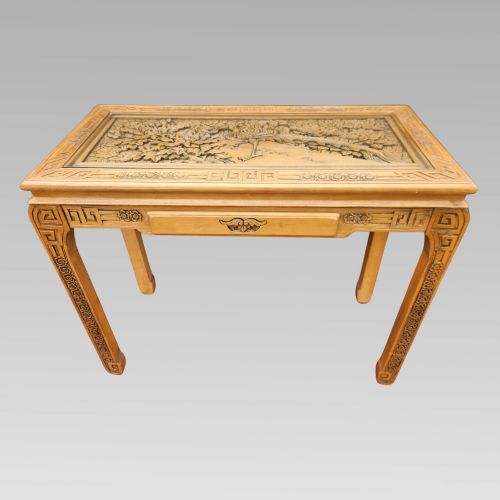
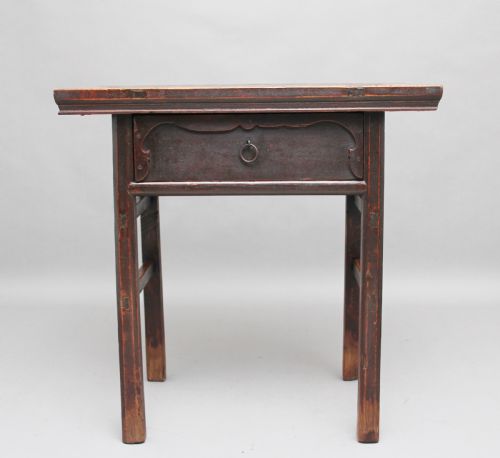
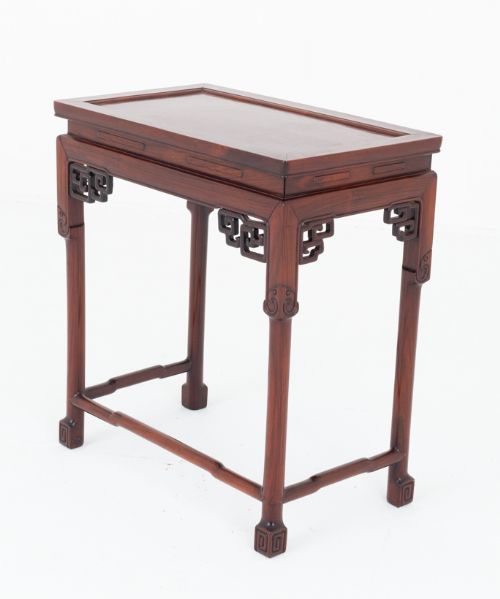


Oriental Carved Hall Table
Oriental carved hall table pieces bring distinct regional presence and rich timber grain to an entrance, spanning Qing Dynasty and 19th Century forms.
Oriental Carved Hall Table
When you search for an oriental carved hall table, you encounter console tables, altar tables, centre tables, and side tables originating from China and Burma. The pieces on this page lean heavily towards 19th Century examples, alongside items dating from the 18th Century, 1900, and 1930.
Forms include long console tables, demi-lune tables, half-moon shapes, writing desks, and occasional tables. These items function practically in hallways and reception spaces while displaying traditional regional joinery and carving.
Stylistic descriptors in the evidence point to Qing Dynasty, Chinese Export, Chinoiserie, and Chinese Provincial designs. Buyers primarily select these formats to anchor a hallway with deep timber tones and traditional carving.
How they were made
Construction relies on dense timbers such as hardwood, elm, rosewood, hongmu, and amboyna, chosen for structural stability and rich grain. Carpenters utilised traditional joinery methods suited to heavy woods without relying on modern hardware.
Surface treatments encompass clear finishes that highlight natural timber, alongside red and black lacquer applications. Certain surfaces incorporate inset marble panels or glass tops, while brass fittings occasionally complement the woodwork.
Listings span the 18th Century, 19th Century, 1900, and 1930, utilising hardwoods, elm, rosewood, lacquer, marble, brass, and glass.
What varies in quality
Depth and crispness of the carving distinguish different tiers of workmanship, particularly on apron rails and leg mounts where dragon motifs or foliage appear. Sharp, deeply undercut relief indicates a higher standard of hand work than shallow surface scoring.
The choice of primary timber shifts the weight and visual gravity of a piece, with dense hardwoods and figured rosewood sitting above domestic utility timbers like elm. Original surface treatments, whether aged lacquer or polished hardwood, retain more character than later refinishing.
The Oriental Carved Hall Table Glossary
- Altar table
- A long, narrow table traditionally used for ceremonial purposes in Chinese domestic and temple settings, adapted in the West as a hall console. These tables typically feature high-set tabletops and carved aprons.
- Demi-lune table
- A half-moon shaped console table designed to stand flat against a wall in a hallway or reception room. Pairs of these tables can be joined to form a circular centre table.
- Hongmu
- A Chinese term translating to red wood, applied to dense, heavy tropical hardwoods prized for fine furniture construction. It exhibits a rich dark grain that takes a high natural polish.
- Qing Dynasty
- The final imperial dynasty of China, ruling from 1644 until 1912. Furniture from this era encompasses significant regional variety and traditional carving styles.
Oriental Carved Hall Table: Frequently Asked Questions
Where should I place an altar table?
Altar tables suit narrow entrance halls, corridors, and living spaces where a shallow footprint is required. Their length provides display surface without blocking walkways.
Pair them against a plain wall to let the carved aprons and timber grain draw the eye upon entering the room.
How do I identify a Qing Dynasty piece?
Qing Dynasty furniture is identified through traditional joinery, timber selection such as hardwood or hongmu, and distinct regional carving motifs. Construction typically avoids modern screws and nails.
Look for evidence of age in the timber shrinkage and the wear patterns on the feet and edges.
What is the difference between a console and a centre table?
Console tables are built to stand flat against a wall, frequently featuring finished front and side elevations with plain or unpolished backs. Centre tables are designed to be viewed from all sides in the middle of a room.
Check the underside and rear edges to understand how the maker intended the piece to face.
How do I care for lacquered wood?
Lacquered surfaces require gentle dusting with a soft, dry cloth to prevent micro-scratching from grit. Keep them away from direct sunlight and excessive heat sources to avoid cracking.
Avoid liquid polishes or harsh chemical cleaners which can degrade the aged lacquer finish over time.