
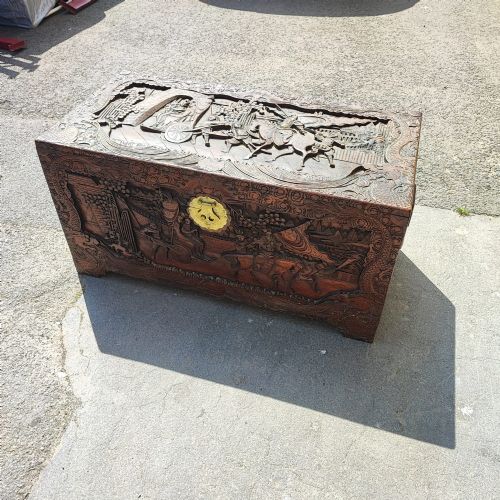


Oriental Carved Blanket Box
An oriental carved blanket box brings a distinct scent and deep relief work into a room, serving as a functional store for linens.
Oriental Carved Blanket Box
An oriental carved blanket box is a sturdy storage chest designed to protect textiles, frequently encountered in camphor wood from the nineteenth century onwards. These pieces span Chinese export work, Anglo-Indian interpretations, and Zanzibar forms.
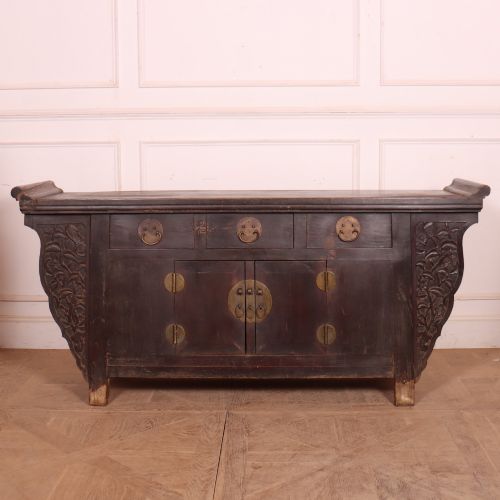
The selection here includes blanket boxes, storage trunks, and sideboards, featuring traditional Chinese styles alongside Art Deco limed oak adaptations. Camphor wood dominates the offerings, alongside hardwood, elm, and rosewood.
Nineteenth-century examples sit alongside pieces from nineteen-twenty and nineteen-thirty, showing regional variations from Chinese workshops to Indian production. The forms function equally well as coffee tables or stationary chests within a modern interior.
Materials and construction
Camphor wood provides the primary body for the majority of these chests, chosen for its aromatic properties that naturally repel insects. Artisans combine this timber with brass fittings, hinges, and corner mounts to reinforce the structure.
Surface decoration relies on deep hand-carving into the wood or the application of lacquer and gilt finish. Certain variations incorporate rosewood, teak, or limed oak alongside traditional brass covering.
Joinery techniques ensure robust corners and heavy lids suited for long-term storage and frequent use. Workshop methods reflect regional traditions, from Cantonese brass-bound work to Qing Dynasty carving styles.
Opening a century-old camphor chest releases a wave of woody perfume that has outlived the dynasties and empires that made it.
What separates the best examples
Quality rests upon the depth, sharpness, and intricacy of the hand-carving across the lid and panels. Superior pieces display crisp motifs without shallow or hurried chisel marks.
The choice of secondary materials, such as heavy brass mounts, substantial hinges, and well-preserved lacquer or gilt, elevates a chest. Timber selection also matters, particularly the grain and natural fragrance retention of the camphor wood.
Proportion and structural integrity define the finest items, where the lid closes flush against the body and the interior remains clean and functional. Regional distinctiveness, such as authentic Zanzibar or Anglo-Indian detailing, adds character to the construction.
The Oriental Carved Blanket Box Glossary
- Camphor wood
- A fragrant timber native to Asia, utilised for storage chests due to its insect-repellent properties. It forms the core material for the vast majority of pieces here.
- Zanzibar chest
- A heavy hardwood storage trunk featuring distinctive brass studding and corner brackets, reflecting East African and Indian trade routes. These pieces often employ rosewood or teak.
- Chinese export
- Items produced in China specifically for Western markets from the eighteenth century onwards. They blend traditional domestic motifs with European functional requirements.
- Lacquer
- A durable finish applied in multiple layers to wood surfaces, sometimes combined with gilt painting. It provides both protection and a decorative sheen.
- Brass-bound
- Construction reinforced with brass corners, straps, and lock plates. This method protects vulnerable edges during transit.
Oriental Carved Blanket Box: Frequently Asked Questions
What are oriental carved blanket boxes made of?
The listings here show camphor wood as the predominant timber, accompanied by hardwoods such as rosewood, teak, elm, and limed oak. Artisans frequently added brass mounts, handles, and corner brackets to reinforce the structure.
Surface finishes also incorporate lacquer and gilt work, particularly on pieces originating from Chinese export and Anglo-Indian workshops.
How do I use a blanket box in a modern room?
These chests function well at the foot of a bed for storing extra blankets, pillows, and seasonal garments. Their flat lids also allow them to double as low coffee tables in a living space.
The natural aroma of the camphor wood helps keep stored textiles fresh while providing a secure compartment for household items.
How can I tell the age of a carved chest?
Dating relies on the recorded periods, which range from the nineteenth century through the nineteen-twenties and nineteen-thirties. Nineteenth-century examples often display traditional hand-carving and heavy brass binding.
Later pieces from the twentieth century sometimes incorporate stylistic shifts like Art Deco limed oak while retaining the traditional camphor construction.
Why do these chests smell of camphor?
Camphor wood naturally contains aromatic oils that persist within the timber grain for decades. This scent serves the practical purpose of deterring moths and other pests from damaging wool and cotton textiles stored inside.
Over time, the intensity may soften, but the characteristic fragrance remains a defining feature of genuine camphor chests.