



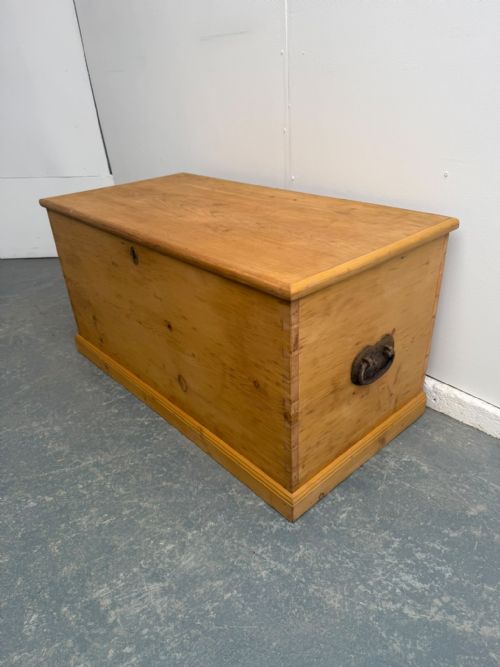
Traditional Wood Blanket Chest
A traditional wood blanket chest offers sturdy storage in oak, pine or camphor, carrying centuries of domestic use into modern rooms.
Traditional Wood Blanket Chest
A traditional wood blanket chest serves primarily as a robust storage box for linens, blankets and household goods. These pieces appear under various descriptions such as coffers, trunks, blanket boxes and mule chests.
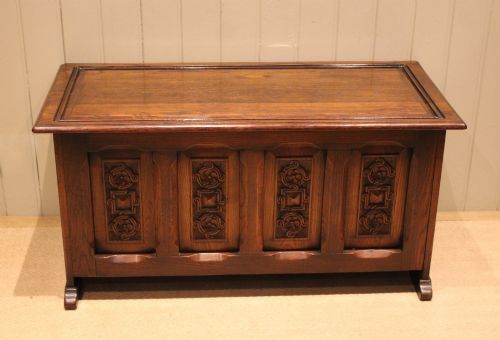
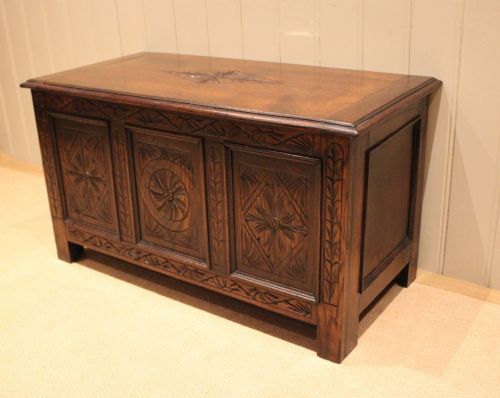
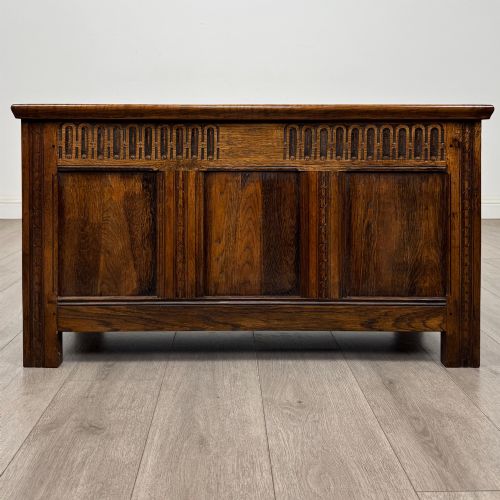
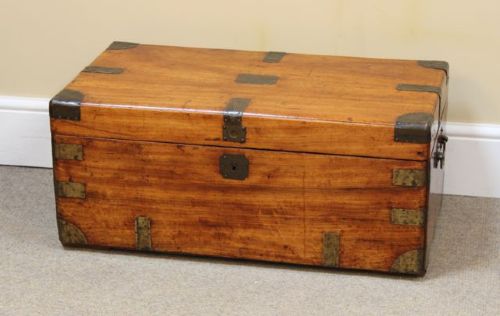
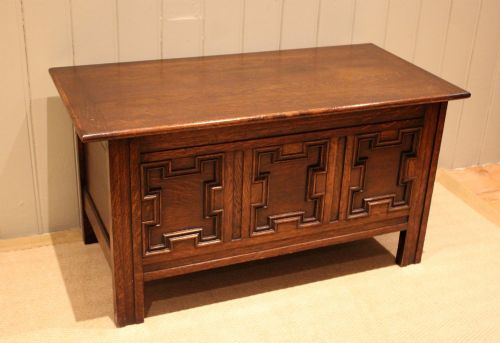
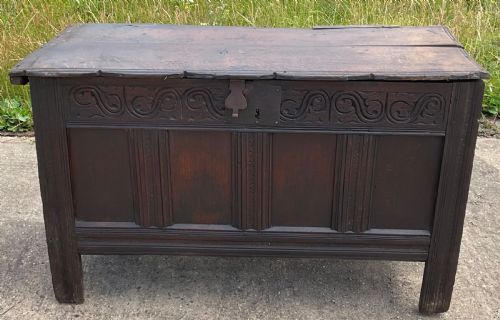
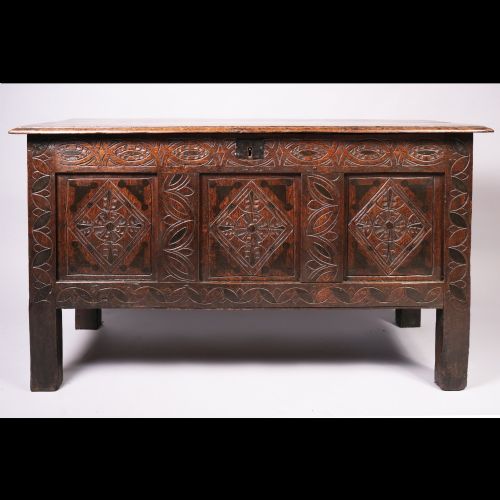
The versions most commonly met on this page span several centuries, running from the seventeenth century through the Georgian and Victorian eras into the early twentieth century. English oak examples sit alongside camphor wood trunks, pine boxes and elm six-plank constructions.
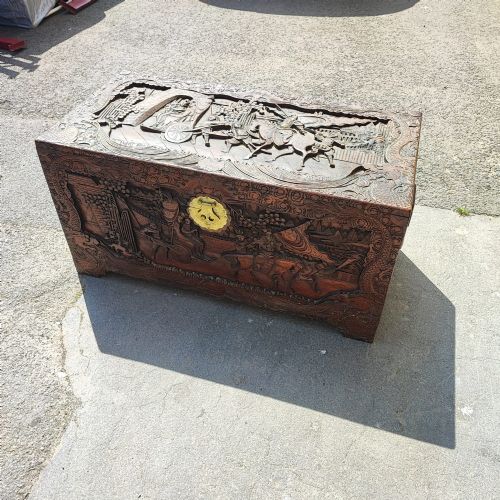
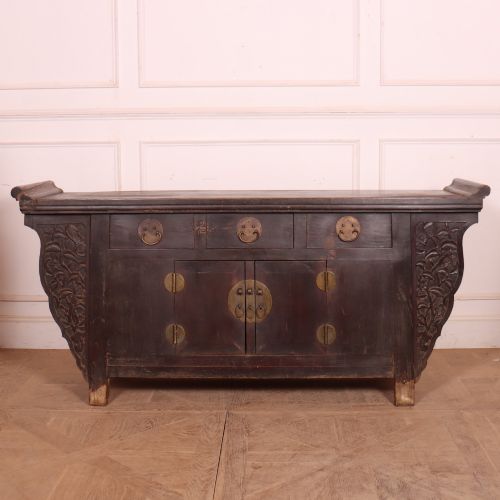
Makers ranged from vernacular rural carpenters building plain elm and pine boards to skilled workshops producing carved oak panels and mahogany designs. Regional variations include Spanish painted chests, Chinese carved camphor trunks and Hungarian painted coffer boxes.
How they were made
Construction relies heavily on solid timber boards joined by frame and panel methods or simple plank assembly using iron or brass fixings. Oak, mahogany, pine and elm form the structural carcases, often strengthened with dovetailed corners or pegged joints.
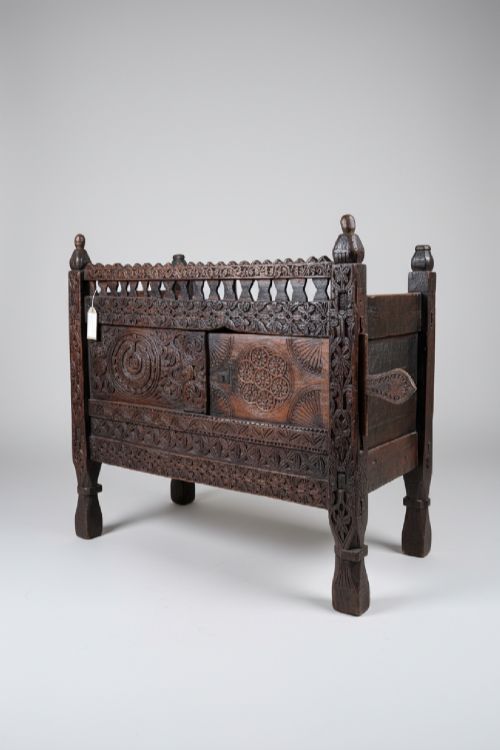
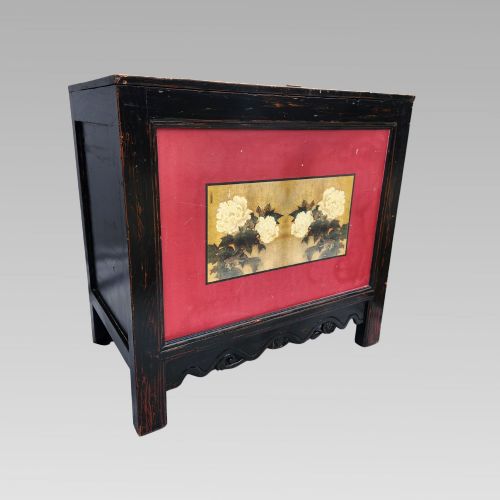
Surface treatments vary from waxed or polished finishes on English oak and mahogany to applied paint, black lacquer and intricate hand-carved decoration. Iron hinges, locks and brass carrying handles provide functional reinforcement for travel and daily lifting.
Listings feature oak, mahogany, pine and camphor wood across centuries ranging from the seventeenth to the twentieth.
What varies in quality
The grade of timber and the depth of joinery skill set individual pieces apart, separating vernacular utilitarian boxes from formal furniture. Heavy solid oak panels with crisp hand-carving or well-figured mahogany represent higher standards than basic pine utility boxes.
Original hardware, working locks and intact internal fittings such as small candle boxes indicate superior preservation and original integrity. The condition of the timber, stability of the joints and survival of early paint or wax surfaces dictate the standing of each piece.
The Traditional Wood Blanket Chest Glossary
- Coffer
- A heavy wooden chest traditionally used for storing valuables, linen or documents. These storage pieces often feature hinged lids and sturdy plank or panel construction.
- Mule chest
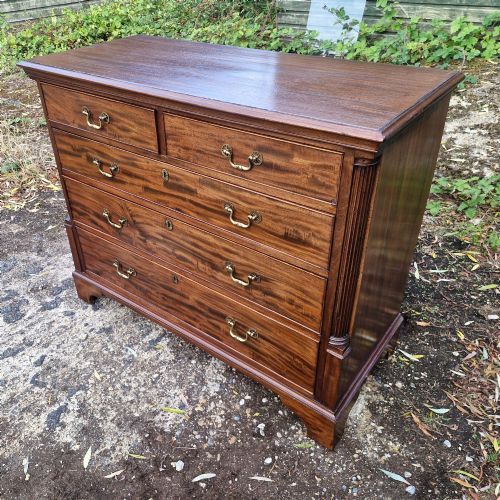
- A storage chest fitted with one or more drawers at the base beneath the main compartment. This form bridges the gap between a traditional blanket box and a chest of drawers.
- Six-plank coffer
- An early form of chest constructed from just six boards joined at the edges to form a box. These utilitarian pieces represent some of the oldest surviving domestic storage items.
- Candle box
- A small internal compartment built into the interior of a chest to hold small items away from main storage. This feature appears inside traditional oak coffers.
Traditional Wood Blanket Chest: Frequently Asked Questions
What is a traditional wood blanket chest used for?
These chests provide deep interior storage for bulky textiles, heavy blankets, quilts and household possessions.
Historically, they sat at the foot of beds or in hallways, doubling as occasional seating or tables within domestic spaces.
How do I identify a seventeenth century oak coffer?
Early seventeenth century pieces rely on heavy solid oak timbers, pegged frame and panel construction, and hand-carved geometric or floral motifs.
They frequently display dark patination, hand-wrought iron hinges and simple boarded lids without complex mechanical support.
What is the difference between a coffer and a mule chest?
A coffer consists of a single top-opening compartment enclosed by sides, front and back panels.
A mule chest adds one or more drawers beneath the main storage well, allowing access to items without lifting the heavy lid.
Where were camphor wood trunks made?
Camphor wood trunks frequently originate from Asian trading routes and coastal workshops, often associated with nineteenth and early twentieth century export trade.
Sailors and travellers utilised these aromatic boxes to protect garments from moths and damp conditions during long sea voyages.
How should I care for an antique pine blanket box?
Maintain the timber by keeping the box away from direct heat sources and sudden humidity shifts that cause wood to split.
Apply a traditional beeswax polish sparingly to nourish the surface and preserve the natural grain of the pine.